
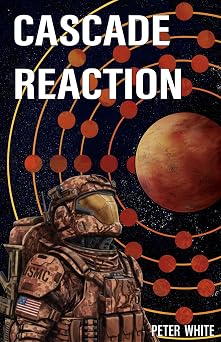
What if the safest place to lose humanity was the very world built to save it? Discover how Cascade Reaction by Peter White explores that unsettling possibility in the review below.
Book
Cascade Reaction by Peter White
Genre
Genre: Science Fiction
Sub-genres:
- Hard Science Fiction
- Military Science Fiction
- Space Opera
- Political Science Fiction
- Near-Future Science Fiction
Themes
- Human survival
- Environmental responsibility
- Resource scarcity
- Colonial society
- Scientific progress
- Consequences of conflict
- Community
- Leadership
- Adaptation
- Hope amid adversity
Review
Imagine building an entire civilization around something as ordinary as a glass of water. Now imagine discovering that every decision made hundreds of kilometers away could determine whether that water remains safe to drink. Few scientific realities are as fundamental as humanity’s dependence on clean water, and Cascade Reaction transforms that simple truth into the foundation of an ambitious science-fiction narrative.
Peter White presents a future in which Mars has evolved beyond an outpost into an essential extension of Earth itself. Rather than treating the planet merely as a backdrop for adventure, the novel portrays it as a living society shaped by economics, politics, engineering, education, medicine, and everyday family life. This broad perspective allows the setting to feel inhabited rather than imagined.
The opening chapters quickly establish that technological advancement does not eliminate human error. Instead, sophisticated systems remain vulnerable to misunderstanding, imperfect information, and unintended consequences. One particularly compelling aspect is the role of communication delays between Earth and Mars. Although modern readers rarely think about the finite speed of light, the novel uses this genuine scientific limitation to create believable tension, demonstrating how physics itself can influence human decisions.
Equally engaging is the author’s attention to everyday details. Families worry about grocery costs, professors prepare lectures, doctors confront difficult medical realities, and workers tackle hazardous environments. These quieter moments prevent the story from becoming solely a military drama and instead emphasize that history is experienced most profoundly by ordinary people. The contrast between domestic routines and planetary-scale events gives emotional weight to the larger conflict.
Readers with an interest in science will likely appreciate the careful integration of authentic concepts including radiation exposure, orbital mechanics, communication latency, resource extraction, and environmental engineering. These elements serve the narrative rather than overwhelming it, helping the fictional world feel plausible while remaining accessible.
The novel also raises thoughtful questions without insisting upon simple answers. How should societies manage finite resources? What responsibilities accompany technological power? Can competing interests avoid escalation when every decision carries enormous consequences? These questions emerge naturally through the characters’ experiences rather than through lengthy exposition.
The writing maintains momentum while allowing enough space for readers to understand the human cost behind the larger events. Multiple perspectives broaden the scope of the narrative and suggest that no single individual fully understands the crisis unfolding around them. That structure adds both realism and suspense.
This book is likely to appeal to readers who enjoy scientifically grounded speculative fiction, expansive world-building, geopolitical tension, and character-driven stories that balance action with thoughtful reflection. Those looking primarily for lighthearted adventure or fast-paced space battles without broader social questions may find its emphasis on political, environmental, and ethical considerations more substantial than expected.
Cascade Reaction demonstrates careful research, convincing scientific foundations, and a compelling narrative voice. It presents an imaginative vision of humanity’s future while remaining anchored in recognizable human concerns, reminding readers that even in distant worlds, our greatest challenges often begin with choices made much closer to home.
Content Warning
Contains strong language, military combat, war-related violence, deaths, radiation exposure, nuclear incidents, medical discussions of illness, and themes involving environmental disaster and political conflict. These elements are presented within a mature science-fiction setting.
Other Stories

Rajat Chohda: Exploring Conscious Living Through Reflection and Everyday Practice
Can a question about an ordinary family conversation change how you define success? Rajat Chohda explores this journey through his experiences, ideas, and writing; read the full interview to discover.
Keep reading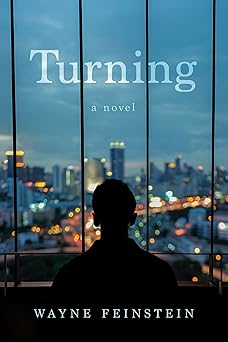
Turning by Wayne Feinstein
What if the loudest room you’ve ever entered was your own memory? Discover how Turning by Wayne Feinstein explores that unexpected question in our full review.
Keep reading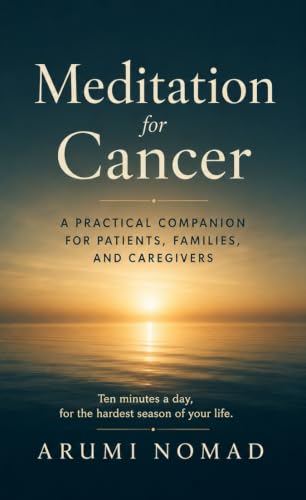
Meditation for Cancer: A Practical Companion for Patients, Families and Caregivers by Arumi Nomad
What if the strongest medicine you carried couldn’t fit inside a bottle? Discover how Meditation for Cancer by Arumi Nomad explores that surprising question in our complete review.
Keep reading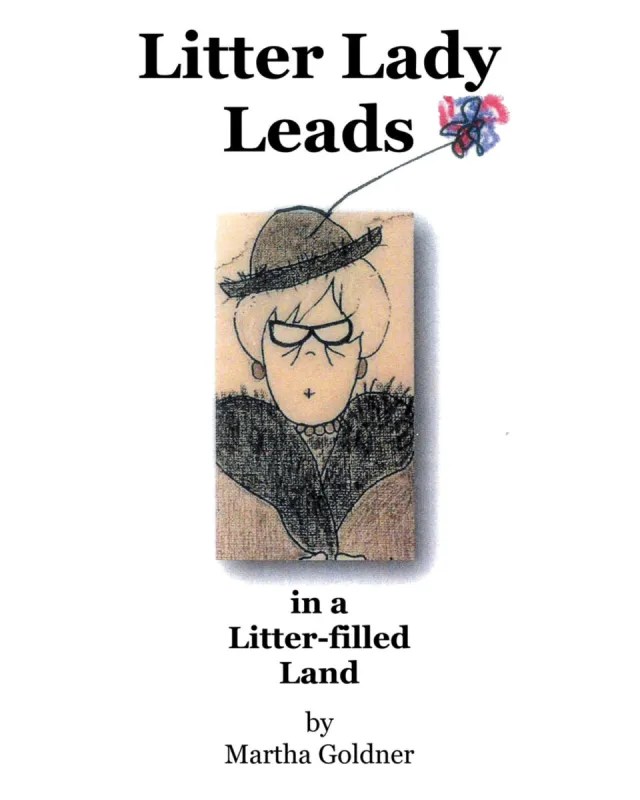
Litter Lady Leads by Martha Goldner
Can one person’s strange habit quietly change an entire neighborhood? Discover why Litter Lady Leads by Martha Goldner asks an unexpected question—and why the full story offers the answer.
Keep reading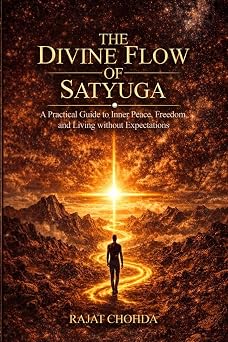
The Divine Flow of Satyuga by Rajat Chohda
What if the heaviest suitcase you carry has no handle and no weight? Discover how The Divine Flow of Satyuga by Rajat Chohda explores that mystery in the full review.
Keep readingWe’d love to hear from you!
What are your thoughts on this piece? Share your insights in the comments below!
- What stood out to you most about this post?
- Have you read a book recently that relates to the themes discussed here?
- What’s your favorite takeaway or reflection from this write-up?
Let’s keep the conversation going—your thoughts make this space richer!
Disclaimer: The content on this site is provided for informational and inspirational purposes only. While we strive for accuracy, the views expressed in reviews, articles, and recommendations are subjective and may not reflect the opinions of all readers.
We receive complimentary copies of all books we review. However, this practice does not compromise the integrity or honesty of our reviews. Every write-up reflects the contributor’s genuine impressions and critical analysis, ensuring transparency and trust with our readers.
For a complete understanding of our practices, please refer to our full Disclaimer, Privacy Policy, and Terms of Service. These documents outline how we manage your information, ensure transparency, and uphold your rights as a user.
To request for a review, to nominate your favorite book for an award, or for more details about our awards, click here.
Other Stories
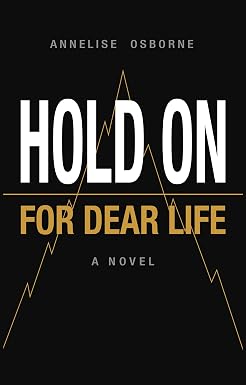
Hold On for Dear Life by Annelise Osborne
What if the greatest investment you ever made wasn’t money but trust? Discover how Hold On for Dear Life by Annelise Osborne explores that question in the review below.

Alder Brandon: Exploring Imagination, Storytelling, and the Craft of Building Fictional Worlds
Can a walk around the block solve a story no outline can? Discover how one young horror author transforms ideas into fiction by reading this thoughtful interview with Alder Brandon.

Twilla Kay Lamm: Exploring History, Character, and the Search for Truth Through Fiction
Can a childhood paper doll quietly become the beginning of a writing career? Discover how imagination, history, and life experience came together by reading this interview with Twilla Kay Lamm.


