
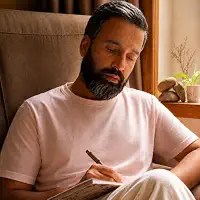
How do personal experiences become ideas that readers can reflect upon in their own lives? In this interview, author Rajat Chohda discusses the journey behind his work as a writer and the development of his ideas on awareness, personal growth, and conscious living. His book, The Divine Flow of Satyuga: Awakening Human Consciousness, has been catalogued by academic philosophy repositories, and his public professional profile notes that it was named a Finalist in the 2026 International Book Awards in the Spirituality: General category. Readers are invited to learn about the experiences, observations, and milestones that have shaped his work, while giving him the opportunity to describe his own journey in his own words.
Rajat, thank you for taking the time to speak with us. To begin, could you introduce yourself to our readers, tell us about your background, what you do today, and what continues to inspire your work?
I am Rajat Chohda, an entrepreneur and author from Pathankot, Punjab, India. I grew up in a joint family with my parents, uncle, siblings and cousins. We were not a wealthy family, so I saw the struggles of life quite early.
As a child, I was never very interested in studies, television or video games. I spent most of my time outside—playing, flying kites, observing nature and asking questions. I was curious about practical things: why the stars twinkle, how nature works, how things happen and why people behave in certain ways.
I also grew up in a Hindu religious family. I respected my family’s beliefs, but I could not personally follow a particular God or religion because I had many simple questions and could not find answers that satisfied me. I didn’t want to believe something just because I had been told to believe it. That made me start exploring life in my own way.
My journey then took me through many different paths. I struggled with my +2 Non-Medical studies, later studied fashion technology at Lovely Professional University, and eventually went to Italy for my master’s at the University of Bologna. I studied and worked in different countries, including France and Bulgaria, and later lived in the Netherlands, where I started my own company.
Today, I continue my entrepreneurial work while writing and exploring questions about life, consciousness and human behaviour. What continues to inspire me is very simple: people, nature and everyday life. I don’t like seeing people live unhappy lives when there may be another way of looking at life.
Your writing encourages readers to pause and reflect on everyday life. Looking back, what experiences first led you to explore these ideas, and how did they eventually develop into your current work?
My curiosity started very early. I was always trying to understand things rather than simply accept them. Religion gave me some ideas, science gave me other ways of understanding things, and my own experiences kept giving me more questions.
Then life itself became my teacher.
I failed my +2 Non-Medical studies, changed direction, studied fashion technology, went to Italy, worked different jobs, studied in France and Bulgaria, got married, built a company and eventually lived in the Netherlands. Each stage showed me a different side of life.
One experience changed my understanding of success in a big way. While living in the Netherlands, I had many things people normally consider a good life—money, comfort, work and freedom. But during video calls with my family in India, I could see sadness on their faces. They had worked hard for me and helped me reach that life, but they were not enjoying life in the same way.
I remember thinking, what is the point of having a good life if the people I love are not happy?
I decided to return and spend more time with my family. Later, the thought became bigger. I started thinking that if I could understand something that helped me live better, why should I keep it only for myself?
That question eventually became part of the reason I wrote the book.
Many authors describe a defining moment that encouraged them to write their first major book. What was that moment for you, and how did it influence your approach to sharing your ideas?
There wasn’t one defining moment. I had been thinking about these subjects for many years before I actually completed the book.
I always felt that I would write something, but I was waiting for my own understanding to become clearer. I didn’t want to write simply because I had some interesting thoughts. I wanted to experience life first and see whether my ideas actually worked.
That became important after I returned to India. I learned that understanding something emotionally is not the same as living it.
You can know that family is important and still not give them enough time. You can know that expectations create problems and still expect people to behave the way you want. You can understand the importance of peace and still react to every small situation.
So I started changing my own patterns instead of only thinking about them.
The book came out of that process. I also decided that I didn’t want to write a book that tells people what they must believe. I wanted to share my experiences and observations and allow readers to decide what is useful for them.
Your work discusses awareness, balance, and personal reflection in practical terms. When writing, how do you translate broad philosophical concepts into ideas that readers can apply in ordinary life?
I keep bringing a big idea back to situations that we all experience.
Take expectations. It is easy to talk about expectations as a philosophical concept, but everyone knows what happens when a person doesn’t behave the way we expected. We become angry, disappointed or hurt.
The same thing happens with freedom. I don’t think freedom simply means doing whatever we want. If our freedom causes unnecessary harm to someone else, then we also need to think about our responsibility.
Relationships are another example. We can love someone deeply without believing that we own them or have the right to control their choices.
These are not ideas that require a special place or a special lifestyle. They can be practised while working, earning money, having a family, building a business or simply living an ordinary day.
That is what I mean by practical philosophy. The ideas become meaningful when we can actually use them in our daily lives.
Throughout the writing process, were there any insights or perspectives that evolved or surprised you as the manuscript gradually took shape?
The biggest thing I learned was that realisation and practice are two different things.
I had many ideas about how life should be, but writing the book made me look at whether I was actually living those ideas myself.
I realised that being emotional is not enough. You can feel deeply about your family, your relationships or the problems in the world, but feelings alone don’t change your life.
I had to look at my own habits and patterns. I started paying more attention to what I was expecting from people, why certain things affected me, how I reacted to situations and where I was unnecessarily spending my energy.
Slowly, I started living differently.
That was probably the biggest change during the writing process. I stopped seeing the book as something I was writing for other people and started seeing it as something I also had to practise myself.
Readers often bring different life experiences to the same book. What kinds of conversations or reflections do you hope your work encourages among people from diverse backgrounds?
I hope people from different backgrounds can find something useful in the book without feeling that they have to change their religion or identity.
I am interested in questions that belong to everyone. What makes us happy? Why do we suffer? How much do we really need? Why do we expect so much from other people? What does freedom actually mean?
The answers don’t have to be the same for everyone.
In fact, I am comfortable with someone disagreeing with me. I don’t want people to follow my ideas blindly. If a chapter makes someone stop and say, “I don’t agree with this,” but then they start thinking more deeply about their own life, the book has still done something useful.
For me, the important thing is respect. We can have different beliefs and still live peacefully together. The book is therefore not meant to create another belief system. It is about awareness, balance and respect for life.
Every creative journey includes milestones that become meaningful for different reasons. Could you share some of the recognitions, achievements, or moments that have stood out to you so far, and what each has meant personally and professionally?
Being named a Finalist in the 2026 International Book Awards in the Spirituality: General category has been an important milestone for me. It was encouraging to see recognition for something that began as a very personal journey.
But I don’t measure the success of the book only through awards.
For me, one of the most meaningful things would be seeing the ideas reach people who genuinely need them. If someone reads something in the book and starts looking at a relationship, a problem or their own life differently, that means more to me than a number.
I also have a larger goal for the book. I want people to be able to read it in their own language. My intention is to make the ideas accessible to as many people as possible, rather than keeping the book limited to one language or one audience.
Writing about personal growth often requires balancing conviction with openness to new ideas. How do you continue learning while developing your own perspectives?
My life has already changed my mind many times, so I don’t feel the need to hold on tightly to every idea I have.
I have changed my field of study, moved between countries, experienced very different lifestyles, changed my understanding of success and developed a different understanding of relationships and family.
I still listen to people who think differently from me. I read, travel, observe nature and learn from ordinary experiences.
Sometimes another person’s way of looking at something can show you something you had completely missed.
I think a person can have strong principles without believing that they know everything. For me, staying open is part of staying alive and curious.
Beyond writing, what habits, routines, or experiences help you remain curious and continue growing as both a person and an author?
I don’t follow a complicated routine. I think curiosity is more important than a fixed routine.
I observe a lot. I watch people, relationships, nature and my own reactions. Travelling has also played a big role in my life because every place shows you another way of living.
Living abroad taught me that what feels normal in one place may look completely different somewhere else. That made me less attached to the idea that there is only one correct way to live.
My work as an entrepreneur also keeps me grounded. Ideas are easy to discuss, but when you actually build something, deal with people and take responsibility for decisions, reality gives you a very different kind of education.
And I value quiet time. Sometimes stepping away from constant information gives you more clarity than consuming more information.
As readers continue discovering your work, what kinds of questions or discussions would you most like your books to inspire in the years ahead?
I would like people to question the idea of what a successful life is supposed to look like.
Do we really need everything we are chasing? Why do we compare ourselves? Why do we expect other people to behave according to our wishes? Can we enjoy money and comfort without making them the purpose of our entire life? Can we love people without trying to control them?
I would also like people to ask whether change always has to begin somewhere outside us.
We often want our family, society, government or the world to change. But what happens if we first look at the way we ourselves live?
I don’t expect one book to solve these questions. I would simply like it to start more honest conversations about them.
If you were to write your own bio, what would you say? And as your work evolves, what kind of impact do you hope it has?
Rajat Chohda is an entrepreneur and author from India exploring consciousness, human behaviour, relationships, freedom and practical ways of living with greater peace and awareness. His journey has taken him from growing up in a joint family in Punjab to studying and working across several countries, building his own ventures and eventually returning to a deeper understanding of family, life and purpose.
His book, The Divine Flow of Satyuga, presents Satyuga not simply as a period in history, but as a state of consciousness that begins within the individual. It explores awareness, truth, balance, freedom, relationships and respect for life as parts of everyday living.
I don’t want my work to tell people what to believe. I want it to make them stop and look at their own lives.
If someone becomes a little happier, more peaceful, more aware or kinder to the people around them because of something I wrote, that would be meaningful to me.
Ultimately, I want to share what I have learned from my own journey. I don’t like seeing people live unhappy lives when they may have another choice. If my work can help even a few people understand themselves and live a little better, I will feel that it was worth writing.
Related
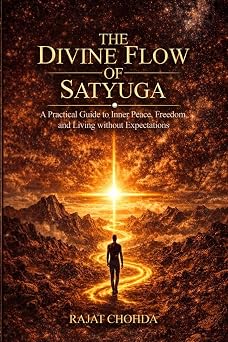
The Divine Flow of Satyuga by Rajat Chohda
What if the heaviest suitcase you carry has no handle and no weight? Discover how The Divine Flow of Satyuga by Rajat Chohda explores that mystery in the full review.
Keep readingMore Posts Like This

Alder Brandon: Exploring Imagination, Storytelling, and the Craft of Building Fictional Worlds
Can a walk around the block solve a story no outline can? Discover how one young horror author transforms ideas into fiction by reading this thoughtful interview with Alder Brandon.
Keep reading
Twilla Kay Lamm: Exploring History, Character, and the Search for Truth Through Fiction
Can a childhood paper doll quietly become the beginning of a writing career? Discover how imagination, history, and life experience came together by reading this interview with Twilla Kay Lamm.
Keep reading
David A. Porter: Mapping Memory, Place, and the Moments That Stay With Us
David A. Porter is a poet and writer whose published work has appeared in a range of literary journals and reviews. Publicly available biographical information indicates that he holds an MFA in Creative Writing from San Francisco State University and has contributed to literary publishing as a co-founder and managing editor of a literary annual.…
Keep reading
Reimagining Life Through Words and Service with Debra J. White
What happens when life’s hardest blows lead to unexpected purpose? Discover how Debra turned trauma, recovery, and rescued animals into writing and volunteer work that inspires resilience and connection.
Keep reading
Learning from the Land: A Conversation with Cathryn Wellner on Life’s Unexpected Lessons
Ever wondered what it’s like to raise sheep, pigs, and camels while learning life lessons along the way? Cathryn Wellner shares her unexpected journey, and readers will discover how she adapted and thrived.
Keep readingWe’d love to hear from you!
What are your thoughts on this piece? Share your insights in the comments below!
- What stood out to you most about this post?
- Have you read a book recently that relates to the themes discussed here?
- What’s your favorite takeaway or reflection from this write-up?
Let’s keep the conversation going—your thoughts make this space richer!
Disclaimer: The content on this site is provided for informational and inspirational purposes only. While we strive for accuracy, the views expressed in reviews, articles, and recommendations are subjective and may not reflect the opinions of all readers.
We receive complimentary copies of all books we review. However, this practice does not compromise the integrity or honesty of our reviews. Every write-up reflects the contributor’s genuine impressions and critical analysis, ensuring transparency and trust with our readers.
For a complete understanding of our practices, please refer to our full Disclaimer, Privacy Policy, and Terms of Service. These documents outline how we manage your information, ensure transparency, and uphold your rights as a user.
To request for a review, to nominate your favorite book for an award, or for more details about our awards, click here.
Other Stories
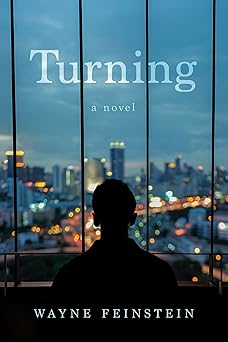
Turning by Wayne Feinstein
What if the loudest room you’ve ever entered was your own memory? Discover how Turning by Wayne Feinstein explores that unexpected question in our full review.
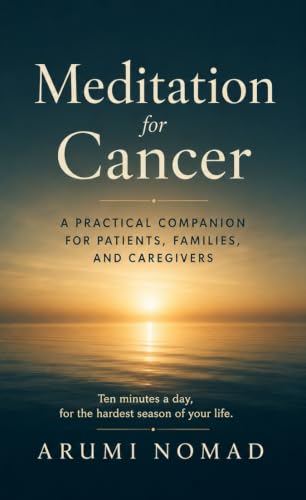
Meditation for Cancer: A Practical Companion for Patients, Families and Caregivers by Arumi Nomad
What if the strongest medicine you carried couldn’t fit inside a bottle? Discover how Meditation for Cancer by Arumi Nomad explores that surprising question in our complete review.
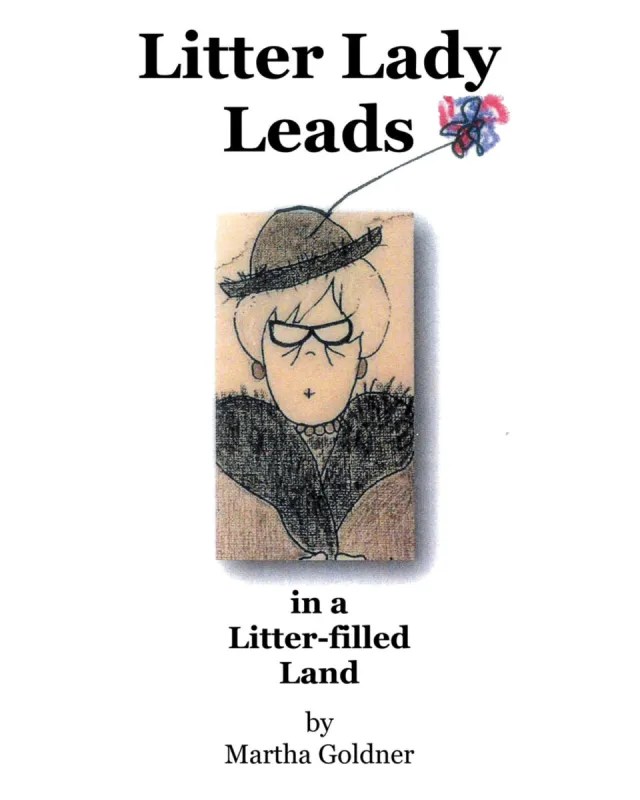
Litter Lady Leads by Martha Goldner
Can one person’s strange habit quietly change an entire neighborhood? Discover why Litter Lady Leads by Martha Goldner asks an unexpected question—and why the full story offers the answer.


