
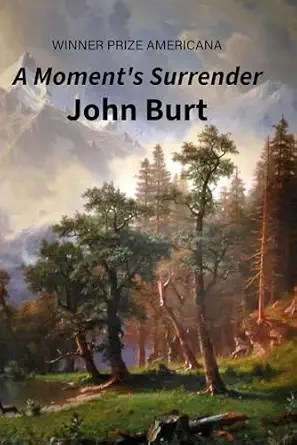
What if the hardest person to forgive is the version of yourself you meet in someone else’s grief? A Moment’s Surrender by John Burt explores it; read the full write-up.
Book title and author
A Moment’s Surrender by John Burt
Genre
Literary Fiction
Sub-genres
- Psychological Fiction
- Literary Mystery
- Relationship Drama
- Contemporary Literary Drama
- Historical Fiction
- Grief and Bereavement Fiction
- Romantic Drama
Themes
- Love
- Friendship
- Grief
- Loyalty
- Betrayal
- Forgiveness
- Guilt
- Mortality
- Caregiving
- Illness
- Parenthood
- Responsibility
- Self-knowledge
- Memory
- Moral uncertainty
- Human relationships
- The relationship between literature and lived experience
Age: Adult readers; not intended as children’s or middle-grade fiction.
Review
What happens when the person who knows your past best is also the person whose absence forces you to confront it? A Moment’s Surrender turns that question into a literary mystery about friendship, grief, love, and the stories people tell themselves when the truth is difficult to bear.
John Burt’s novel opens with Paul Bishop, a Reno writing instructor, being questioned by police about the murder of his former best friend, poet Tom Corbin. Paul already knows something the police and Corbin’s widow, Susan, do not: Tom had been preparing to leave Susan for Rachel Lake, a woman connected to both men’s past. From that starting point, the novel develops less as a conventional whodunit than as an examination of what happens after the central crime, when people must continue living with incomplete knowledge, conflicting loyalties, and decisions that cannot be undone. The book’s central premise accurately captures its web of grief, secrecy, betrayal, and unresolved relationships.
One of the book’s strongest qualities is its attention to the inner life. Paul is not presented as a conventional hero. He is intelligent, self-aware, hesitant, sometimes evasive, and deeply conscious of his own failures. That makes his choices more interesting than simple right-versus-wrong decisions. The novel repeatedly asks a useful human question: when does protecting someone become another form of withholding the truth?
Research on grief supports one of the novel’s central intuitions: bereavement does not follow a single timetable or fixed sequence, and people can experience different emotions at different points in the process. Burt uses this human variability effectively, allowing grief to coexist with affection, resentment, responsibility and even uncertainty.
The setting also does substantial work. Reno, Riverside, the Sierra Nevada, university offices, homes, hospitals, courthouses, and other Southern California locations give the story a physical world in which private conflicts unfold. The period setting, around 1980, adds another layer: communication is slower, academic life feels different, and characters rely heavily on conversation, telephone calls, observation, and memory. The result is a story deliberately removed from the speed of contemporary life.
Burt also makes literature part of the novel’s structure rather than merely its scenery. Paul and Tom are shaped by poetry, criticism, teaching, ambition, and arguments about what art can reveal. These passages will appeal particularly to readers who enjoy fiction that treats ideas as part of character development rather than decoration. At times, however, the intellectual density asks for patience. Readers seeking a fast thriller may find the novel more contemplative than suspense-driven.
The book’s treatment of illness, caregiving, mortality, forgiveness, and parenthood gives the relationships consequences beyond romantic rivalry. Susan’s experience as both physician and patient adds another perspective on vulnerability and care, while Jack provides a reminder that adult choices affect people who did not make them.
Like literary fiction, it recognizes that facts can be settled while meaning, responsibility, and forgiveness remain unsettled.
A Moment’s Surrender is for readers who enjoy psychologically detailed literary fiction, complicated relationships, moral uncertainty, and prose that expects attention. It is less suited to readers looking for a straightforward murder mystery, a light romance, or a plot driven primarily by action. Its greatest achievement is not solving every human contradiction, but showing why some contradictions remain meaningful even after the facts are known.
Content Warning
Content Warning: Adult sexual content and intimate situations; marital infidelity; murder and stabbing; terminal cancer and dying; suicidal thoughts and planning; alcohol intoxication; profanity; smoking/tobacco use; grief and emotional distress; and references to religion and period political events.
Other Stories
Book Review: Birds Beyond Reach by Dwayne Ulliac
Can chasing a bird teach someone more about love than chasing a dream? In Dwayne Ulliac’s Birds Beyond Reach, read the full write-up to discover why this strange question matters.
Keep reading
Book Review of In My Mother’s Footsteps: Poems of Love & Loss by Rachel Peck and Barbara Dickenson
Can a jam tart, a snowflake, or an old chair remember someone better than we can? In In My Mother’s Footsteps by Rachel Peck, read the review to find out.
Keep reading
Book Review: Welcome to Mapleberg by Tye Burroughs
What if a town became so orderly that finding the truth became the real crime? Welcome to Mapleberg by Tye Burroughs explores that question; read the full review to discover.
Keep reading
Book Review: Tesler & the Burning Bush by Mark W. Sasse
What happens when the richest man alive decides that civilization is the problem? Tesler & the Burning Bush asks an unsettling question readers can explore by reading the full review.
Keep reading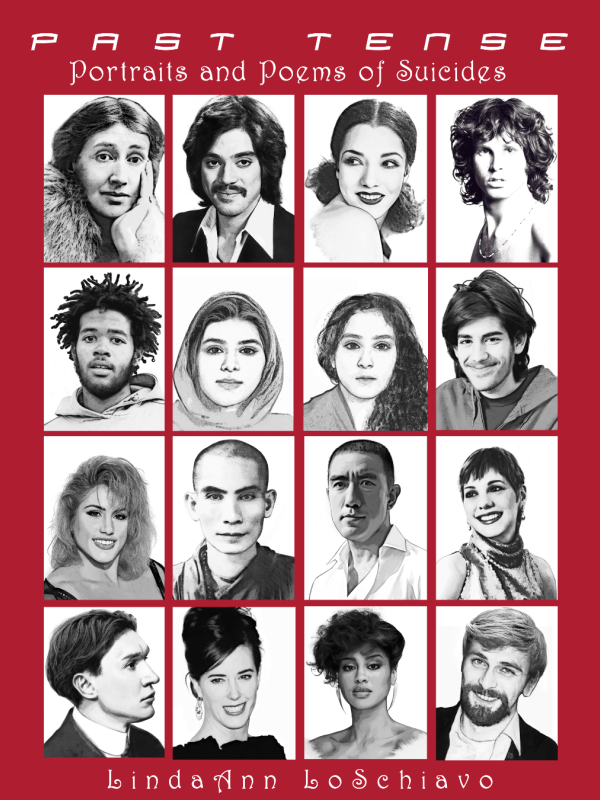
Past Tense by LindaAnn LoSchiavo
Can twenty-three different poetic forms make silence speak without pretending to know everything? Past Tense by LindaAnn LoSchiavo invites readers to investigate through poetry together.
Keep readingWe’d love to hear from you!
What are your thoughts on this piece? Share your insights in the comments below!
- What stood out to you most about this post?
- Have you read a book recently that relates to the themes discussed here?
- What’s your favorite takeaway or reflection from this write-up?
Let’s keep the conversation going—your thoughts make this space richer!
Disclaimer: The content on this site is provided for informational and inspirational purposes only. While we strive for accuracy, the views expressed in reviews, articles, and recommendations are subjective and may not reflect the opinions of all readers.
We receive complimentary copies of all books we review. However, this practice does not compromise the integrity or honesty of our reviews. Every write-up reflects the contributor’s genuine impressions and critical analysis, ensuring transparency and trust with our readers.
For a complete understanding of our practices, please refer to our full Disclaimer, Privacy Policy, and Terms of Service. These documents outline how we manage your information, ensure transparency, and uphold your rights as a user.
To request for a review, to nominate your favorite book for an award, or for more details about our awards, click here.
Other Stories

Rajat Chohda: Exploring Conscious Living Through Reflection and Everyday Practice
Can a question about an ordinary family conversation change how you define success? Rajat Chohda explores this journey through his experiences, ideas, and writing; read the full interview to discover.
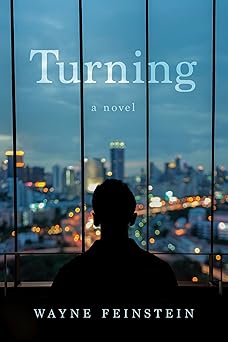
Turning by Wayne Feinstein
What if the loudest room you’ve ever entered was your own memory? Discover how Turning by Wayne Feinstein explores that unexpected question in our full review.
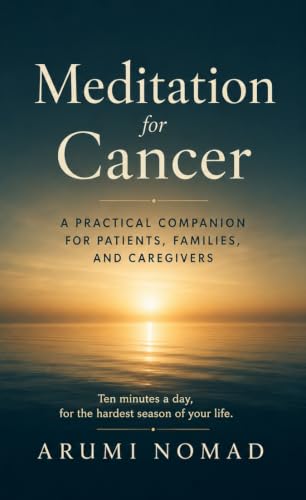
Meditation for Cancer: A Practical Companion for Patients, Families and Caregivers by Arumi Nomad
What if the strongest medicine you carried couldn’t fit inside a bottle? Discover how Meditation for Cancer by Arumi Nomad explores that surprising question in our complete review.


