
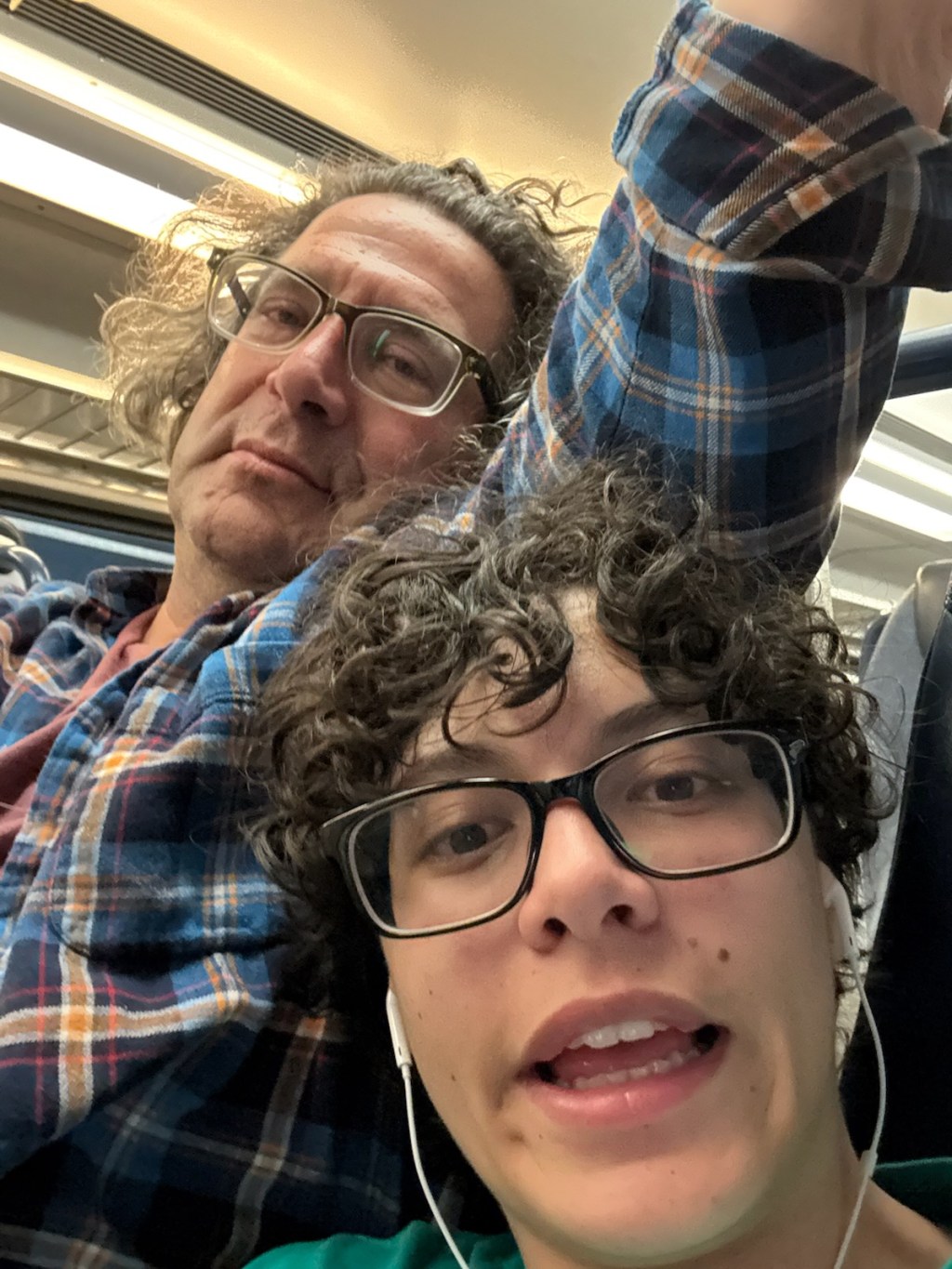
David A. Porter is a poet and writer whose published work has appeared in a range of literary journals and reviews. Publicly available biographical information indicates that he holds an MFA in Creative Writing from San Francisco State University and has contributed to literary publishing as a co-founder and managing editor of a literary annual. His poetry collection Ghost Season brings together poems shaped by experiences across different places, relationships, and stages of life, exploring themes such as memory, family, travel, time, and belonging. In this conversation, Porter reflects on the experiences that inform his creative work, the role of observation in poetry, and the ways personal moments can resonate with readers from many different backgrounds. The discussion invites him to share his journey, creative process, and aspirations in his own words.
David, thank you for taking the time to speak with us. To begin, could you introduce yourself to our readers, tell us a little about your background, what you do, and what you hope your work contributes to the world?
Thanks for this opportunity and for your interest in my work.
I’m New Jersey born and bred (and proud of it). I’ve lived in New York for 13 years, with lengthy stays in San Francisco and Nicosia, Cyprus, where my wife, Antigone, is from and where my son, Leontios, was born. Right now, I’m a substitute teacher at a public K–5 school in Harlem.
I’m a lifelong English major, from high school through my MA in English and my MFA in Creative Writing, both at San Francisco State University (SFSU), and I taught undergraduate short fiction at SFSU during the final year of my MFA. In addition to Ghost Season, I’ve written an as-yet-unpublished collection of stories, Protracted Adolescence, and I’m working on a nonfiction book about music, 20,000 Things I Love, and a memoir about surfing, Pages from a Floating World. I also wrote a comic strip, Pretty Sure, from 1999 until 2009, and I have one or two new strips in the hopper.
As for what I hope my work contributes to the world…it’s hard to think of my writing on such a scale. I remember sitting on the N Judah in San Francisco on my way to work and reading something, maybe J.P. Donleavy’s The Ginger Man, and I loved it so much I wanted to just squeeze the book. I want someone to read my poems or stories and love them so much it makes them a bit giddy.
I hope my work reminds anyone who reads it of what a joy it is to read something great and perhaps inspires them to hunt down the writers whose work I reference throughout my own. I also hope it inspires other writers to keep going, to try even harder. We have miles to go before we sleep.
Ghost Season brings together poems connected to places, memories, and relationships. What first inspired you to shape these experiences into a collection?
While I was living in Cyprus, I think I received an email about a chapbook competition, and I decided to go through my poems and see if I had enough of them to compile a chapbook, and I did. That was well over 10 years ago, and I kept adding new poems and revising the poems I’d already written until, around fall 2023, I had about 60 pages of poems, which I titled Ghost Season and began submitting to contests and publishers in earnest.
My writing changed around the winter of 2000, when I finished one of the poems in Ghost Season, “Sometimes I Slip Out of Time.” It was one of those poems that seems to arrive in its entirety, which, as I think any writer will tell you, is the drug to obviate all other drugs. It felt like a magic trick, like something whispered to me, and suddenly I was a different writer than I’d been. It was more abstract than anything I’d written before, more widescreen but delicate, and there was wordplay and a few puns, also something new for me. And the last stanza is arranged thusly:
This is how it feels to be a fairy princess.
This is how you turn and
flutter
down.
So the words on the page actually “turn and flutter down.” I hadn’t done anything like this before and had only seen lines arranged like this in a few E.E. Cummings poems, maybe in William Carlos Williams’s “The Red Wheelbarrow” and “This Is Just to Say.”
Only two of the poems in Ghost Season, “Night Mission, Everglades” and “Samara Sleeping,” were written before “Sometimes I Slip Out of Time,” so the collection almost entirely comprises the best poems I wrote between that winter and the fall of 2023. The keepers. I hope it doesn’t take me 23 years to write the next one (working title: Hideous Splendor).
Many readers associate certain memories with specific locations. How have travel, geography, and everyday surroundings influenced the way you observe and write about life?
Almost every place, home or abroad, is tied to someone I love. I love, love, love to travel, but I’m also what my best man describes as a “stay-at-home,” so I have a lot of poems that take place at home—poems about Antigone, about Leo, and about my everyday surroundings.
When I do travel, I don’t need to be anywhere exotic or exquisite to be struck by something. One of the poems in Ghost Season, “Bakersfield,” takes place at a gas station off Interstate 5 in Bakersfield, California. Another, “Pocono Outlet Mall, Route 80 West,” was written, yes, on Route 80 West in Pennsylvania, pointed toward the Poconos. I wrote a lot of the lines that would become the first draft in my journal while sitting in the passenger seat, with my best man driving us to visit his mom for Christmas in December 1999.
“Torch Town Eulogy” entered my atmosphere one evening during a routine trip to IKEA in Nicosia, Cyprus. We passed an empty lot, a lone streetlight on the sidewalk, and by the time we got to IKEA the poem was about to “bubble over.” I didn’t have a journal or a pen with me, so I wrote the first draft on an IKEA shopping list with one of those miniature golf pencils they give you. “Torch Town Eulogy” is about how broke we were at the time. I have no idea what our finances had to do with an empty lot and a streetlight, though maybe that tableau was the perfect metaphor for our pennilessness.
As for everyday surroundings, can this include weather? Each of my poems references a season, either directly or obliquely, and Ghost Season is organized accordingly—it begins in/with winter and ends in/with autumn. I like the texture this gives my poems, and I think it helps give the reader some sort of purchase.
Throughout your creative journey, what experiences have most shaped your perspective as a writer?
This is a hard question for me, so I’m providing a list of categories of “experiences”—used loosely here and not limited to epiphanies or specific incidents—that have had the most significant impact on my writing.
Childhood and Adolescence
I’ve been writing poetry since seventh grade. I had a fantastic English teacher, John Rogers, who inspired me and pushed me along. This was back in 1980, and I haven’t stopped writing since. He turned the first crank, and the jalopy has been rolling along ever since. Forty-five years later, we’re still in touch, and I still share my work with him.
My childhood and adolescence were pretty miserable—more than some people’s and less than others’. I was sad and self-pitying, and one of the ways I managed this was to try to write it all down. So I sat on my bed, listened to a lot of Springsteen, and filled a lot of spiral notebooks. I was without any measurable self-confidence, and I often felt awkward, beaten down, exposed, and insufficient. When I wrote, I felt better, and it’s the same to this day. I always feel better when I have a pen in my hand and paper in front of me. This is from an essay I submitted to a contest before COVID:
“I imagine there are people who feel they disappear when they write: they slip out of time, become someone else, paper imaginary walls…when I write, it’s as if I reappear, remember myself, become purposeful; vaporous, I become solid again. My scattered stars align in distinct constellations and hold their place in the sky. I feel a power, a nearly limitless freedom, the way a surfer must when he or she takes off down the face of a wave. I am liberated. I can, for a short while, refrain from tallying my sins. This is the version of myself I like most. I can see it all from here.”
Cyclothymia
I’ve been in and out of therapy and on and off medication since I was in second grade, when my parents were going through a rather difficult period in their marriage and considering divorce. The first psychologist I ever saw was their couples therapist.
In late 2016, after a breakdown, I was diagnosed with cyclothymia, which is what bipolar disorder II might be if it could get an Ozempic prescription. While I don’t have manic episodes, my moods are either crests or troughs. I also experience severe depressions, paralytic rages, and enough self-loathing—and self-pity—to choke a horse. My illness is a sort of clothesline on which almost all of my experiences hang. Writing is a refuge. Relief. From the aforementioned essay:
“If the purpose of meditation is to still oneself, to pause and submerge in one’s private epipelagic zone, then writing is how I do it: everything stops spinning, something alights in my upturned palms, from the mud the mighty lotus blossoms…I still write the lion’s share of my first drafts by hand, and this is part of the ritual—holding the pen, feeling the paper beneath the knuckles of my right pinky, watching the page fill with my illegible handwriting…it stills me, like watching snow fill the street. It’s a feathery quiet. It gives me something to do with my hands.”
Writing, for me, is always a series of steps toward order, which, in the midst of a lifelong mood disorder, is something I crave. Setting off from the first scratched notes, I travel to the final clean, flat, white, typewritten pages. The process calms me, makes me feel productive, under control, and like my intellect is operating at full horsepower. I imagine it’s similar for painters and photographers—this progression from chaos to a finished piece inside a frame.
Getting Older
I’m 58 years old and closer in age to King Lear than to Prince Hamlet. My knees are shot. I’m nearer the end than the beginning, and that this statement is a cliché doesn’t make it any less true or any less profound. I don’t think about it all the time, but it’s always there, sometimes making itself known the way a record ends and you hear that crackle and fuzz, then the pop and click as the needle is lifted from the vinyl and the phonograph arm returns to the cradle.
If I hear about an 82-year-old surfer, I think, “Okay, I’ve got 24 more years.” It’s mortality math, counting how much time is left in the till. Springsteen said in an interview that at some point in your life you realize you are “walking alongside your mortal self.” Whatever I write now, time is the panting wolf at my door. My entire perspective now resides within my very mortal coil. I probably won’t be here for more than three more decades, tops. This awareness makes everything heavier with either dread, significance, sweetness, or all of the above. It washes through everything I write.
Graduate School
Getting my MA and my MFA were crucial to my perspective and my development as a writer. I know people often disparage graduate writing programs, but I loved being in graduate school for writing. Workshops helped me learn how to edit and how to do it generously, and I loved teaching. It helped me hone a very important skill: helping a writer improve a story without making him or her feel like a failure or hurting his or her feelings—a tender art, for sure.
I also made lifelong friends at SFSU—people whom I love very much, great writers who, as editors and sometimes cheerleaders, help me get my work across the finish line.
I haven’t read any Ezra Pound, but I had an instructor at SFSU, Molly Giles, who’s a great writer, and she used to quote Pound in our workshops: “Make it new.” This has been a guiding principle for me. I always fight for a fresher way to say something, to avoid using tired and worn expressions and clichés. Graduate school was also where I learned to use strong, descriptive verbs and how important physical gesture is whenever you’re writing dialogue. These have all become elements of my style.
When developing a poem, what usually comes first for you: an image, a memory, a question, a place, or something else entirely?
Most of the above? It’s usually a memory or a place, a feeling or a mood, and certainly images.
“Surguesa,” the only surfing poem in the collection, first came into being when I was at a friend’s house in the mountains north of Limassol, Cyprus, and her mom had a back issue of the Australian Marie Claire. The cover model was a beautiful woman—an architect, I think—who’d been burned over her entire body in a fire. Later on, I thought of something a friend of mine had said: “You can tell the beauty of Rome by its ruins,” which I think is an adage that’s been with us for a few millennia. Somehow the quote and this woman found themselves entwined in my journal.
“Lovers over Strovolos,” a poem I wrote about homesickness, kicked off with Chagall’s Over the Town (though I’m not sure what brought it to mind), a painting of Chagall and his wife and true love, Bella, flying over their hometown of Vitebsk in what is today Belarus. I wrote my first notes for another Ghost Season poem, “Transfiguration,” on a bench in the Vatican Museum after I saw the Raphael painting.
Some poems are ways for me to tell a story I can’t tell any other way. “Ballerina” is about a woman begging in Times Square Station to whom I gave a few Hershey’s Miniatures (New York provides many opportunities for this sort of benevolence, unfortunately), while “Underwater” is about an afternoon when Leo, who had just turned two, almost drowned in the deep end of a swimming pool in Cyprus. I wasn’t keeping a close enough eye on him, and I still beat myself up about it and discuss it with my psychiatrist. Maybe trauma comes first sometimes?
Some poems do arrive on account of “something else entirely.” The year before COVID, I was working as a content coordinator at the MTA, and one rainy October evening I was on an uptown 2 train heading home, and I wrote this down: “I am on a subway on a rainy October evening (an uptown 2, if you must know),” and I had a good chunk of the first draft of “For M” by the time I got off at 72nd Street (we lived on 71st).
“For M” is written for and to my first love, whose heart I pretty much shoved through a woodchipper. A few times. The poem is an abbreviated way of telling her I never stopped writing (she was my biggest fan) and that I still think of her with love (and with guilt and regret). I doubt she’ll ever read it, but it’s out there. And the entire poem, with every other line in parentheses, is an E.E. Cummings reference. Why that night on that train? No idea, but I guess that’s the magic. What can you do but welcome it and be grateful for it?
Several poems focus on ordinary moments that carry lasting significance. What have you learned about finding meaning in experiences that others might overlook?
I’ll lean on Springsteen again here, who once said something about how you can be toasting a slice of bread in your kitchen and, all of a sudden, it becomes a moment of grace.
So a poem like “Canyon,” which tells a brief story about a bus ride home with Leo, is a profession of my deep and unyielding love for him, my hope that he’ll hear me telling him I love him long after I’m gone. “The Gift” is a somewhat similar poem, just a simple story about carrying Leo home from a restaurant in Vienna on a damp evening that somehow, for me, was transcendent. It also includes a line, “a quiet I love everywhere descends,” which I pilfered wholesale from E.E. Cummings.
Why is the world so full of this richness? I’m just lucky I see it and feel it, and these moments have lasting significance for me partly because their number, thanks to my age, is dwindling.
I think the evolution of my poetry mirrors my evolution as someone who understands empathy, who feels it. I doubt I could have written poems like “Ballerina” or “The Iron Mask,” which is about a woman begging for food at a ramen place on the Upper West Side during COVID, if I hadn’t gone through what I would describe as a lengthy—perhaps a few decades in duration—“empathy lesson,” if I hadn’t internalized Bob Marley’s aphorism, “when the rain fall/it don’t fall on one man’s house,” as my forties dissolved into my fifties.
For me, empathy means you treat everyone as if they are on equal footing. It’s about cracking some self-deprecating remark and making the cashier at Duane Reade laugh. It’s about giving something of yourself, something sincere, to someone else. Everyone else’s life is as intense and painful and vivid—and perhaps as much of a disaster—as yours is.
Joni Mitchell puts it best in “Refuge of the Roads,” from Hejira, maybe my favorite album of hers:
“heart and humor, and humility, will lighten up your heavy load.”
I wrote “Toll Family Playground, November” while sitting on a bench watching Leo and one of his friends in the Toll Family Playground as a chilly evening blew into Central Park, something a million parents have done a million times. But something about the cold and the darkness and the soft pain in my fingertips reminded me how much I love winter nights. I scratched out the first draft in my pocket journal, quick as blowing out a candle:
“the mist of my breath as I lean over to write this.”
Again, just lucky.
Looking back on your body of work so far, are there milestones, accomplishments, recognitions, or memorable moments that stand out to you, and what do they mean to you personally?
The most significant milestone I can think of, other than the publication of Ghost Season, was when I finally finished my collection of short stories, Protracted Adolescence, maybe in 2022.
I wanted to write stories that evoked the writers I love, like J.P. Donleavy, Frederick Exley, Ernest Hemingway, Philip Roth, and J.D. Salinger—something I felt could, if not stand alongside their work, at least sidle up to them, beer in hand. I wanted to write a book I would love, one I’d be proud of decades after I finished it, and I think I did it.
So finally getting Protracted Adolescence done and dusted was a milestone for me.
Of course, getting anything published anywhere, in print or online, is always a milestone, and I’ve been fortunate enough to be included in some beautiful magazines.
How has your understanding of memory changed through the process of writing and revisiting experiences from different stages of your life?
I’ve been gifted with an excellent memory, even after many years immersed in a lifestyle that should have eroded it.
What I find is that my poems are accurate in terms of what I remember. With my stories, however, having rewritten them so many times, whatever actual events or real people with which they began have been entirely fictionalized and are now unrecognizable.
So my stories, even though they are fictionalized autobiography, are truly fiction, while the poems are, in a sense, nonfiction.
What role do curiosity and observation play in your creative process, and how do you continue to cultivate them?
The curiosity I have is usually about craft and process. Can I put this poem or story together from the stray lines I have in my journal? I almost always know where I’m going, how the poem or story is going to end, but I’m curious to see if I can get there.
There are great writers who start with an idea, a first sentence, a particular character, or an event, and then they write their way to the end, but I can’t do it. That kind of curiosity is about seeing how and where a piece resolves. I always start with the ending.
As for observation, I try not to miss anything, which I think is because I’m preternaturally enthusiastic about things. I want to see everything. I want to hear everything.
Even in my neighborhood, walking to the subway every morning, which I’ve done hundreds of times, I still see if I can find something new on the façades of the buildings. I still stop and listen to a church bell ringing somewhere between St. Nicholas Place and Broadway. And, of course, sitting on the subway is a kind of ecstasy of observation.
My dear friend and editor, Dan Coshnear, the author of three collections of what I would describe as classic American short fiction—Jobs and Other Preoccupations, Occupy, and Separation Anxiety—said this about my poetry:
“These poems are you headed home after work, after the gym on the IRT, weary and wildly alive, paying full attention like a wide-open shutter to the accidents of beauty.”
The pen is a camera. The better and more specific the observations you thread through your work, the more cinematic it will be.
And reading is cinema! We imagine what Holden Caulfield looks like. We imagine Ginsberg’s apartment in “Fourth Floor, Dawn, Up All Night Writing Letters.” We see Giovanni’s room.
To do this, you have to move from observation to specific details. This is how the immersion of the reader works: your descriptions of faces and clothing, of gait and gesture, the music playing in the living room, the red-and-white striped surfboard snapped in half and tossed on the beach, sunset gilding the benches along the boardwalk. You have to capture all of this so your reader can hear it, feel it, see it, smell it, and taste it. The devil’s always in the details.
For readers who may be exploring contemporary poetry for the first time, what do you hope they discover through Ghost Season?
That poetry doesn’t have to be convoluted, highfalutin, inaccessible, or smug. That it often just feels like someone telling a story, that it often sounds like song lyrics. That poetry can be beautiful and profound and stirring, and that to experience this beauty and profundity—to be stirred—isn’t hard work at all, that quite often a poem can do to you what a great song does.
That it offers a locus for contemplation and stillness, things this wretched century seems determined to obliterate.
If you were to write your own bio, what would you say? And as your work evolves, what kind of impact do you hope it has?
I have a bio I usually include when I submit work to literary magazines and contests, and it’s the usual dry list of my degrees, where my work has been published, and so on.
I love the bios authors had in the nineteenth and twentieth centuries. I’m thinking maybe Joseph Conrad or Rimbaud—that sort of “served in the merchant marine, introduced surfing to Australia, built the first solar-powered house in the continental United States, taught Hemingway how to box, fought in the Spanish Civil War, invented the frozen margarita…”
Moi? I was a barback, a dishwasher, a pantry chef, and a paralegal. I changed a lot of diapers, ran a few marathons, spent a lot of time in record stores, surfed a lot of small waves on the Jersey Shore. It’s all been rather middle class. Most of my adventures have been on the “low” seas.
Since I read this question, for some reason—perhaps because I’m only a month or so past my fifty-eighth birthday—I keep thinking along the lines of an epigraph or a eulogy rather than a bio, so maybe I’ll just indulge myself:
“David A. Porter was a loving father, husband, and friend. He had an insane obsession with music, and he loved to surf, lift weights, cook, watch movies, read, and sleep late. He loved people and dogs and New York and the Jersey Shore and Greece and the Caribbean and California. He loved cafés and long, rambling conversations and Amtrak and the way, on an airplane, time seems to slow and sound seems muffled. He adored his son and his wife and his friends beyond measure. Whatever he did, he tried his hardest. He took his work and the people he loved very seriously. Himself? Not so much.”
I hope they’re crying all the way up in the nosebleeds.
As for the impact I hope my work has, I hope anyone who reads it just loves it, finds it generous of spirit and lovingly written, that the writing itself is beautiful, that it was worth reading—and worth remembering.
And maybe, here and there, someone might finish one of my poems or stories and say, “Wow.” Maybe even out loud.
Related

Ghost Season by David A. Porter
Have you ever wondered whether a suitcase remembers the places it has been better than the traveler who carried it? David A. Porter’s Ghost Season explores a similar mystery. Read the full review to discover why.
Keep readingMore Posts Like This
Rajat Chohda: Exploring Conscious Living Through Reflection and Everyday Practice
Can a question about an ordinary family conversation change how you define success? Rajat Chohda explores this journey through his experiences, ideas, and writing; read the full interview to discover.
Keep reading
Alder Brandon: Exploring Imagination, Storytelling, and the Craft of Building Fictional Worlds
Can a walk around the block solve a story no outline can? Discover how one young horror author transforms ideas into fiction by reading this thoughtful interview with Alder Brandon.
Keep reading
Twilla Kay Lamm: Exploring History, Character, and the Search for Truth Through Fiction
Can a childhood paper doll quietly become the beginning of a writing career? Discover how imagination, history, and life experience came together by reading this interview with Twilla Kay Lamm.
Keep reading
Reimagining Life Through Words and Service with Debra J. White
What happens when life’s hardest blows lead to unexpected purpose? Discover how Debra turned trauma, recovery, and rescued animals into writing and volunteer work that inspires resilience and connection.
Keep reading
Learning from the Land: A Conversation with Cathryn Wellner on Life’s Unexpected Lessons
Ever wondered what it’s like to raise sheep, pigs, and camels while learning life lessons along the way? Cathryn Wellner shares her unexpected journey, and readers will discover how she adapted and thrived.
Keep readingWe’d love to hear from you!
What are your thoughts on this piece? Share your insights in the comments below!
- What stood out to you most about this post?
- Have you read a book recently that relates to the themes discussed here?
- What’s your favorite takeaway or reflection from this write-up?
Let’s keep the conversation going—your thoughts make this space richer!
Disclaimer: The content on this site is provided for informational and inspirational purposes only. While we strive for accuracy, the views expressed in reviews, articles, and recommendations are subjective and may not reflect the opinions of all readers.
We receive complimentary copies of all books we review. However, this practice does not compromise the integrity or honesty of our reviews. Every write-up reflects the contributor’s genuine impressions and critical analysis, ensuring transparency and trust with our readers.
For a complete understanding of our practices, please refer to our full Disclaimer, Privacy Policy, and Terms of Service. These documents outline how we manage your information, ensure transparency, and uphold your rights as a user.
To request for a review, to nominate your favorite book for an award, or for more details about our awards, click here.
Other Stories
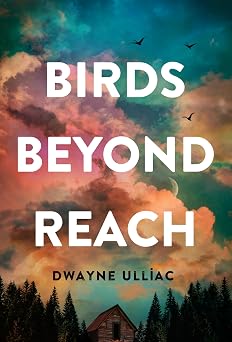
Book Review: Birds Beyond Reach by Dwayne Ulliac
Can chasing a bird teach someone more about love than chasing a dream? In Dwayne Ulliac’s Birds Beyond Reach, read the full write-up to discover why this strange question matters.
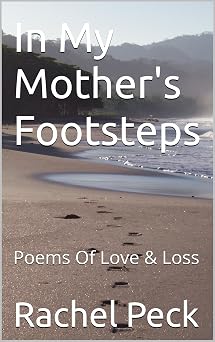
Book Review of In My Mother’s Footsteps: Poems of Love & Loss by Rachel Peck and Barbara Dickenson
Can a jam tart, a snowflake, or an old chair remember someone better than we can? In In My Mother’s Footsteps by Rachel Peck, read the review to find out.
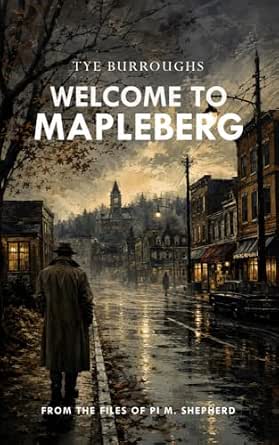
Book Review: Welcome to Mapleberg by Tye Burroughs
What if a town became so orderly that finding the truth became the real crime? Welcome to Mapleberg by Tye Burroughs explores that question; read the full review to discover.


