
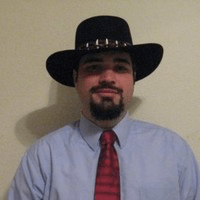
We chat with Dr. Christopher Smithmyer to explore his multifaceted professional journey — from his academic and legal background to his work building organisations at the intersection of law, conflict resolution, business and emerging finance. In this conversation, he will reflect on what motivated him to combine these disciplines, how he tackles the challenges of leadership and innovation, and what ambitions he carries for the future in shaping approaches to legal frameworks and financial transformation.
Editor’s Note: The following interview reflects the personal opinions and experiences of the interviewee, including views on finance, governance, and societal systems.
Chris, thank you for agreeing to speak with us. Could you begin by introducing yourself — sharing your background, what you do today, and what drives your work
As you noted, my name is Dr. Chris Smithmyer. I am the CEO and founder of Black Wallet Limited. Background is always one of those tricky things for me; while I like talking about the past, part of the reason for Black Wallet’s success is keeping our eyes focused on the future, building a new business model where people are given direct access to their wealth to allow them to manage their own lives.
I guess my working life started with working at Church picnics at my home parish. When we were in CCD (Catechism), we would help set up and take down the church hall at events. This is something that we do not see as much of in the world today, where kids are taught that being part of a community is more than just joining it on Reddit or Discord. This instilled us with the values that the world is made by people who do things, even those who find something to do when no one is asking. From there, I moved into the most influential part of my life, working for the family business. I started carrying the tool bag for my father at 12 years old and worked there until I graduated with my bachelor’s degree. Not only did digging ditches teach me that I never wanted to do that again, but watching my grandfather and my father taught me a lot about how to treat people in business. From there I went on to manage an apartment complex, become a professor, and run several businesses including my own mediation firm, a facilitation training company, an international IGO, then worked for Dr. Alli at Brav Online Conflict Management prior to starting Black Wallet.
Education has also been a major part of my life. I was a first-generation college graduate; while my mother had done some college, I was the first one with student loans. So, when I graduated (with good marks), people encouraged me to go on. From my bachelor’s at Penn State, I moved to a Master of Arts in Labor Relations at Indiana University of PA (the top program in the world at the time). I then went to Florida Coast School of Law for my JD (not the top program in the world). While I was there I picked up my MBA at Florida Metropolitan University (which was later bought out by Everest, a Corinthian Company). After that I went to Australia to acquire two LLM degrees (the degree above a JD). Upon returning to the United States, I entered into my Ph.D. in Conflict Analysis and Resolution, picking up two graduate research certificates in Qualitative Research and Online Teaching Methodologies. I have had the privilege of teaching for Penn State University, Florida Metropolitan University, Everest University (several locations), Regent Law School, Doane University, University of South Florida, Arkansas State University, and the University of Arizona over the years. In all of these programs, I focused on the nexus of business and the law.
Your bio references advanced study in law, business and conflict management. What motivated you to pursue that combination of fields, and how have those disciplines influenced your perspective on finance, regulation, and organisational leadership
It is one of those situations where the road wound where it wanted to and I kind of followed the path. When I entered into college, I wanted to be an FBI agent. So I got involved with what was called Administration of Justice at the time. The department chair at Penn State Altoona, where I did my four years, was named Dr. Patricia Loveless. She really helped me realize that working as a government suit may not be the right move for me, and under her mentorship I was captain of the Penn State Altoona Mock Trial, Mediation, and Moot Court teams (undergraduate) and led all to national tournaments, with our highest placement being 3rd place in the nation for the mediation team. She also wrote my recommendation for the master’s program.
When I moved on to graduate programs, I started in an odd place—the geology program at the Indiana University of Pennsylvania. When I started scheduling classes, I realized I didn’t know much and cared even less about geology, so I transferred to labor relations. There I found another mentor, Dr. David Piper. He helped me realize that I had skill in the area of law. This led me to apply to law school and be accepted. When I started law school, I went from being the biggest fish in a small pond to being a fish in a large pond; I didn’t know the size. So I followed suit for the first two years, being a good, scared law student like they expected us to be. That did not work for me. So I returned to how I was already successful: carrying two jobs and studying when I had time. My scores went up. By my 3L year, I had 6 credits remaining, so I picked up the MBA. After that, I went to Australia, focusing on international law, then to Nova. The path led me to the skillset; I just happened to find I was good at it.
What led you to co-found Black Wallet and to engage in projects at the intersection of finance and conflict resolution? What problems were you aiming to address when you conceived these initiatives
I interviewed a gentleman named Marc Zelenca, the founder of Magacoin, for a national newspaper. After the interview, I realized that cryptocurrency could do a lot to change the world, but most people were using it as a toy rather than as a serious endeavor.
In July of 2021, I came up with the idea of KIROS, though it didn’t have a name at the time, looking at how people have been duped into thinking that currency, fiat currency specifically, is an independent variable. It is not! When you work equations using dependent variables as independent variables, the math just does not work right, or rather it does not work honestly.
By November, the idea was fully formed—a digital asset as close to the independent status as possible, one which left the “debt” banking system and moved toward merit and skill, something that allows people to control their own wealth. This comes back to conflict management; currently there is a banking system which is against the people. By managing that conflict, we can make the world a better place.
Running an organisation that claims to span legal expertise, publishing, and financial innovation must pose challenges. What have been the most significant obstacles and how have you navigated them
The greatest challenge in the process is having the correct team. The current team which I have for the company is a dream team. Our CIO, Dr. Remi Alli, has been a Godsend for me; without her, I would not be here today. She manages the information systems of the company (the non-digital ones) and oversees most of the staff. Mr. Joshua Blanchard, our CTO, is one of the best in the industry. Not only does he have some of the top technical knowledge in the space, but also has a moral compass which no one is going to outdo. Mr. Anthony Clifton, our Chief Compliance Officer, was one of my students in whom I saw a strong future. Few people realize the critical eye that is needed in a CCO, and Trony has shown it working for us and for his other position. We were blessed to meet and work with Prof. Carmella Parker from Northeastern Louisiana; she has become the go-to sounding board for the company. As the Chief Legal Officer, she removes the grey to keep things black and white in decision-making.
Hiring great people is not the only challenge; sometimes it is dealing with the “not so great.” We have only had the misfortune of firing two people from the company, but both times they were stressful. The first was a person who was doing “estimates” for the company, thinking that he could pocket the difference between the price and what he quoted them. This led to many angry client calls where they asked, “where did you get that price?” What made it more confusing is that I did not know where they got their price. When everything came to light, he was terminated. The other one was a long-time friend who took money from the company and never paid it back. There were also some issues with him saying things to employees which were NEVER acceptable. His termination was harder in a way, as it was firing a friend, but also easier in that because of what he did it had to be done differently.
I suppose, looping back to your question, it makes sense that the hardest part of a company is the people. Good or bad, right or wrong, people are the lifeblood of the company. Making the right selection allows you to change the world. More haunting, choosing the wrong people gives them the chance to change you.
Among your written works — including your book under the title The Stablecoin Book — what inspired you to become an author? What goals did you have in writing about these topics, especially those related to finance or regulation
LOL, this is the easiest question today. I became an author to spite the old dean at Penn State Altoona. I wrote a paper in his class to which he gave me a “D,” which he stated was the worst paper he had ever read and that he wondered why I was in college (lousy thing to say to a freshman, right?). Anyway, I went on to only take high-level classes, graduate with honors, and become one of the top 10 most lettered people in the world.
To give full credit, Dr. Randy Abate, from my law degree, sat me down and turned being a prolific writer into a skilled prolific writer. Anyone can write a lot of words, but to have history remember you, the words need to mean something. He helped me become a writer where I took the chaos in my mind and converted it into something other people could enjoy reading.
How do you see the role of legal frameworks, conflict-resolution practices, and ethical governance in shaping emerging financial systems? What principles guide your vision for responsible innovation
Finance has worked on a system for about 400 years: “how close can you get to breaking the law without actually breaking it?” This is the system that led to the debt financing system we have today, where we work for money to buy food and a place to sleep so that we have enough energy to go to work for the system. This is not “capitalism” but rather a form of “social feudalism” promoting oligarchy on one hand but forcing communal acquiescence on the other. This framework has undermined the entire social structure of humanity.
The goal of this process is to bring the legal and financial system back to a system where people have control of their wealth. By and large, we are commoditized in our lives. Facebook, Instagram, YouTube—whether we are watching or creating content—our lives become the product that they are pushing. Debt is a natural outgrowth of that system. However, if we convert the system to where merit is rewarded, not punished (kind of like eliminating income tax), then we can have people who are working to better their lives, not line the pockets of the unions and banksters.
For readers interested in law, business and finance: what insights or lessons would you share about building organisations that straddle these domains
Be honest, know how big you are. The “fake it till you make it” mentality of the 1990s kills companies now. Sure, it gets you in the door, but it leaves you like a dog chasing a car—what are you going to do when you catch it? Let clients know what you can do and what you cannot. Have ethics and rules and live by them. With AI, faking it will get you shut down. Do not take that risk.
You have spoken before about the impact of financial cycles and market downturns. In light of recent shifts in global finance, what opportunities and responsibilities do you see for leaders bridging law and finance today
The recent financial drop was predictable; there were a lot of shorts that needed closing so people were moving money around. Shorts are gambling and should be treated differently than legitimate investing (income tax, not capital gains). Further, margin shorts are even worse. Leaders need to look at the theory underpinning the investment vehicle they are using. For instance, if you are looking at a derivative, what is the state of the underlying asset? This is a normal process for any real investor (not counting day traders). Crypto is no different: if you are investing, it needs to be in a stable (fiat-based, for a loss leader) or a security token; if you are hedging, then it should be in RWA or ABTs; if you are gambling, stick with the memecoins. As a general rule, if it does not have a physical asset backing it or a plan to back it, it is just a memecoin with paint on it. Any token saying that they will “do something” but has not done it for 10 years is a con.
What does success look like to you — for your organisations, for your writing, and for your broader ambitions? Are there particular milestones or achievements that you consider especially meaningful
For the company, we want to make people’s lives more under their control. We have created a system where we expect the government to do everything for us; look at England. People cannot have a fulfilling life unless they are responsible for it. 10% of the population will always fail, about 20% need a little help. The rest will succeed on their own if given a chance and not forced to become addicted at 10 years old and in debt by 16 years old. We want to give people a chance to make better lives.
For writing, I like getting number 1 in class for Amazon sales. The NYT is too political; Amazon just runs on numbers. We have made number 1 in cryptocurrency and also in Business taxes twice now; I would like the next couple books to do well too.
For me, I guess I want to make the world a better place. Other than that I do not know what to say. Too many times we are forced to be the main character in our own stories. Sometimes, when you try to live your life to make other people’s lives better, the story sounds much better. The trap there is making sure that people are not taking advantage of you as you move forward.
Looking ahead: what are your aspirations for the coming 5–10 years? How do you hope your work might influence the intersection of law, conflict resolution, and financial innovation in that time
I want to keep working with world leaders to write laws that benefit people. The model law on Digital Assets and Exchanges for the DCBAS of the UN IGF could change the world. Working with a number of politicians opened the door to change; I hope to continue that. Law, conflict, and finance are part of everyone’s lives. If we keep this in mind, we can make people’s lives better. KIROS is designed to do that; now will the world let it function as it is supposed to.
If you were to write your bio in your own words, what would you say? What legacy would you like to leave
History is binary; we are all ones and zeros. With every step we take we either make the world better or make it worse. The odd fact is that we have created a system where the “0s” are rewarded while the “1s” are punished. Now we wonder why we have so many problems in the world. I guess, if I were to write my own biography: “Dr. Smithmyer, known as Chris, liked to help people behind the scenes to make sure that good things happen to good people. His goal was not to put his thumbs on the scale of justice; rather it was just to help people who were making an effort.”
I know that it is kind of short, but now we treat influencers, celebrities, and athletes like they make the world a better place by talking, making a movie, or playing a game. While it is true that some of them support charities, the vast majority live their lives in decadence, which is their choice. The goal is not to punish them; that is their choice, but rather to regard the nurse who takes the overtime shift because another nurse on her floor is ill, the lineman who spends the night away from his family so that someone else can have power, the plumber or electrician who misses Christmas with his or her family because they are making sure someone else has heat, the librarian who helps a child whom the public schools failed learn to read, or just a person on the street who takes the time to buy a sandwich for a homeless person. These are the heroes we should celebrate, but these are the heroes whom society overlooks. By changing the financial system so it does not benefit the influencers, celebrities, and athletes, but benefits the nurses, the librarians, the plumbers, the electricians, the linemen, and all the others who work to make the work keep working, then we have the workings of a better world. If we reward hard workers and do not punish anyone but criminals, then we can make the world a better place. So I guess to answer your question, if someone asked me what I want my bio to say: I want a world where people have a fighting chance, where equality is based on what you do, not how you are born or where you live, and where when someone is in need the community rather than the government comes together… and somewhere in the footnotes, maybe on my tombstone, just a note that says “He helped do that.”
I was the author of the UN IGF DCBAS Model Law on Digital Assets and Exchanges,
I spoke at APEC 2017,
Written 20+ Books,
Speaker at over a dozen conferences in the last few years.
Link
More Posts Like This
Learning from the Land: A Conversation with Cathryn Wellner on Life’s Unexpected Lessons
Ever wondered what it’s like to raise sheep, pigs, and camels while learning life lessons along the way? Cathryn Wellner shares her unexpected journey, and readers will discover how she adapted and thrived.
Keep reading
Carmella Parker on Law, Education, and Guiding Institutions Through Change
How do you teach students about laws that are still being written? This interview explores one legal educator’s answer—revealed through experience, strategy, and real-world change inside the evolving legal landscape.
Keep reading
Shannon O’Brien on Travel, Teaching, and Redefining Home
Can a backpack become a home and a classroom at the same time? This interview follows one teacher-writer’s journey to find out—revealed through travel, reflection, and lived experience.
Keep reading
Leon Mitchell on Imagination, Resilience, and Finding the Extraordinary in the Ordinary
What if imagination isn’t an escape but a survival skill you forgot you had? This interview explores that idea—revealed through childhood wonder, discipline, and stories that reflect who we are.
Keep reading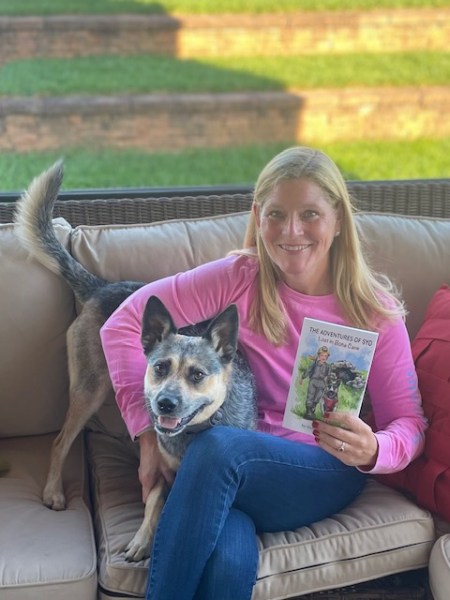
Danielle Simone on Curiosity, Courage, and Learning Through Story
Have you ever wondered what happens when curiosity goes missing in childhood? This interview explores one educator-author’s response—and how stories can invite exploration, reflection, and care for the world around us.
Keep readingWe’d love to hear from you!
What are your thoughts on this piece? Share your insights in the comments below!
- What stood out to you most about this post?
- Have you read a book recently that relates to the themes discussed here?
- What’s your favorite takeaway or reflection from this write-up?
Let’s keep the conversation going—your thoughts make this space richer!
Disclaimer: The content on this site is provided for informational and inspirational purposes only. While we strive for accuracy, the views expressed in reviews, articles, and recommendations are subjective and may not reflect the opinions of all readers.
We receive complimentary copies of all books we review. However, this practice does not compromise the integrity or honesty of our reviews. Every write-up reflects the contributor’s genuine impressions and critical analysis, ensuring transparency and trust with our readers.
For a complete understanding of our practices, please refer to our full Disclaimer, Privacy Policy, and Terms of Service. These documents outline how we manage your information, ensure transparency, and uphold your rights as a user.
To request for a review, to nominate your favorite book for an award, or for more details about our awards, click here.
Other Stories
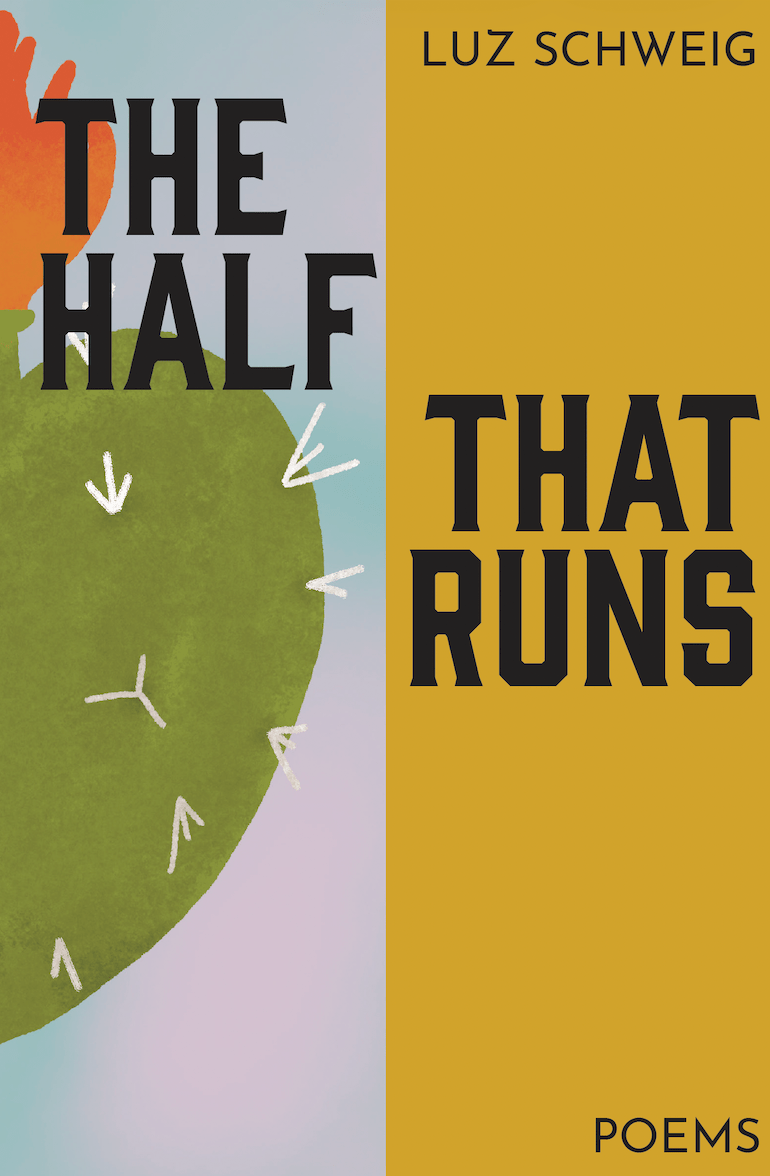
The Half That Runs by Luz Schweig
What if your memories had a geography—one that kept shifting under your feet like sand? Discover how The Half That Runs by Luz Schweig maps identity—read the full piece.
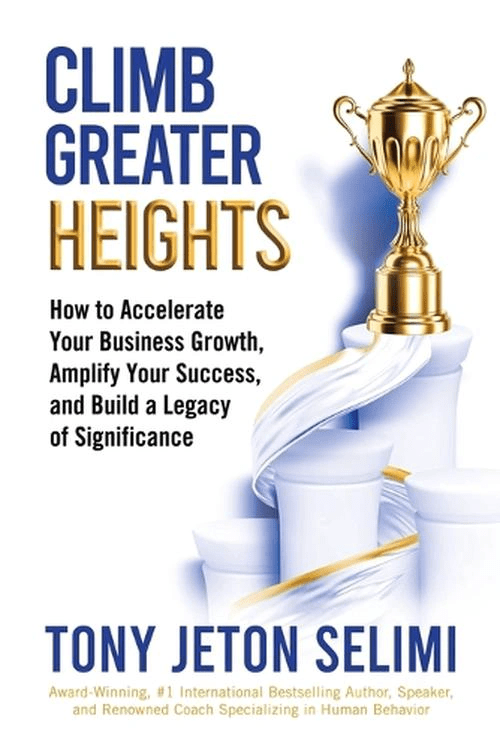
Book Review: Climb Greater Heights by Tony Jeton Selimi
What if your biggest business obstacle isn’t competition but something invisible within you? Discover the answer in Climb Greater Heights by Tony Jeton Selimi—read the full review to explore.

Review of The Sound of an Ordinary Life by Alis Cerrahyan
There are many ways to tell the story of a life. Some choose grand narratives, sweeping arcs of triumph and tragedy. Others, like The Sound of an Ordinary Life, find meaning in the quiet spaces, the moments that seem small but carry the entire weight of a person’s existence.

 OneTribune