
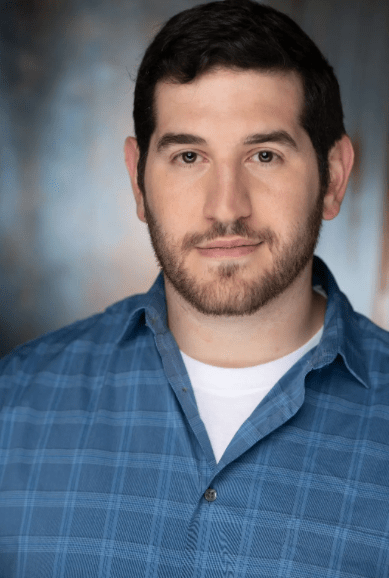
This conversation with poet and storyteller Evan Raiff explores how language can become a bridge between people in an era defined by disconnection. Known for transforming raw emotion into lyrical precision, Evan’s work dissects love—not as sentiment, but as structure, process, and human instinct. In this interview, he reflects on creativity as an act of empathy, the purpose of modern poetry, and how his recognition as a Voyages of Verses Award recipient has influenced his perspective on storytelling and art. Readers will discover how Evan views poetry as both microscope and mirror: a way to study the human heart while helping others see themselves more clearly.
Evan, thank you for joining us. Could you start by telling readers a bit about yourself—what you do, what drew you to writing, and what you hope people take away from your creative work?
Thank you so much for having me! I am a poet, author, and storyteller based in Los Angeles. Originally, I moved to the Golden State from Massachusetts with the intention of pursuing a career in Hollywood. However, the weight of hunting for representation and submitting for auditions that didn’t fulfill me slowly killed the passion I had when I first moved out west.
I began to seek that same level of artistic fulfillment and was able to find it in screenwriting and filmmaking, leading me to write and produce my own short films. I pursued this passion for a few years, creating three short films, some of which have had successful film festival runs. However, that same feeling of a dwindling passion began to reemerge.
And so, in a dark time, an old passion found its way back to the forefront. I began to write for the page, something I had done as a kid but hadn’t done for quite some time. Immediately, that spark was rekindled and doubled. I found myself crafting poem after poem, unbridled by any pressure or burden. I was creating art with the same passion and joy as when I was younger.
I hope people take away a sense of direction in life. Maybe my work won’t provide the exact directions, but I hope I can create guideposts for people on their own journey. It’s so easy to get beaten down by the world, and feel abandoned by how fast things move these days, so if my work can offer a helping hand, I would consider my mission fulfilled.
Your poetry often feels like an exploration of human emotion through scientific precision. How do you balance intellect and empathy when you write about something as immeasurable as love?
To me, there’s no other way to write about love, because love exists on both a scientific and conceptual level.
On one hand, love and the physiological actions/reactions of it can be broken down into neurological actions and reactions. The firing of dopamine here. The retrieval of serotonin there. A rise in temperature due to increases in blood flow, causing cheeks to redden. It can and does exist in scientific terms if that’s the lens we wish to view it through.
On the other hand, love is so deeply ingrained into our existence that the life of an infant can be put at risk if not held enough by their mother. We are so deeply affected by this thing we call love that it seeps into every pore of our existence. Because love is our existence.
As you mentioned, love is immeasurable. But words are a concrete fixture. Trying to encapsulate love into words requires both intellect and empathy to even attempt to put love into words. After all, if love is light, how do you hold the sun in the palm of your hands?
Many of your poems study different kinds of relationships—familial, romantic, platonic, even self-reflective. What personal experiences or observations helped shape the way you understand love in all its forms?
My journey since coming to Los Angeles has provided me with several experiences in all facets of love. I am grateful to have experienced a wide variety of successes and failures and to have met a broad variety of people along the way.
I experienced familial love many times over, first with the like-minded artists I studied with and under at my postgraduate conservatory. Outside of the program, I made new friends and fostered that love until it changed from friendship to family, welcoming and being welcomed into countless homes and lives.
Through a happenstance of fate and great timing, I met my now wife on this journey. She taught me what romantic love can be. Seven years and a wedding later, there are too many lessons about what romance and lifelong love is. And so many more lessons to come.
And, seeing a dream rise, die, rise again, die again, and then be reborn stronger than ever gave me a deeply profound understanding of self-reflective love. I learned so much about myself, both good and bad. I found pieces of myself that I initially loathed and learned to accept. Qualities I admired in others I discovered to be in me, as well. I had to scour every dark corner of myself on this journey, and I’m still looking around, but I had to learn to love it all.
It might seem like a cop-out, but every experience I ever had shaped my understanding of love. Some large, some small. All of them important.
The book’s structure follows the eight Greek words for love, suggesting a universal framework for connection. What inspired that decision, and how do you think ancient concepts can still help modern readers understand themselves?
I wanted to explore love in ways that poetry may not always do, at least not so bluntly. I knew I wanted to write a collection of love poems, but that romantic poetry about desires and passions wouldn’t encompass all that I wanted to say. So I researched the different types of love and became enchanted by how the Greeks classified such a broad emotion.
Ancient concepts will always pertain to the modern day. We have such a deep and extensive history as a species that any problem we face has roots dating back far more than we realize. If we begin to pull at these threads, and follow the string we uncover, those ancient concepts can become the missing piece modern readers are looking for.

You’ve recently received the Voyages of Verses Award from OneTribune Media. What does that recognition mean to you personally and professionally, and how has it influenced your vision for your future projects?
This award means the world to me. This latest collection is my second book to be released and, as such, I believe I am still new to the craft. These words, however, have struck me to such a depth and caused such an all-encompassing feeling of elation at seeing them come to life. I don’t know if there’s a comparable feeling; my soul has been stirred in ways that I’ve never felt before. Knowing that my words and poems helped to make someone’s journey through this world worthwhile, even for a little while, makes all the toil worth it. I don’t know if I can fully put the joy of receiving this award into words, but I cannot thank OneTribune Media enough for this honor.
This award has cemented my vision of the future. With this achievement spurring me forward, I know I will continue down this path, hoping to improve with every collection I release.
Your work often highlights small, human moments—a shared glance, a memory, a quiet act of kindness. Why do you think these subtle details matter in today’s fast, often digital world?
I believe those small moments are where the magic of humanity and life live. As things grow faster and we are pulled in more and more directions, those little moments can be glossed over or cease to happen altogether. And, if that happens, some of that magic will disappear, maybe forever. So I will continue to look for and write about those tiny moments to help keep that magic alive.
You’ve been described as both a storyteller and a visual thinker. How does your background in performance and art influence your poetry? Do you see yourself as a writer, a performer, or something in between?
The one constant in my life, throughout all of the twists and turns, is a deep love of stories and storytelling.
Ever since I first stepped onstage at four years old and fell in love with acting, I have had an insatiable appetite for heroic journeys. Stage plays, screenplays, novels, poetry, video games, any and every medium imaginable and the countless genres within each one. I spent my youth devouring these stories and letting my imagination take me from one land far, far away to another.
And, when creating a new character, I draw from that deep well to create a new story. A cop, a beggar, a burnout, a scientist. Each character telling their own story and the story the script has planned for them. In the same vein, each poem is a character in its own right. Instead of drawing from the well to create a character, I use that well as proverbial ink to put the words to page.
While I am not pursuing acting as my main passion, my writing cannot exist without performance.
Many readers have said your poems invite reflection on empathy and coexistence. How do you hope your work contributes to broader conversations about understanding one another across differences?
I hope my work can serve as a reminder of our inherent equalities. We are all human. We all experience love and loss. Different circumstances, different traits, different beliefs, sure. But we are all the same species. We are all just trying to do our best.
If my work can contribute to those conversations in any way, I would be honored.
As a creative professional, what practices or habits help you sustain originality and honesty in your work? How do you keep your writing grounded without repeating yourself or your themes?
Every time I read or reread a piece of my writing, I try to listen to my instincts and see if my gut has anything to say. It has taken some time to develop the skill, but these days I’ve grown adept at getting out of my own way. If I find myself impressed by my own writing, fantastic! If not, I let my gut tell me what needs to be changed and adjusted so that every piece is as authentic as it can be.
For me, I view repetition as an inevitability and an opportunity. There are a finite number of words in the dictionary and two pieces are eventually going to say the same or similar things. When that happens, I try to paint those pieces with different shades of the same color. While one may focus on the bolder, larger aspects of what’s being said, I try to focus the other on the minuscule details that might get left behind. Or if one piece is espousing the joys of a topic, the other may delve into what sits behind the smile.
Looking ahead, what kinds of stories or forms do you hope to explore next—whether in poetry, prose, or another medium—and how do you see your creative journey evolving from here?
I certainly want to keep exploring poetry! This last collection was an exhilarating thrill ride, and I feel I’ve only just begun to scratch the surface, both as a reader and writer. I’ve already begun to brainstorm what the next collection will be, even having written a few lines and ideas to bring forward when the time comes.
As far as other mediums, I have been obsessed with worldbuilding for a while now. While poetry will be the main focus, there are several other ideas rattling around for some time. I’m hoping, alongside this next collection, to bring these ideas and projects to life. From stand-alone novels to a world with thousands of years of history, I see my creative journey expanding toward several new horizons.
And I can’t wait to see what I find.
If you were to write your bio in your own words, how would you describe yourself, and what lasting impact would you like your work to have?
Evan Raiff is a poet, author, and storyteller based in Los Angeles. Having gone through several stages and metamorphoses in his life, he brings a reverence for the written word to every piece. Blending spoken word influences and classical poetry, he plumbs the depths of self-discovery and identity, bringing new perspectives alongside his raw and honest writings.
I hope my legacy is that of a storyteller. One where, even if I fade, my words remain. I hope to pay it forward and provide someone the same experience I had when I would stay up too late and read books by flashlight.
Related

And Other Ways to Say ‘I Love You’ by Evan Raiff
Have you ever wondered if every form of love—from heartbreak to healing—can be described without saying “I love you”? Discover how one poet tries, and why words almost fail.
Keep readingMore Posts Like This

Reimagining Life Through Words and Service with Debra J. White
What happens when life’s hardest blows lead to unexpected purpose? Discover how Debra turned trauma, recovery, and rescued animals into writing and volunteer work that inspires resilience and connection.
Keep reading
Learning from the Land: A Conversation with Cathryn Wellner on Life’s Unexpected Lessons
Ever wondered what it’s like to raise sheep, pigs, and camels while learning life lessons along the way? Cathryn Wellner shares her unexpected journey, and readers will discover how she adapted and thrived.
Keep reading
Carmella Parker on Law, Education, and Guiding Institutions Through Change
How do you teach students about laws that are still being written? This interview explores one legal educator’s answer—revealed through experience, strategy, and real-world change inside the evolving legal landscape.
Keep reading
Shannon O’Brien on Travel, Teaching, and Redefining Home
Can a backpack become a home and a classroom at the same time? This interview follows one teacher-writer’s journey to find out—revealed through travel, reflection, and lived experience.
Keep reading
Leon Mitchell on Imagination, Resilience, and Finding the Extraordinary in the Ordinary
What if imagination isn’t an escape but a survival skill you forgot you had? This interview explores that idea—revealed through childhood wonder, discipline, and stories that reflect who we are.
Keep readingWe’d love to hear from you!
What are your thoughts on this piece? Share your insights in the comments below!
- What stood out to you most about this post?
- Have you read a book recently that relates to the themes discussed here?
- What’s your favorite takeaway or reflection from this write-up?
Let’s keep the conversation going—your thoughts make this space richer!
Disclaimer: The content on this site is provided for informational and inspirational purposes only. While we strive for accuracy, the views expressed in reviews, articles, and recommendations are subjective and may not reflect the opinions of all readers.
We receive complimentary copies of all books we review. However, this practice does not compromise the integrity or honesty of our reviews. Every write-up reflects the contributor’s genuine impressions and critical analysis, ensuring transparency and trust with our readers.
For a complete understanding of our practices, please refer to our full Disclaimer, Privacy Policy, and Terms of Service. These documents outline how we manage your information, ensure transparency, and uphold your rights as a user.
To request for a review, to nominate your favorite book for an award, or for more details about our awards, click here.
Other Stories
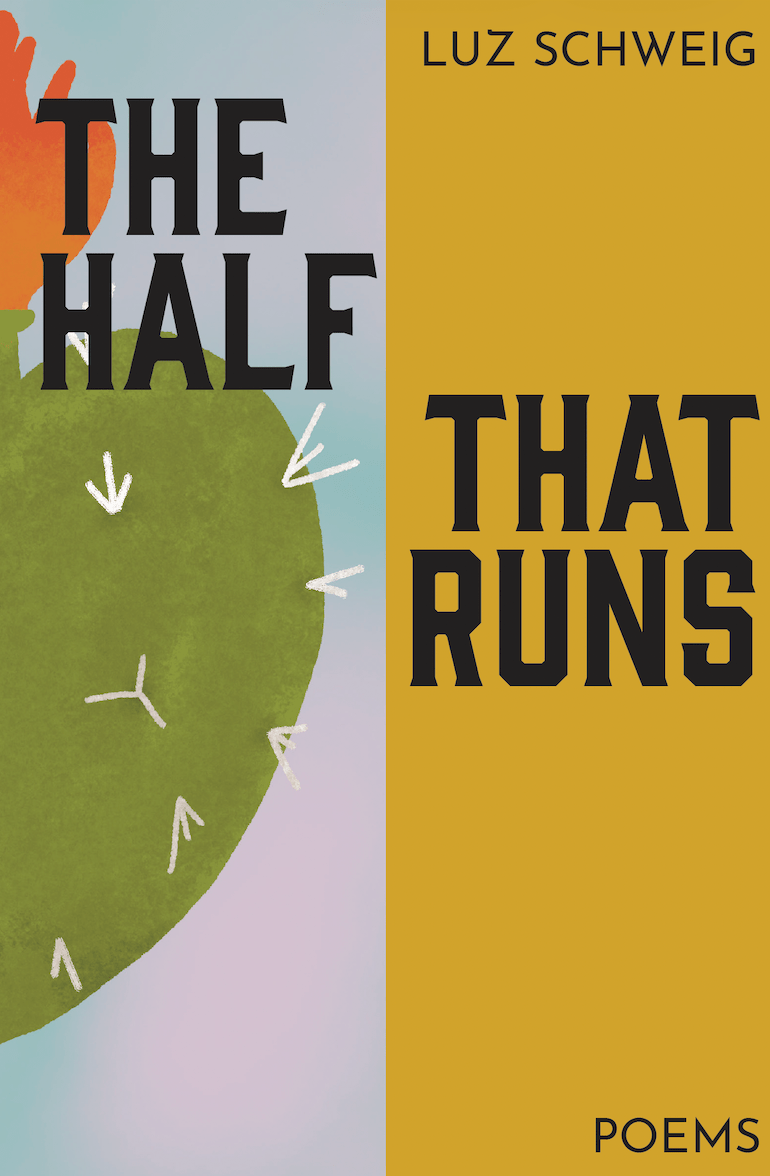
The Half That Runs by Luz Schweig
What if your memories had a geography—one that kept shifting under your feet like sand? Discover how The Half That Runs by Luz Schweig maps identity—read the full piece.
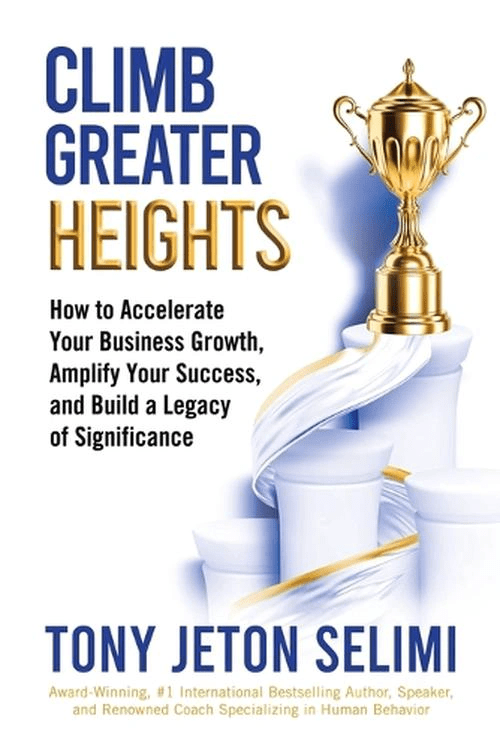
Book Review: Climb Greater Heights by Tony Jeton Selimi
What if your biggest business obstacle isn’t competition but something invisible within you? Discover the answer in Climb Greater Heights by Tony Jeton Selimi—read the full review to explore.
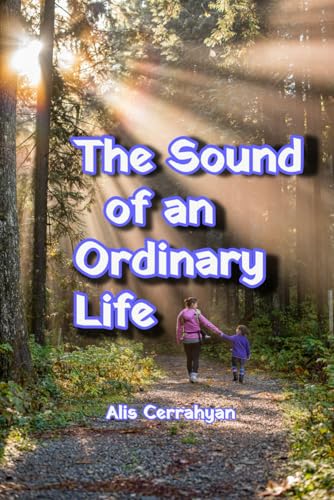
Review of The Sound of an Ordinary Life by Alis Cerrahyan
There are many ways to tell the story of a life. Some choose grand narratives, sweeping arcs of triumph and tragedy. Others, like The Sound of an Ordinary Life, find meaning in the quiet spaces, the moments that seem small but carry the entire weight of a person’s existence.

 OneTribune