

This interview explores how New York poet and dramatist LindaAnn LoSchiavo transforms personal caregiving experiences and emotional truth into imaginative, structured verse. Through Cancer Courts My Mother, she fictionalizes grief, care, and resilience to reveal how poetry can reframe human challenges as art. The conversation centers on her creative process, artistic discipline, reflections on recognition, and her perspective on writing about emotionally charged subjects without losing balance. Readers will gain insight into how artistic purpose, lived experience, and literary craft intersect to create meaningful, lasting work.
Editor’s Note: This interview includes personal reflections involving illness, caregiving, and past traumatic experiences. These perspectives are shared in the context of the author’s creative process and are the interviewee’s own reflections.
LindaAnn, thank you for joining us today. To begin, could you tell readers a little about yourself—your background, what you do, and what drives your work as both a poet and dramatist?
First of all, thank you for your outstanding ongoing support of indie authors and all the opportunities you offer. I am immensely grateful to you, and I appreciate the chance to share my story with your enormous global readership. Perhaps my story will resonate with other wordsmiths.
Despite hailing from a humble working-class background, I had these advantages:
Early exposure to books and to raconteurs.
Both my Aunt Fay and my father created their own bedtime stories. My Aunt Fay’s stories were inspired by New York City’s garment trade, tales about hardworking, underpaid factory workers and their intrinsic importance to fashion’s high-life, runway models, and Vogue Magazine.
In contrast, my father’s stories were drawn from his fanciful imaginings about Brooklyn’s waterfront and low-life characters.
Early exposure to New York City’s cultural buffet.
My earliest memories, even when I was in my crib, included listening to Italian Grand Opera. After my fourth birthday, I was taken to Broadway shows, Carnegie Hall, NYC’s museums, Radio City Music Hall, The Ice Capades, and the circus by my loving aunts, uncles, and godparents.
Growing up without a TV.
Thanks to my parents’ modest circumstances, I developed a lifelong love for the library. Each week I borrowed seven library books and read one book a day.
Early interest in writing and theater.
By age 9, I started having my own plays staged in New York City.
By age 9, I began submitting my poems to journals that published work from schoolchildren and had my first metrical poem published.
By age 15, a short story I wrote won my school’s gold medal for Literary Achievement.
What has always driven my work, as a dramatist and a poet, is a focus on women’s stories and experiences.
You’ve written across genres for years. How did you first discover poetry as your primary mode of expression, and what has kept you loyal to that form through the years?
My parents were too poor to afford housing, so we lived in a large house owned by my grandparents, a busy household that included other family members. Since I learned to read when I was a toddler, I was given this privilege: whenever greeting cards arrived, I was permitted to read the card aloud at the dinner table as our family gathered for supper. The flat-footed “June – moon – spoon” rhymes in Hallmark cards offended me. They were clunky, predictable, and boring. Thus my Aunt Fay, a talented illustrator, and I started our own modest greeting card line. She drew; I wrote the metrical rhymes. These unique homemade cards were praised, and a formalist was born at age 3.
What has kept me loyal to formal verse is a long answer, so I’ll limit my response to two aspects:
• Rhythm and rhyme act as hooks to make poetry easier to remember and recite, amplifying the musicality of the word order.
• Limitations of a fixed form force a poet to be more creative and innovative. For instance, though writing a good Golden Shovel poem is difficult, I challenge myself further by creating these in iambic pentameter.
Your recent work centers on caregiving, loss, and transformation. What initially led you to explore such personal material through fiction and verse rather than direct memoir?
What initially led me to attempt a collection on caregiving and cancer was the attention critics bestowed on the six poems about my dying mother in Apprenticed to the Night. Certain interviewers claimed these poems, especially My Mother’s Ghost Dancing, had helped them cope with their own loss and grief. Since these six were already created as poems, it made sense to explore further with poetry.
Many of your readers describe your poems as both structured and emotional. What is your process for balancing discipline and feeling when crafting your lines?
Metaphor and symbolism are central to my work. A well-crafted metaphor can reveal truths that straightforward everyday language cannot match. Metaphor allows me to take my deeply personal feelings or situations and translate these into the universal. Metaphors transform emotions into imagery that can transcend the particularity of my own experiences, inviting readers to see their own reflections within the stanzas and the lines.
Your poems often use personification and metaphor—such as reimagining illness as a suitor. What draws you to this kind of imaginative framing, and what effect do you hope it has on readers?
This is the advantage of having a graduate degree in Medieval Literature. Medieval authors loved allegorical tales. One famous example is Le Roman de la Rose, a 13th-century allegorical poem where a lover seeks to pluck a rose, which represents his beloved. Decades later, Victorian British authors relied on allegory to skirt the censors. In Far from the Madding Crowd, for instance, Sergeant Troy’s masculine display of swordsmanship that makes Bathsheba swoon was Thomas Hardy’s lascivious wink-wink at the reader.
Depicting cancer as a wasting disease is rather pedestrian. Introducing illness as a seducer—a persistent lover who tempts a patient to abandon her family for him—removes it from bleak reality. Instead of presenting cancer as an enemy to be fought, the metaphor portrays cancer as an irresistible, charming, and ultimately manipulative force that wins through enticement rather than brute force.
Throughout your writing journey, you have received recognition from various institutions. Without naming specific awards, could you share what those acknowledgments represent to you personally and how they have influenced your creative direction?
Recognition and awards are impactful because they convey appreciation, encouragement, and make an author feel seen. In the same way that effusive praise from strangers over six poems in Apprenticed to the Night propelled me into the work in progress that became Cancer Courts My Mother, these acknowledgments have served as crucial affirmations that my work mattered to others beyond my own need to write it.
To me, honors are less about validation of talent and more about connection—confirmation that the private emotions I have grappled with have resonated with readers and touched something universal in the particular. Each recognition has felt like permission to go deeper, to take greater risks in my work.
You’re a member of several professional literary and artistic associations. How does community—whether through mentorship, collaboration, or feedback—shape your growth as a writer?
Community is absolutely essential since it offers opportunity, intellectual growth, comradeship, and the ability to tap into the hive mind when you need it. Community also provides role models: positive figures to learn from and negative examples that hold up a mirror, daring you to be better than that.
When working on emotionally intense subjects, what self-care or creative practices help you maintain clarity and purpose during the writing process?
When intense writing becomes overwhelming, I take refuge in my green family, my collection of houseplants—doting on the more demanding species that can be forced to bloom all year long, such as my finicky Hoya Multiflora. I might also replay favorite opera overtures as I rearrange cut flowers or feed my Siamese cats. Nurturing living things refuels me.
Many writers struggle to separate lived emotion from artistic distance. How do you decide what to fictionalize, what to retain as memory, and what to transform entirely in your poetry?
Here is one of those transformations. When I was 15 years old, I became very seriously ill. While I was half-unconscious with a high fever, my parents drove me to a hospital, pre-signed all the medical releases so they would not have to visit, and dumped me there.
I felt impelled to lullaby this trauma to sleep by writing about it.
A highly fictionalized version appeared in Litro Magazine called Side-lined with the Goddess Pallas Athena. The protagonist Sue is raised by a struggling single mother, not in a two-parent household, and the abandonment is due to a fortune teller’s interference. What I retained in this hospital drama was the emotional architecture—the bewilderment, the fever-haze, that specific quality of adolescent vulnerability when you realize your parents are fallible, even cruel. But I transformed everything else.
Whether writing prose or poetry, my imagination hammers away at the experiences, retaining the emotional truth—the texture of the feeling—even as I sandpaper and polish the roughness. The facts belong to my life; the feeling belongs to the story or the poem. If I cling too tightly to what actually happened, the work becomes a complaint or a diary entry. But if I transform the circumstances entirely, I can access a more universal current of feeling. The fiction protects both the reader and myself—they get a story, not a trauma dump, and I get the distance I needed to shape a trauma or turn a disappointment into art.
If you could share one practical insight with emerging poets who want to write about personal experiences responsibly and artfully, what would it be?
Read every day with a focus on books by innovative poets who have won acclaim for personal writing such as Ocean Vuong and Victoria Chang.
If you were to write your bio in your own words, what would you say? What legacy do you hope to leave?
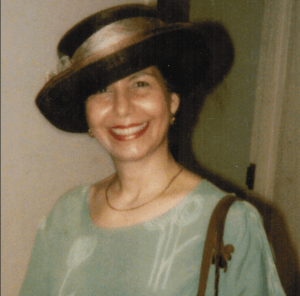
I’d be tempted to copy the simple inscription on the gravestone of Sarah Hannah Jones in Heysham, England: poet, philosopher, and failure.
Though I’d love to think of my work as having a lasting impact, the fact is that most poets’ books will vanish into obscurity. We all end in failure—unless, of course, the right award vaults us into the Pantheon.
But perhaps that’s the wrong way to think about lasting impact.
I write to give shape to what feels unspeakable, to transform bewilderment and pain into something clarified, even beautiful. If my work matters, it’s not because it survives in anthologies but because it meets a reader in the exact moment they need it—when they’re half-conscious with fever, abandoned, searching for words that make sense of their own confusion.
That kind of impact doesn’t require permanence. It just requires honesty, precision, and the willingness to fail spectacularly while trying.
Related
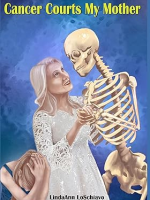
Cancer Courts My Mother by LindaAnn LoSchiavo
What if the battle between life and death took the shape of courtship? Readers will discover how one poet transforms imagined illness and memory into lyrical fiction through this haunting collection.
Keep reading
Apprenticed to the Night by LindaAnn LoSchiavo
If memories had a scent, would they smell like fig trees or hospital rooms? Apprenticed to the Night takes readers through an intricate maze of recollection—follow its trail to uncover where past and present converge.
Keep reading
Felones de Se by LindaAnn LoSchiavo
Have you ever wondered if a Hawaiian shirt could haunt someone more than a ghost ever could? This write-up reveals the strange truth hidden in poetic memory—read on to find out.
Keep readingMore Posts Like This
Shannon O’Brien on Travel, Teaching, and Redefining Home
Can a backpack become a home and a classroom at the same time? This interview follows one teacher-writer’s journey to find out—revealed through travel, reflection, and lived experience.
Keep reading
Leon Mitchell on Imagination, Resilience, and Finding the Extraordinary in the Ordinary
What if imagination isn’t an escape but a survival skill you forgot you had? This interview explores that idea—revealed through childhood wonder, discipline, and stories that reflect who we are.
Keep reading
Danielle Simone on Curiosity, Courage, and Learning Through Story
Have you ever wondered what happens when curiosity goes missing in childhood? This interview explores one educator-author’s response—and how stories can invite exploration, reflection, and care for the world around us.
Keep reading
Following the Story: Harker Jones on Writing Across Genres and Ages
What happens when stories choose their own form? In this interview, readers explore how a writer follows ideas across ages and genres, discovering the answer by reading the full conversation.
Keep reading
Remi Alli: On Law, Conflict Resolution & Emerging Finance
Curious how a tech and compliance expert shapes the backbone of innovative finance platforms? Discover how Dr. Remi Alli drives Black Wallet’s success and ensures stability in our full interview.
Keep readingWe’d love to hear from you!
What are your thoughts on this piece? Share your insights in the comments below!
- What stood out to you most about this post?
- Have you read a book recently that relates to the themes discussed here?
- What’s your favorite takeaway or reflection from this write-up?
Let’s keep the conversation going—your thoughts make this space richer!
Disclaimer: The content on this site is provided for informational and inspirational purposes only. While we strive for accuracy, the views expressed in reviews, articles, and recommendations are subjective and may not reflect the opinions of all readers.
We receive complimentary copies of all books we review. However, this practice does not compromise the integrity or honesty of our reviews. Every write-up reflects the contributor’s genuine impressions and critical analysis, ensuring transparency and trust with our readers.
For a complete understanding of our practices, please refer to our full Disclaimer, Privacy Policy, and Terms of Service. These documents outline how we manage your information, ensure transparency, and uphold your rights as a user.
To request for a review, to nominate your favorite book for an award, or for more details about our awards, click here.
Other Stories
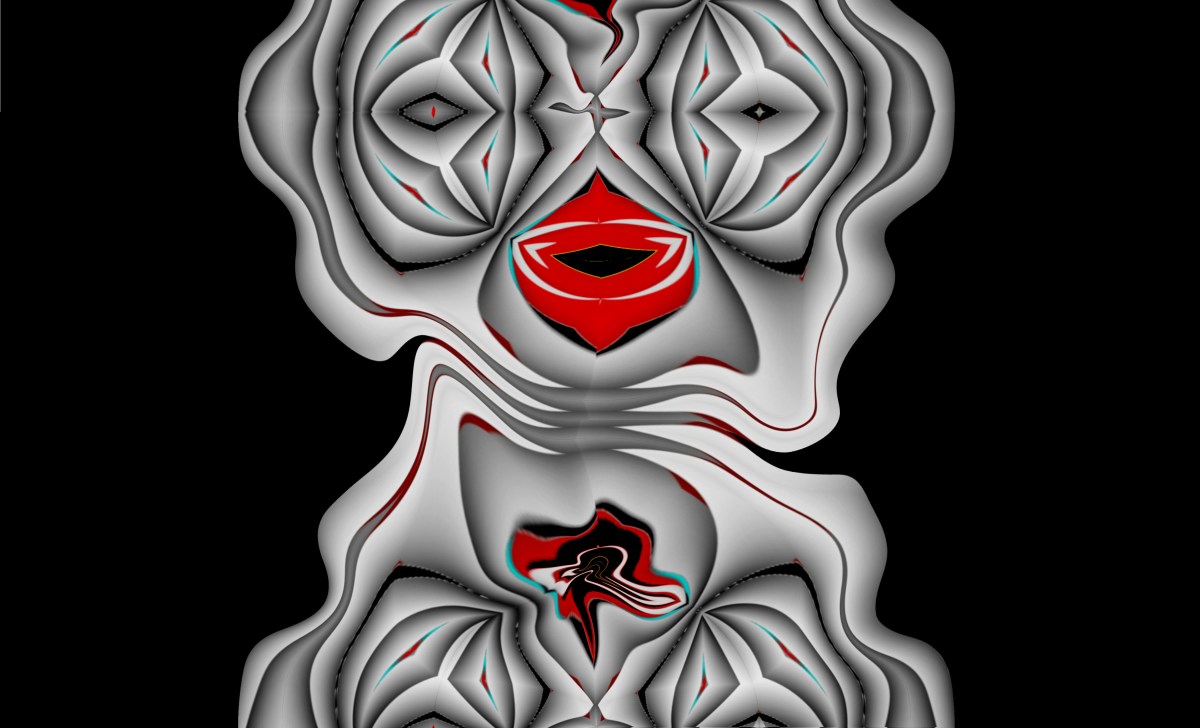
Grieving Ic by Edward Michael Supranowicz
What does a feeling look like when it turns symmetrical? Spend time with Edward Michael Supranowicz’s artwork, let its forms speak, and discover meaning by lingering with the image quietly.
Book Review: The Stress Book by Dr. D. Terrence Foster
If an octopus could text, juggle, cook, plan a future, soothe trauma, and still feel behind—would it read The Stress Book? You’ll find out why that’s relevant as you read on.
Once A King, Now A Prince by Ira Blacker
What happens when imagination becomes a survival skill instead of a pastime? Once A King, Now A Prince by Ira Blacker reveals the answer—if you’re willing to follow the journey.

 OneTribune