

Todd Brown is the award-winning author of When Shadows Burn, a Southern Gothic novel set in Raven’s Cross, Virginia. In this interview, he discusses the inspiration, creative process, and themes behind his debut work, exploring how personal experience and social observation shaped the story.
Editor’s Note: This interview contains references to neurodivergence, LGBTQ+ identity, marginalization, prejudice, and hate-related experiences, as well as mild irreverent humor. Reader discretion is recommended.
Todd, thanks for joining us. Let’s begin by getting to know you from your own perspective. Can you tell our readers about yourself, your background, what you do, and what drives your work today?
First, I have to say it’s a tough world out there for debut authors, so I cannot thank you enough for having me. To answer your question, I am a computational sociologist who studies and builds education programs based on human behavior. I’m a former public school teacher who is passionate about social justice, with my work appearing in The New York Times, WIRED, USA Today, National Geographic, and more.
Aside from my professional experience, I’ve been married to a wonderful wife for 30 years, who somehow has found a way to put up with me. I’m also a father of two great sons, one of whom is queer and was the inspiration for writing When Shadows Burn.
Many writers say their first book comes from something deeply personal—even if it’s fictional. What was happening in your life or your thinking when this story started to form?
WSB came from two places. First and foremost, it is rooted in my son’s worldview. He wanted the book, although fiction, to be grounded in the unfortunate truth that he and others like him have experienced through hate and misunderstanding, sometimes leading to fatal ends. I am sad about his views, but I can’t argue with him.
For what it’s worth, this story is a father’s love letter to his child and to all those who, like him, bravely live their truth in a world that often hates them. It’s a testament to their courage and a reminder that there is always light, even in the darkest corners. With all their flaws and strengths, the characters’ choices in the story reflect the choices we must make every day of our lives. We can confront our fears, challenge injustice, and embrace compassion.
Your book paints a vivid picture of a small town filled with silence, memory, and myth. What draws you to writing about place and community as almost a living character?
I feel as though it is vital to center queer and neurodivergent characters in the rural spaces that have historically erased them. Not as tokens, not as afterthoughts, and not as tragic plot devices, but as fully human people who endure, resist, and love. For me, this isn’t a gesture or a nod—it is more of a reclamation.
There’s a quiet violence in omission that society can easily miss. Rural fiction, like the small towns it so often romanticizes, has a long history of deciding who gets to belong, who counts, and who disappears between the silos and dinner tables. And for decades, that silence has been mistaken for peace with quiet, and that quiet built on erasure is paralysis.
I grew up seeing how stories got told. Which characters were deemed “relatable,” and which ones were made into metaphors, or worse, which ones never made it onto the page at all? Queer people, neurodivergent people, trans people, and people of color are all too easily reduced to cautionary tales or worse—they are scrubbed from the landscape of the “wholesome” town. To me, the ultimate horror is something that shouldn’t be real, but is.
Storytelling is often used as a tool for reimagining truth or reclaiming buried histories. Was that intentional in your process—or something you discovered along the way?
In WSB, using storytelling to reimagine truth and reclaim buried histories was an intentional choice from the outset. The novel deliberately digs into Raven’s Cross’s hidden past—stories that were distorted, silenced, or forgotten. I reframed them through multiple perspectives, as if you, the reader, were sitting in a town square and watching everything that was happening around you. This wasn’t just about adding depth to the mystery, but about confronting how communities often rewrite their own narratives to protect power or erase uncomfortable truths. That theme was embedded early in the process to let the characters act as archivists, witnesses, and interpreters of those suppressed histories to help the reclamation.
You write with a voice that’s both sharp and reflective. What’s your writing process like when you’re developing complex characters like Tim or Amanda?
For me, the complexity is based on personal experience. I think there’s a little of me in Tim and my wife in Amanda. I very much anchor my characters in dialogue to shape their complexity. While there are moments of introspection, I try to balance that with the characters verbalizing what they are feeling. Also, I try to write characters as people, not just as two-dimensional beings that take up space on a page, moving from point A to point B. We are all complex, and I want the reader to be able to relate to different people in different situations. There is also a bit of acting (maybe) in my writing. I try to get into character and let the dialogue come naturally.
In your own experience, what do you think fiction can do that other forms of storytelling—like journalism or nonfiction—can’t?
To me, journalism or nonfiction can be very cut and dry, whereas fiction is more humid and smelly. Fiction can take you places where facts alone can’t go. It can slip past defenses, drop you into another person’s skin, and let you feel the world as they do. Journalism and nonfiction can show you what happened—sometimes even why—but fiction can live inside the “what if” and “what it felt like.” It can bend time, merge voices, and distill a lifetime into a few pages without betraying the truth of an experience. In that space, readers don’t just understand—they inhabit, and that’s far more powerful.
Has feedback from readers ever revealed something new about your own work that surprised you?
Feedback always surprises me. I have had readers reveal layers in WSB that weren’t consciously planned as I wrote, which has been both surprising and illuminating. One thing in particular that has stood out to me is that a reader was very excited about how, as the book’s pace accelerates, the length of the “scenes” shortens, making the story feel like it is literally speeding up. To be honest, I didn’t even notice I was writing it in that way! That experience underscored how a story can hold something more than I initially intended, and how interpretation can enrich the work in ways I didn’t anticipate.
What habits or practices help you stay creatively grounded when dealing with emotionally intense material?
Unfortunately, all I have to do is read a newspaper article or watch a news report. In my small rural town, I have seen and listened to marginalized people tell their stories to those who are willing to listen. With that comes an anchoring in storytelling that is needed to help the reader live in a character and relate to what is happening. Everyone is living in their own story, and I am just trying to recreate what is happening all around us.
For emerging writers who want to tackle difficult themes with nuance and honesty, what advice would you offer?
Oof, that’s a tough one. I’m still an emerging writer myself, so all I can share is what’s worked for me. I focus on telling stories rooted in real people and real truths, while also giving space to the “other side.” That balance keeps the work from feeling heavy-handed and allows readers to draw their own conclusions from what’s on the page. I don’t want to tell them what to think—only to present lived experiences through characters and dialogue, and trust them to engage with it honestly. With that, every author’s book is their book, so I would never tell anyone how to tackle things for themselves.
That said, some truths do need to be placed directly in front of us. Discomfort isn’t a reason to turn away. In fact, if something unsettles you, it might be exactly the thing worth writing—and worth reading. If you’ve received any awards, recognitions, or invitations related to your writing, what were they—and what do those milestones mean to you personally?
I have to be honest—because my novel hasn’t been released to the public yet, the only award thus far is the Atlas of Stories award. I am honored and thankful for the recognition beyond words.
All of this is very new to me, and I am grateful to be receiving an opportunity to tell stories that need to be told, fiction or otherwise. At this point, Bloody Disgusting was gracious enough to have a feature article on WSB, and there are many more to come. Being recognized by multiple best-selling authors and screenwriters like Jennifer Ashley Wright and Mishna Wolff is mind-blowing.
I just hope that this novel can help people feel seen and begin the reclaiming of the Southern Gothic for the invisible.
If you were to write your bio in your own words, what would you say? What legacy do you hope to leave?
My bio in my own words? I’m an ADHD-riddled pain in the ass that is on the spectrum. I have an incredible wife who, after thirty years of marriage, is contractually obligated to like me. I have produced two spawns, and that is way more than the world probably needs. I worked the hair off my head for a long time and have become very lucky to do what I do.
Legacy? I’m way too young to think about that. I don’t even know how to apply that word to my life. Since you’ve put me on the spot, I’ll say that there are plenty of books out there that haven’t been written that need to be. But if you choose to write one such book, don’t let it become a chore. Writing should be fun. It should be a hobby or time spent loving what you are doing.
Related

When Shadows Burn by Todd Brown
Have you ever wondered if a house could remember what you’ve tried to forget? This review of When Shadows Burn might not answer that—but it’ll take you somewhere close.
Keep readingMore Posts Like This
Reimagining Life Through Words and Service with Debra J. White
What happens when life’s hardest blows lead to unexpected purpose? Discover how Debra turned trauma, recovery, and rescued animals into writing and volunteer work that inspires resilience and connection.
Keep reading
Learning from the Land: A Conversation with Cathryn Wellner on Life’s Unexpected Lessons
Ever wondered what it’s like to raise sheep, pigs, and camels while learning life lessons along the way? Cathryn Wellner shares her unexpected journey, and readers will discover how she adapted and thrived.
Keep reading
Carmella Parker on Law, Education, and Guiding Institutions Through Change
How do you teach students about laws that are still being written? This interview explores one legal educator’s answer—revealed through experience, strategy, and real-world change inside the evolving legal landscape.
Keep reading
Shannon O’Brien on Travel, Teaching, and Redefining Home
Can a backpack become a home and a classroom at the same time? This interview follows one teacher-writer’s journey to find out—revealed through travel, reflection, and lived experience.
Keep reading
Leon Mitchell on Imagination, Resilience, and Finding the Extraordinary in the Ordinary
What if imagination isn’t an escape but a survival skill you forgot you had? This interview explores that idea—revealed through childhood wonder, discipline, and stories that reflect who we are.
Keep readingWe’d love to hear from you!
What are your thoughts on this piece? Share your insights in the comments below!
- What stood out to you most about this post?
- Have you read a book recently that relates to the themes discussed here?
- What’s your favorite takeaway or reflection from this write-up?
Let’s keep the conversation going—your thoughts make this space richer!
Disclaimer: The content on this site is provided for informational and inspirational purposes only. While we strive for accuracy, the views expressed in reviews, articles, and recommendations are subjective and may not reflect the opinions of all readers.
We receive complimentary copies of all books we review. However, this practice does not compromise the integrity or honesty of our reviews. Every write-up reflects the contributor’s genuine impressions and critical analysis, ensuring transparency and trust with our readers.
For a complete understanding of our practices, please refer to our full Disclaimer, Privacy Policy, and Terms of Service. These documents outline how we manage your information, ensure transparency, and uphold your rights as a user.
To request for a review, to nominate your favorite book for an award, or for more details about our awards, click here.
Other Stories
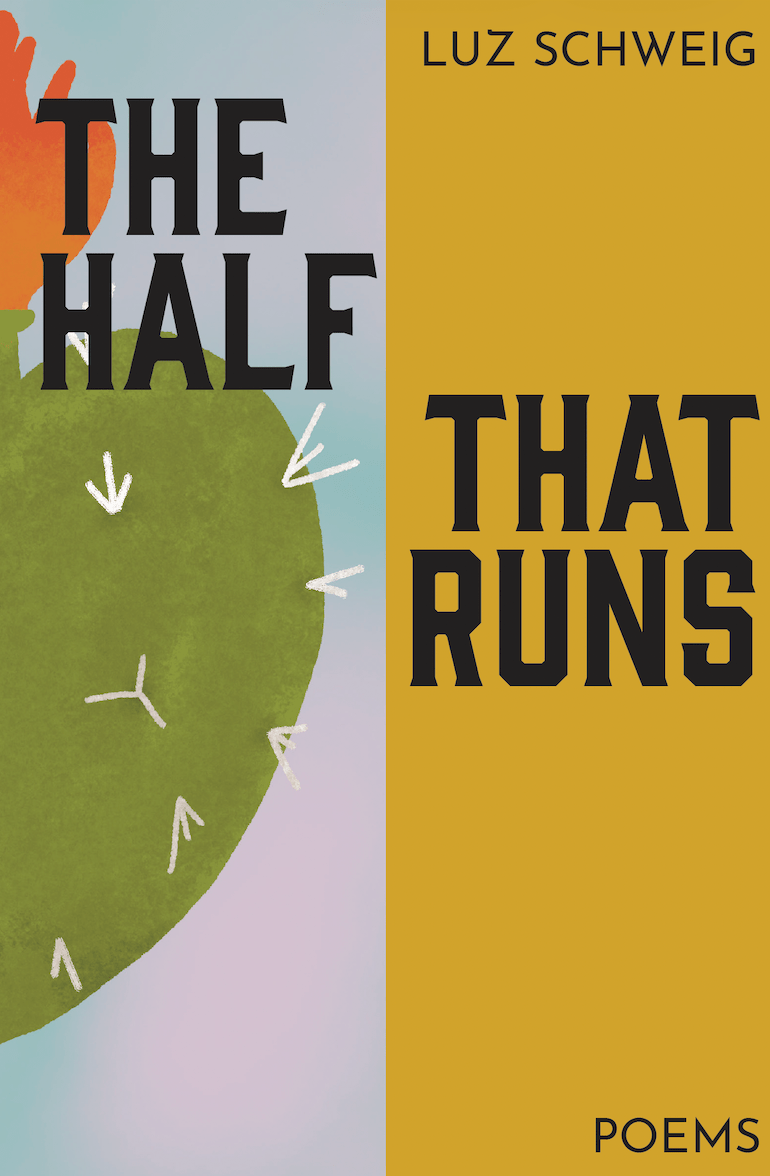
The Half That Runs by Luz Schweig
What if your memories had a geography—one that kept shifting under your feet like sand? Discover how The Half That Runs by Luz Schweig maps identity—read the full piece.
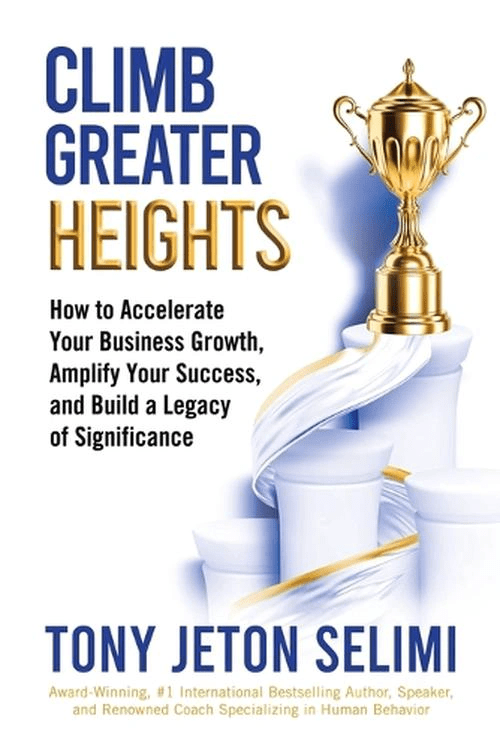
Book Review: Climb Greater Heights by Tony Jeton Selimi
What if your biggest business obstacle isn’t competition but something invisible within you? Discover the answer in Climb Greater Heights by Tony Jeton Selimi—read the full review to explore.
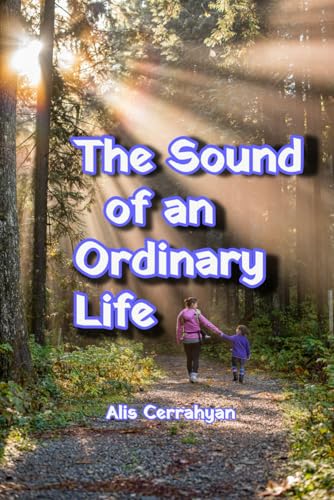
Review of The Sound of an Ordinary Life by Alis Cerrahyan
There are many ways to tell the story of a life. Some choose grand narratives, sweeping arcs of triumph and tragedy. Others, like The Sound of an Ordinary Life, find meaning in the quiet spaces, the moments that seem small but carry the entire weight of a person’s existence.

 OneTribune