

Jenny Carey has earned the June 2025 BREW Readers’ Choice Award – Book of the Month and other awards for The Travels of Mr. Cat. In this interview, Jenny Carey discusses her shift from nursing to children’s writing and how her stories spark curiosity and empathy through simple, everyday adventures.
Jenny, thank you for joining us. To start, could you share a bit about your background, your journey from nursing to writing, and what you aim to achieve through your children’s books?
I am a retired nurse, with over twenty years of experience within a nursing setting. Before nursing, I worked within the hosiery industry for over sixteen years. I also worked in various other industries since the age of fifteen, which is the age I was when leaving school to seek work. Exposure to various industries helped me to have insight into people and their emotions.
I started my career in nursing in 1998 as a health care assistant. I gained NVQ II and NVQ III whilst I worked as a health care assistant, which gave me the qualifications to enter university. In 2002, I became a student nurse. I was 46 years old, and I thought maybe I was too old, but this wasn’t true, as mature people can learn new skills. I graduated in 2005 with a Diploma for Higher Education. I worked within a hospital environment on wards for orthopaedics and later in a clinic for orthopaedics. I graduated in 2012 with a BSc (Hons) degree. This was achieved while I worked full-time.
I married Andrew in 1981, and I retired from nursing in 2021. During the lockdown, I was inspired to write books for children, as children were not able to attend school. I wanted to write a book that would spark their curiosity and feed their imagination.
If you have a dream, chase it. I had a dream to write books for children. I fulfilled my dream, which proves you’re never too old or not qualified enough. Just believe in yourself and follow that dream.
What inspired you to write The Travels of Mr Cat, and how did your personal experiences with animals influence the narrative?
As a child, we had cats as pets and had birds for many years, but unfortunately do not own any pets now. I was inspired to write about a travelling cat as I love all animals, and cats are very curious by nature, so had plenty of scope for writing stories about them. Animals make friends with other species, and they don’t discriminate against each other.
Your book has been recognized with the BREW Readers’ Choice Award Book of the Month. Could you elaborate on what this recognition signifies to you and how it reflects your objectives as an author?
It’s a great honour to be an award-winning author. I have won several awards for my books, Fun Poems For Your Child and The Travels of Mr Cat. It validates my books and proves that my books have been recognised and are worth reading.
How do you approach creating stories that are both entertaining and educational for children aged 6 to 10?
I write my books for children so that they may read them for themselves or have someone read them to them. I wanted them to be entertained, so I tried to make them engaging while not being frightening in any way. Children might identify their own pets in Mr Cat, as cats love to explore their environment and have adventures. Hopefully, through my books, it may help children to be curious about their own environment and have a desire to explore.
In what ways do you believe stories like The Travels of Mr Cat contribute to a child’s understanding of empathy and exploration?
Cats have a unique personality which helps to nurture emotional development in children. Cats can help children with empathy and can also help to teach them responsibility, so by using these qualities in my stories, it may teach children in a subtle way and hopefully doesn’t feel like teaching them lessons.
Could you discuss the role of illustrations in your book and how they complement the storytelling?
The illustrations are a visual representation of each part of Mr Cat’s adventures. They bring to life the story as I envisioned it. The colourful illustrations help children to visualise all of the adventures that Mr Cat experienced. Even if the children are not able to read for themselves, they can still envision the story as it unfolds.
How has your background in nursing informed your perspective on children’s emotional and cognitive development in relation to reading?
As a nurse, I encountered patients of many diversities and cultures. Observation of patients and how they interacted with each other and members of the multidisciplinary team gave me the inspiration for my book, and I used my observations in the book — how a cat might interact with other animals, with mutual respect and the importance of harmony and diversity.
What challenges have you encountered in transitioning from a healthcare profession to writing, and how have you addressed them?
I was overwhelmed with the process of publishing my first book, Fun Poems For Your Child. I sought help from a huge publisher in the USA. They had everything needed to publish books, at a cost. I didn’t realise that writing a book involved so much, such as illustrations and so much marketing. As I’m an unknown author, I had to do a lot of marketing to raise my profile.
The marketing packages offered by the publisher were excellent, but expensive. I wasn’t forced to purchase them, but I thought the packages would boost my book and enhance my chances of being discovered by buyers. I learned about marketing from this experience, so decided to write my second book, The Travels of Mr Cat. I felt confident enough to do most of my marketing myself. The publisher I had already did the publishing and illustrations for my new book.
I also decided to have a colouring book, using the illustrations from my other two books. I called the colouring book A Coloring Book For Children, using the American spelling of “colouring,” as it was also published in the USA. I contacted companies and found a huge company that would distribute my book worldwide. My books are now sold in several countries. I have also won several awards for my books, which I am very proud of.
Are there particular themes or messages you consistently aim to convey in your writing for children?
I intended to have Mr Cat interact with other animals, and hope that children would be curious about their world outside their own doors. By looking at other animals and being reminded that even the smallest of animals will have a story to tell, maybe they will have experienced an adventure or two — perhaps even with a touch of mischief.
Looking ahead, are there new projects or stories you’re developing that continue your focus on adventure and learning for young readers?
I have thought about writing other books for children for a future project, but at the moment, I’m just focusing on promoting my books via social media platforms, and continuing to keep my books visible for potential readers.
More Posts Like This

Shannon O’Brien on Travel, Teaching, and Redefining Home
Can a backpack become a home and a classroom at the same time? This interview follows one teacher-writer’s journey to find out—revealed through travel, reflection, and lived experience.
Keep reading
Leon Mitchell on Imagination, Resilience, and Finding the Extraordinary in the Ordinary
What if imagination isn’t an escape but a survival skill you forgot you had? This interview explores that idea—revealed through childhood wonder, discipline, and stories that reflect who we are.
Keep reading
Danielle Simone on Curiosity, Courage, and Learning Through Story
Have you ever wondered what happens when curiosity goes missing in childhood? This interview explores one educator-author’s response—and how stories can invite exploration, reflection, and care for the world around us.
Keep reading
Following the Story: Harker Jones on Writing Across Genres and Ages
What happens when stories choose their own form? In this interview, readers explore how a writer follows ideas across ages and genres, discovering the answer by reading the full conversation.
Keep reading
Remi Alli: On Law, Conflict Resolution & Emerging Finance
Curious how a tech and compliance expert shapes the backbone of innovative finance platforms? Discover how Dr. Remi Alli drives Black Wallet’s success and ensures stability in our full interview.
Keep readingWe’d love to hear from you!
What are your thoughts on this piece? Share your insights in the comments below!
- What stood out to you most about this post?
- Have you read a book recently that relates to the themes discussed here?
- What’s your favorite takeaway or reflection from this write-up?
Let’s keep the conversation going—your thoughts make this space richer!
Disclaimer: The content on this site is provided for informational and inspirational purposes only. While we strive for accuracy, the views expressed in reviews, articles, and recommendations are subjective and may not reflect the opinions of all readers.
We receive complimentary copies of all books we review. However, this practice does not compromise the integrity or honesty of our reviews. Every write-up reflects the contributor’s genuine impressions and critical analysis, ensuring transparency and trust with our readers.
For a complete understanding of our practices, please refer to our full Disclaimer, Privacy Policy, and Terms of Service. These documents outline how we manage your information, ensure transparency, and uphold your rights as a user.
To request for a review, to nominate your favorite book for an award, or for more details about our awards, click here.
Other Stories

Grieving Ic by Edward Michael Supranowicz
What does a feeling look like when it turns symmetrical? Spend time with Edward Michael Supranowicz’s artwork, let its forms speak, and discover meaning by lingering with the image quietly.

Book Review: The Stress Book by Dr. D. Terrence Foster
If an octopus could text, juggle, cook, plan a future, soothe trauma, and still feel behind—would it read The Stress Book? You’ll find out why that’s relevant as you read on.
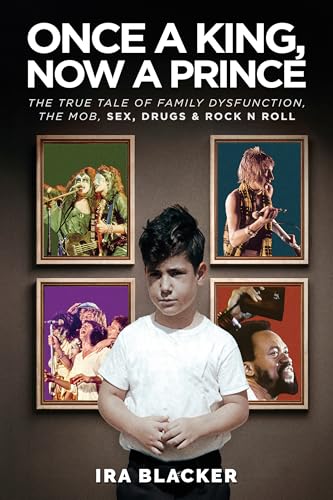
Once A King, Now A Prince by Ira Blacker
What happens when imagination becomes a survival skill instead of a pastime? Once A King, Now A Prince by Ira Blacker reveals the answer—if you’re willing to follow the journey.

 OneTribune