
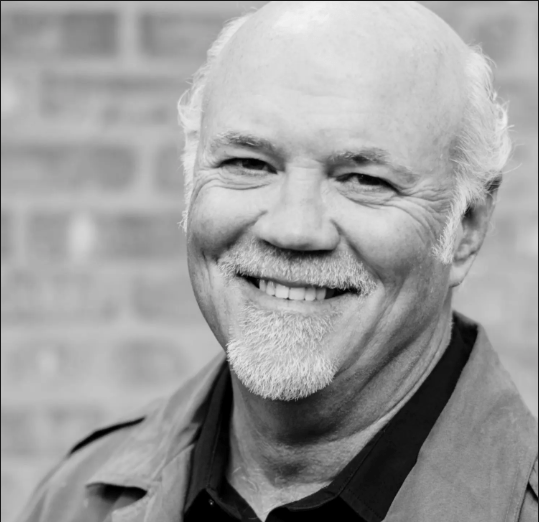
David W. Berner is the winner of the 2024 Fugere Book Prize for Finely Crafted Novellas among other awards and an author of memoir, fiction, and poetry. In this interview, Berner explores how we find meaning in the everyday, tending to our memories and the passage of time.
David, thank you for joining us. To begin, could you tell us about yourself in your own words—what you do, your journey as a writer, and what you’re hoping readers take away from your work?
I’ve been writing seriously most of my life, first as a broadcast and print journalist, then turning to my own life and writing my first memoir in my 40s. I’ve been writing books, short stories, and poetry for decades now. Telling stories has always been a part of my creative life.
I see my current work as contemplative, both the fiction and memoir. It’s also true about my poetry. Much of my prose leans on poetry; rhythm and tone are important. There are many who have said that poetry is a kind of “witnessing.” I see that in my writing — a witnessing of my place in the world and how it fits in within the worlds of others. It’s the same with fiction. It’s the same approach: being a witness to the world and the characters’ place in it.
Garden Tools is grounded in moments that many might overlook—how did this theme of finding meaning in the everyday come to define your writing in this collection?
The first inspiration came from my wife, an avid and expert gardener. I see her working with her trowel, carefully weeding, digging, nurturing. It’s what we do with life. Life is the garden, and we tend to it with care, or let it become overgrown and full of weeds. And in that process, we only have the “everyday” to guide us through it all. It’s all that matters—the everyday—that single moment in time.
All the poems in Garden Tools relate directly or circuitously to this idea. But the collection didn’t start out with that overall theme. I just wrote poems that moved me in some way on subjects that mattered to me or that we can all relate to, and eventually discovered the theme that ran through nearly all of them. Writing, and especially writing poetry, is sometimes a “spooky art,” to use the words of Norman Mailer.
Memory plays a central role in your poetry. How do you navigate what to preserve, reshape, or release when writing about personal experiences?
I’ve been writing memoir and personal stories for many years. I wear my heart on my sleeve and believe telling my personal story helps everyone tell their own. We share so much of the human condition and if we all would be more vulnerable in our sharing, we would understand each other better. It’s hard. I struggle, too. But it’s necessary to open yourself, your heart, and that shows up in your work.
Your poems avoid dramatics and lean into quiet, reflective spaces. Was this a deliberate stylistic choice, or did it emerge naturally?
It’s a natural thing. I go with my heart and where it pulls me. I am a contemplative person, so, why wouldn’t my writing, which comes from deep inside me whether it be poetry or fiction, not also be contemplative? I don’t try to write to a “style,” but rather try to stay true to my voice, my authenticity. I believe that’s what a true writer does. They write as themselves for themselves, and not the market or the current whim of the publishing industry.
Many poems in Garden Tools touch on relationships—with parents, children, partners, and even neighbors. How does writing about these bonds help you understand them better?
There is no question that I understand a thing, a person, a moment far better after I write about it. Joan Didion said she wrote to find out what she was thinking. I am in that camp. That very focused look at something—a person, an event, even a garden tool—can reveal layers of emotion.
Your book avoids explicit ideology or sensationalism, yet it resonates deeply with emotional truth. How do you balance personal honesty with universal accessibility?
I honestly never think about that. I believe that if I write a poem that resonates with me, it will hopefully resonate with others. It’s the shared human condition. Of course, the details may be different. We all live our own lives. But we all have mothers, we have all loved someone, we all have had heartbreak, we all wish upon a star, revere the moon, find solace in a sunset. If I write about what moves me, I hope and believe it will move the reader. I don’t know any other way to approach it.
As someone who has written both fiction and memoir before turning to poetry, how did your approach shift when writing Garden Tools?
Reviewers and readers have said they have found a kind of poetry in my prose. That’s a wonderful thing and a humbling comment. I hope that’s true. And if so, then the poetry part of my writing life comes rather naturally. But it took some time to believe I was hitting the right marks. I shared a lot of poetry with poets I admire. They have been extremely helpful in shaping my approach and seeing what works or doesn’t.
Can you share a moment or memory—perhaps one not included in the book—that you often return to for creative grounding?
Great question. If there is anything that truly grounds me in my creative life, it’s the land. It’s nature. A walk in the woods. A walk in the trees. A walk along water. Landscapes inspire me. They open my heart.
In the Celtic tradition the most magnificent landscape, the ones that make our souls come alive, are known as “thin places” – some say it’s a location, usually a wide open, remote place where the veil between the earthly and the divine is lifted. Northern New Mexico does that for me. The Irish coast. The islands in the Pacific Northwest. The Pennsylvania woods of my youth.
You’ve been recognized for your work in various formats. What has been one of the most meaningful responses or interactions you’ve had from a reader, and why did it stay with you?
Getting direct reader responses to my work is so beautiful. Writing is a one-way, solitary act, but in the reading, it becomes an act of sharing, a combined interpretation, mixing emotion and experience.
If I had to pick one response that was most meaningful, it would be at a book club event where the group had read one of my memoirs. It was a simple thing. A participant showed me a passage in the book that she had highlighted with a yellow marker. She smiled as she revealed it to me. It was such a personal moment.
For writers and readers seeking to slow down and reconnect with their surroundings, what practices or habits have helped you develop the kind of mindful observation reflected in your poems?
It is always something I need to work on. My mind is continually moving, considering stories and words. I have begun to do a mild version of Tai Chi each morning, and I try to write a poem every day. It doesn’t have to be any good, really. It’s simply an act of meditation. It slows down my creative mind, gets me centered on what matters.
I write the poem on a typewriter. I have two. A Smith-Corona Skyriter and a wonderful English-Italian Olivetti model. I work inside a small writing shed. The 8×10 sanctuary in my beloved solitary space.
Being alone and using those typewriter keys and not those of a computer allow one to study each word more intensely and with more purpose. It connects one to the mind, body, and heart in a tactile way, feeling more linked to the creative process.
Related

Book Review: “Garden Tools: Poems” by David W. Berner
What if a rusted trowel knew more about love and grief than a bestselling novel ever could? This review will show you why—and how poetry might quietly change everything.
Keep reading
The Islander by David W. Berner
What does a sunset truly look like to someone who sees light not just as illumination but as a prism of existence? Find out in The Islander by David W. Berner.
Keep readingMore Posts Like This

Reimagining Life Through Words and Service with Debra J. White
What happens when life’s hardest blows lead to unexpected purpose? Discover how Debra turned trauma, recovery, and rescued animals into writing and volunteer work that inspires resilience and connection.
Keep reading
Learning from the Land: A Conversation with Cathryn Wellner on Life’s Unexpected Lessons
Ever wondered what it’s like to raise sheep, pigs, and camels while learning life lessons along the way? Cathryn Wellner shares her unexpected journey, and readers will discover how she adapted and thrived.
Keep reading
Carmella Parker on Law, Education, and Guiding Institutions Through Change
How do you teach students about laws that are still being written? This interview explores one legal educator’s answer—revealed through experience, strategy, and real-world change inside the evolving legal landscape.
Keep reading
Shannon O’Brien on Travel, Teaching, and Redefining Home
Can a backpack become a home and a classroom at the same time? This interview follows one teacher-writer’s journey to find out—revealed through travel, reflection, and lived experience.
Keep reading
Leon Mitchell on Imagination, Resilience, and Finding the Extraordinary in the Ordinary
What if imagination isn’t an escape but a survival skill you forgot you had? This interview explores that idea—revealed through childhood wonder, discipline, and stories that reflect who we are.
Keep readingWe’d love to hear from you!
What are your thoughts on this piece? Share your insights in the comments below!
- What stood out to you most about this post?
- Have you read a book recently that relates to the themes discussed here?
- What’s your favorite takeaway or reflection from this write-up?
Let’s keep the conversation going—your thoughts make this space richer!
Disclaimer: The content on this site is provided for informational and inspirational purposes only. While we strive for accuracy, the views expressed in reviews, articles, and recommendations are subjective and may not reflect the opinions of all readers.
We receive complimentary copies of all books we review. However, this practice does not compromise the integrity or honesty of our reviews. Every write-up reflects the contributor’s genuine impressions and critical analysis, ensuring transparency and trust with our readers.
For a complete understanding of our practices, please refer to our full Disclaimer, Privacy Policy, and Terms of Service. These documents outline how we manage your information, ensure transparency, and uphold your rights as a user.
To request for a review, to nominate your favorite book for an award, or for more details about our awards, click here.
Other Stories
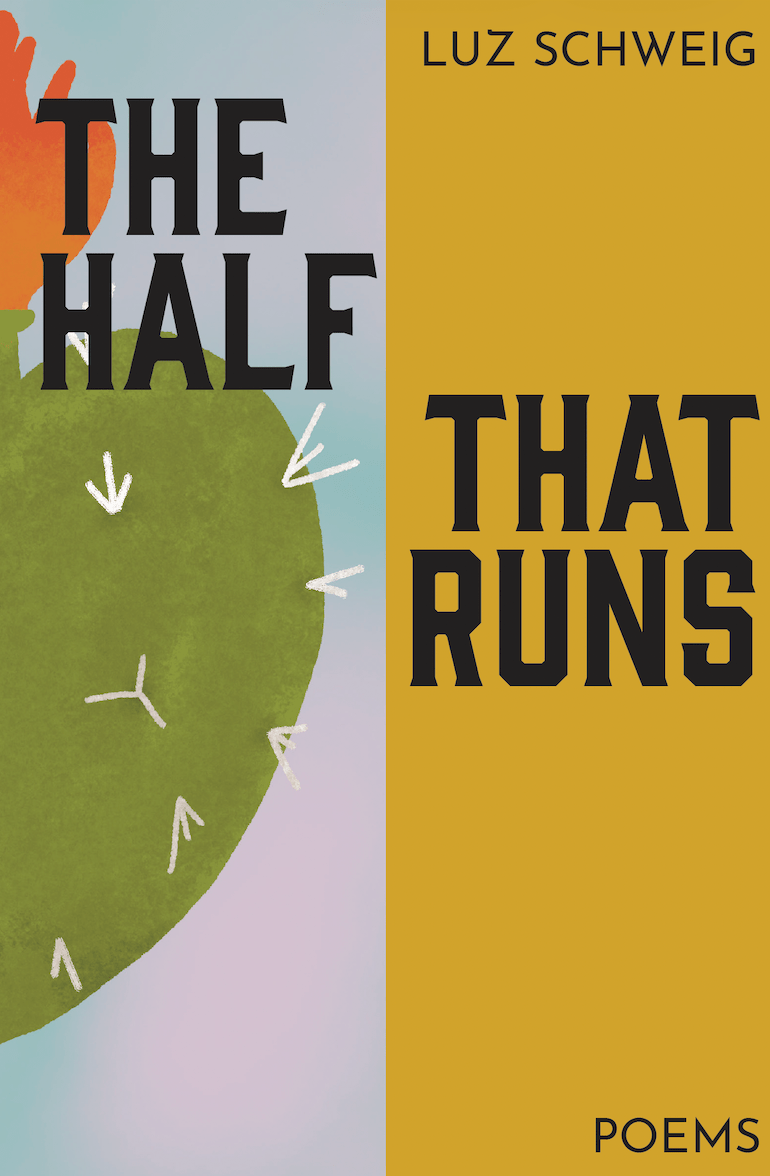
The Half That Runs by Luz Schweig
What if your memories had a geography—one that kept shifting under your feet like sand? Discover how The Half That Runs by Luz Schweig maps identity—read the full piece.
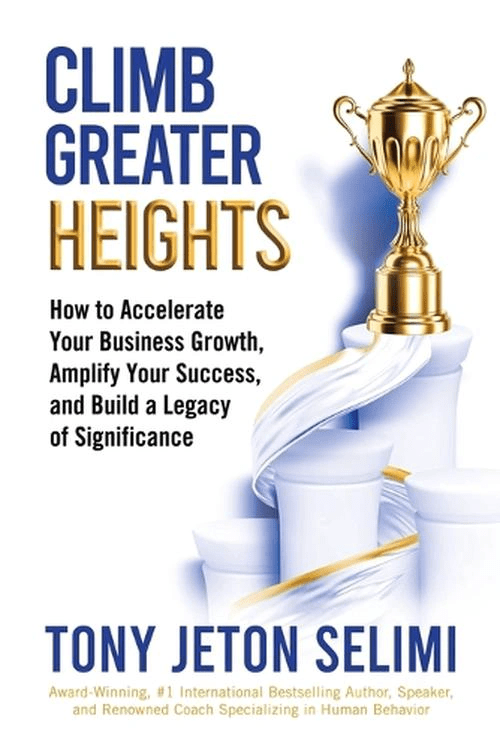
Book Review: Climb Greater Heights by Tony Jeton Selimi
What if your biggest business obstacle isn’t competition but something invisible within you? Discover the answer in Climb Greater Heights by Tony Jeton Selimi—read the full review to explore.
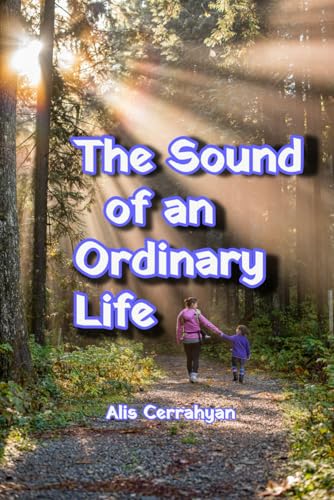
Review of The Sound of an Ordinary Life by Alis Cerrahyan
There are many ways to tell the story of a life. Some choose grand narratives, sweeping arcs of triumph and tragedy. Others, like The Sound of an Ordinary Life, find meaning in the quiet spaces, the moments that seem small but carry the entire weight of a person’s existence.

 OneTribune