
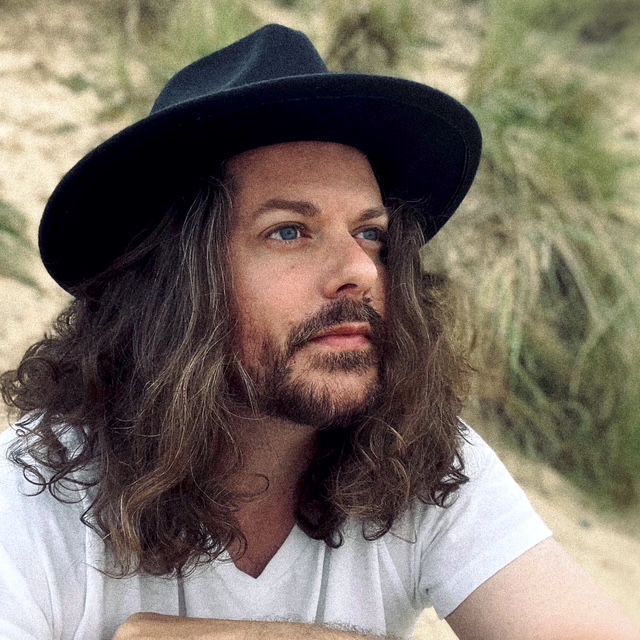
Leon Mitchell approaches storytelling as both craft and compass. An author shaped by psychology, discipline, and a childhood steeped in imagination, he writes narratives that uncover meaning beneath the ordinary. In this interview, he reflects on creativity as an active force: one that helps readers navigate challenge, connection, and growth rather than escape them.
Leon, thank you for taking the time to speak with us. To begin, could you introduce yourself in your own words—who you are, what you do creatively or professionally, and what you aim to achieve through your work?
“I’m an explorer who never quite let go of the ‘why’ phase. Professionally, I’m an author; creatively, I’m an architect of internal landscapes. My work is dedicated to peeling back the layers of the mundane to find the extraordinary imagination beneath—something you may have lost. Ultimately, I aim to create stories that act as a mirror, letting readers see parts of themselves they hadn’t yet found the words for.”
Many readers are drawn to stories that balance ordinary life with imaginative possibilities. How did your interest in storytelling develop, and what early experiences influenced the way you approach narrative today?
I grew up in the 80s, a decade where the ordinary world felt like a launchpad. My storytelling roots are buried in the glow of a CRT television and the crackle of a VHS tape. Watching those classic films—where kids on bikes could stumble into cosmic adventures—taught me that normal is just a thin layer over something marvellous. It made me realise that imagination isn’t just a hobby; it’s a gift that allows us to find the “extra” in the ordinary. I still write with that same sense of wonder today.
For me, the 80s were a sensory explosion. It was about sitting in my room, headphones on, letting the synthesisers and bold melodies of the era build entire civilisations in my mind. Those songs weren’t just background noise; they were soundtracks to unwritten epics. That era taught me that narrative is about transport—the ability to take a reader from their living room to another world entirely. It gave me the conviction that if you can dream it, you can inhabit it.
I believe there was a specific kind of magic in an 80s childhood—the freedom to roam and the fuel to dream. Between the Spielbergian sense of adventure and the dark, imaginative fantasy films of the time, I learned that the world was much larger than my neighbourhood. It sparked a lifelong realisation: imagination is a gift. I approach narrative now as a way to reclaim that feeling—that sense that around the next corner, something life-changing and impossible is waiting to happen.
Your work places strong emphasis on imagination as an active force rather than an escape. How do you personally define imagination, and how has that definition evolved over time?
When I was younger, I thought it was a place to hide—a sanctuary from boredom or the rain. But over time, I’ve realised it’s actually a tool for engagement. It’s the faculty that allows us to rehearse courage, to empathise with people we’ve never met, and to build the world we want to live in. It’s not an escape from life; it’s the engine that drives it forward.
Growing up in the 80s, I saw imagination as a superpower—the “Force” or a hidden magic. Today, I define it more as a dialogue between the world as it is and the world as it could be. It’s evolved from a childhood “superpower” into a professional “compass.” It doesn’t take me away from the truth; it helps me navigate toward it. It’s the spark that turns a blurry observation into a meaningful connection.
Stories often reflect how people respond to challenges. Without giving away plot details, what kinds of personal qualities or values do you find most important to explore through your characters?
I’m less interested in traditional “superheroes” and more drawn to the quiet resilience of the underdog—the unlikely hero people can relate to. The qualities I value and often seek in stories are curiosity and persistence. In my work, I love exploring that moment when a character realises their imagination isn’t just for dreaming, but for problem-solving. It’s about the courage to look at a bleak situation and have the “active imagination” to see a way through it that others might miss. That “inner light” is what keeps the darkness at bay.
Creating fictional worlds requires structure as well as creativity. Can you walk us through your general process for developing a setting that feels coherent, immersive, and meaningful to readers?
For me, a setting is only as meaningful as the person standing in it. I build my worlds from the inside out, starting with how a character perceives their surroundings. If they’re anxious, the city feels claustrophobic; if they’re inspired, the landscape opens up. I think of the environment as a living participant in the story, not just a backdrop. It becomes immersive when the setting reacts to the characters’ emotions—much like those 80s films where the weather or the music seemed to pulse in time with the protagonist’s heart.
I treat world-building like archaeology in reverse. I start with the “bones”—the history, the local legends, and the unwritten rules of the society.
Many writers describe learning as much from obstacles as from successes. What lessons have you learned throughout your creative journey that continue to shape how you work today?
My military experience taught me that “motivation is not always the strategy.” In the 80s, I learned to dream; in that training, I learned how to follow through with those dreams with discipline. You get up early, you show up, you maintain your “attitude”—which for me is my craft—and you find a way through the obstacles. There’s no other choice. Resilience isn’t just about enduring; it’s about adapting the plan when the “ground truth” changes.
Readers often connect deeply with stories that feel emotionally authentic. How do you approach writing moments that require empathy, restraint, or careful consideration of the reader’s perspective?
My psychology research and MSc have taught me that empathy isn’t just a feeling—it’s a form of radical observation. When I write high-stakes emotional moments, I approach them with an “open heart.” I look at the cognitive dissonance my characters are facing: the gap between what they feel and what they allow the world to see.
I use restraint because, in reality, our most profound shifts often happen in the quiet spaces between the outbursts. My own journey has taught me that the loudest emotions are rarely the most honest ones; I aim for the “quiet truth” that resonates in the reader’s own lived experience. Writing with empathy requires a deep understanding of the unspoken.
Over time, creators accumulate milestones—projects completed, feedback received, recognition earned. Looking back so far, what moments stand out to you as meaningful markers of progress, and why do they matter to you?
While becoming a BAFTA member and receiving industry awards are incredible professional “coordinates,” I’ve always viewed my career as a long-range goal rather than a destination. To me, the most significant markers of progress aren’t the accolades on the shelf, but the “signals” I get back from the world.
It’s the message from a reader who felt seen for the first time, or the person who found the courage to face their own “ordinary” challenges because of a character I created. My military mind values the strategy, and my psychology studies value the person—so for me, a milestone is any moment where my imagination became a catalyst for someone else’s growth.
I’m also a big advocate for young children learning to read before scrolling, so when I see young people reading my books, that’s a nice feeling.
Writing for younger or mixed-age audiences carries unique responsibilities. How do you think about audience awareness while still staying true to your own creative voice?
I approach audience awareness by tapping into my own “80s core”—an era of storytelling that didn’t over-sanitise the world for children. My master’s in psychology helps me understand that children don’t always need simplistic stories; they need authentic ones that reflect their internal struggles.
I stay true to my voice by speaking to the universal human experience. Whether you’re ten or fifty, the fear of the unknown and the need for connection feel the same. By focusing on that “human constant,” I can create a narrative that is accessible to a child but profound for an adult, bridging the generational gap through shared empathy.
Beyond the act of writing itself, what habits, disciplines, or ways of thinking have you found most helpful in sustaining long-term creative work?
My research in psychology also taught me that the “well” of creativity needs constant replenishment. I’ve made a habit of “active curiosity”—intentionally seeking out experiences, conversations, and art that challenge my existing schemas.
I view my creative energy through the lens of a battery: it needs a regular charge from the real world to keep the fictional ones running. By understanding the psychology of my own motivation, I’ve learned to navigate the “dip” that happens in every long project, treating it not as a failure, but as a natural part of the cognitive process.
If you were to write your bio in your own words, what would you say? Looking ahead, what kind of long-term impact would you like your work to have?
When the final page is turned and the awards have gathered dust, I want my legacy to be measured in how I made people feel—and how the world through a child’s eyes opened up for the first time. I hope my work serves as a reminder that imagination is not a retreat, but a form of courage.
I want a reader years from now to close one of my books and feel a little less alone, a little more capable, and infinitely more curious about the person standing next to them. If my stories have provided a map for someone’s own emotional journey or acted as a spark for their own creative mission, then I have done my job.
I once wrote a poem that ended with the words, “Live your life like the stars were hung just to witness the light burning inside you.” I still stand by that.
Related
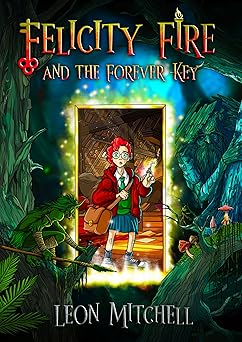
Felicity Fire and the Forever Key by Leon Mitchell
What if the thing that keeps making you late is actually trying to lead you somewhere? Felicity Fire and the Forever Key by Leon Mitchell lets readers discover why—if they dare to follow.
Keep readingMore Posts Like This
Learning from the Land: A Conversation with Cathryn Wellner on Life’s Unexpected Lessons
Ever wondered what it’s like to raise sheep, pigs, and camels while learning life lessons along the way? Cathryn Wellner shares her unexpected journey, and readers will discover how she adapted and thrived.
Keep reading
Carmella Parker on Law, Education, and Guiding Institutions Through Change
How do you teach students about laws that are still being written? This interview explores one legal educator’s answer—revealed through experience, strategy, and real-world change inside the evolving legal landscape.
Keep reading
Shannon O’Brien on Travel, Teaching, and Redefining Home
Can a backpack become a home and a classroom at the same time? This interview follows one teacher-writer’s journey to find out—revealed through travel, reflection, and lived experience.
Keep reading
Danielle Simone on Curiosity, Courage, and Learning Through Story
Have you ever wondered what happens when curiosity goes missing in childhood? This interview explores one educator-author’s response—and how stories can invite exploration, reflection, and care for the world around us.
Keep reading
Following the Story: Harker Jones on Writing Across Genres and Ages
What happens when stories choose their own form? In this interview, readers explore how a writer follows ideas across ages and genres, discovering the answer by reading the full conversation.
Keep readingWe’d love to hear from you!
What are your thoughts on this piece? Share your insights in the comments below!
- What stood out to you most about this post?
- Have you read a book recently that relates to the themes discussed here?
- What’s your favorite takeaway or reflection from this write-up?
Let’s keep the conversation going—your thoughts make this space richer!
Disclaimer: The content on this site is provided for informational and inspirational purposes only. While we strive for accuracy, the views expressed in reviews, articles, and recommendations are subjective and may not reflect the opinions of all readers.
We receive complimentary copies of all books we review. However, this practice does not compromise the integrity or honesty of our reviews. Every write-up reflects the contributor’s genuine impressions and critical analysis, ensuring transparency and trust with our readers.
For a complete understanding of our practices, please refer to our full Disclaimer, Privacy Policy, and Terms of Service. These documents outline how we manage your information, ensure transparency, and uphold your rights as a user.
To request for a review, to nominate your favorite book for an award, or for more details about our awards, click here.
Other Stories
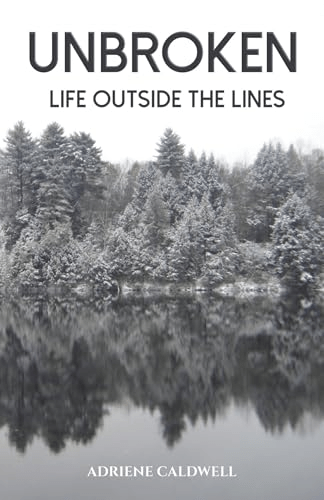
Book Review of Unbroken: Life Outside the Lines by Adriene Caldwell
What if your strongest survival tool wasn’t strength but instinct? In Unbroken: Life Outside the Lines by Adriene Caldwell, discover how one life answers that question—if you dare read on.
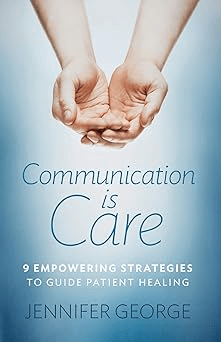
Communication is Care: 9 Empowering Strategies to Guide Patient Healing by Jennifer George
What if the most powerful medicine in a hospital wasn’t in a vial or tablet? Discover how human connection reshapes healing in Communication is Care by Jennifer George—explored in the full review.
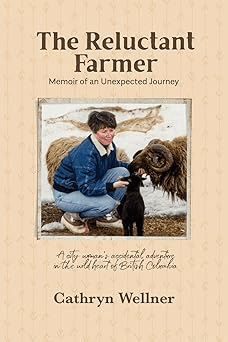
The Reluctant Farmer: Memoir of an Unexpected Journey by Cathryn Wellner
Have you ever wondered what a piglet, a runaway ram, and a hesitant city dweller could possibly teach about courage? Discover the surprising answers in The Reluctant Farmer by Cathryn Wellner.

 OneTribune