

What happens when peace itself is labeled weakness in a universe obsessed with evolution through force? This piece explores that question—and why four unlikely survivors may hold the answer.
Book Title and Author
Earth Warriors: The Four Heroes of Peace by Lui Petri
Genre, Sub-Genres, and Themes
- Genre: Science Fiction
- Sub-genres: Space Opera, Superhero Fiction, Military Sci-Fi
- Themes: Peace versus power, survival ethics, prejudice, found family, moral courage, identity under war
Review
Some science-fiction stories ask how wars are fought. The Four Heroes of Peace asks why they begin—and why they keep going even when everyone knows the cost.
From its opening chapters, the novel establishes a world where survival is no longer guaranteed, and moral clarity is a luxury few can afford. Earth is under assault by the Zlocu Empire, a technologically superior force that equates strength with worthiness and peace with stagnation. Against that backdrop, the story follows four individuals who are not heroes by title, training, or intention, but by circumstance.
Logan, a former teacher, embodies the instinct to protect even when protection seems futile. Seiner represents hardened skepticism shaped by trauma and captivity. Tania carries resilience through humor and emotional openness, while Amira—a displaced alien princess—forces both characters and readers to confront how easily “otherness” becomes justification for fear. Their interactions feel less like a superhero team assembling and more like strangers negotiating survival in real time.
The book’s structure mirrors crisis psychology. Research on disaster response shows that trust forms fastest under shared threat, yet fractures just as quickly when fear dominates decision-making. That tension fuels nearly every interaction here. Arguments feel raw, alliances fragile, and moments of compassion hard-won rather than sentimental.
Worldbuilding is expansive and clearly influenced by anime, tokusatsu, and classic sci-fi traditions. Walkers, knights, Guardians, and interstellar politics coexist in a universe that values spectacle but does not abandon consequence. Importantly, the novel does not glamorize violence. Battles are chaotic, frightening, and costly. When characters act, they do so knowing that survival often comes at moral expense.
One of the book’s strongest elements is its thematic insistence that peace is not passive. In evolutionary biology, cooperation is recognized as a survival strategy, not a weakness, and the narrative echoes this principle repeatedly. The Zlocu’s ideology of domination contrasts sharply with the protagonists’ gradual realization that endurance, empathy, and restraint can be forms of strength.
This book is for readers who enjoy large-scale science fiction grounded in character emotion, especially those who appreciate ensemble casts and morally complex conflicts. It may not suit readers seeking minimal violence, lighthearted escapism, or tightly minimalist prose. Instead, it rewards patience, imagination, and tolerance for intensity.
Ultimately, The Four Heroes of Peace argues that heroism is not about winning wars, but about choosing not to become what war demands. That idea lingers long after the battles fade.
Content Warning
Includes sustained war violence, character deaths, alien invasion themes, and depictions of prejudice and psychological distress.
Other Stories
Book Review: Welcome to Mapleberg by Tye Burroughs
What if a town became so orderly that finding the truth became the real crime? Welcome to Mapleberg by Tye Burroughs explores that question; read the full review to discover.
Keep reading
Book Review: Tesler & the Burning Bush by Mark W. Sasse
What happens when the richest man alive decides that civilization is the problem? Tesler & the Burning Bush asks an unsettling question readers can explore by reading the full review.
Keep reading
Past Tense by LindaAnn LoSchiavo
Can twenty-three different poetic forms make silence speak without pretending to know everything? Past Tense by LindaAnn LoSchiavo invites readers to investigate through poetry together.
Keep reading
Rajat Chohda: Exploring Conscious Living Through Reflection and Everyday Practice
Can a question about an ordinary family conversation change how you define success? Rajat Chohda explores this journey through his experiences, ideas, and writing; read the full interview to discover.
Keep reading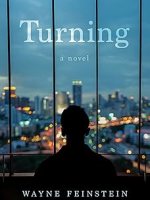
Turning by Wayne Feinstein
What if the loudest room you’ve ever entered was your own memory? Discover how Turning by Wayne Feinstein explores that unexpected question in our full review.
Keep readingWe’d love to hear from you!
What are your thoughts on this piece? Share your insights in the comments below!
- What stood out to you most about this post?
- Have you read a book recently that relates to the themes discussed here?
- What’s your favorite takeaway or reflection from this write-up?
Let’s keep the conversation going—your thoughts make this space richer!
Disclaimer: The content on this site is provided for informational and inspirational purposes only. While we strive for accuracy, the views expressed in reviews, articles, and recommendations are subjective and may not reflect the opinions of all readers.
We receive complimentary copies of all books we review. However, this practice does not compromise the integrity or honesty of our reviews. Every write-up reflects the contributor’s genuine impressions and critical analysis, ensuring transparency and trust with our readers.
For a complete understanding of our practices, please refer to our full Disclaimer, Privacy Policy, and Terms of Service. These documents outline how we manage your information, ensure transparency, and uphold your rights as a user.
To request for a review, to nominate your favorite book for an award, or for more details about our awards, click here.
Other Stories
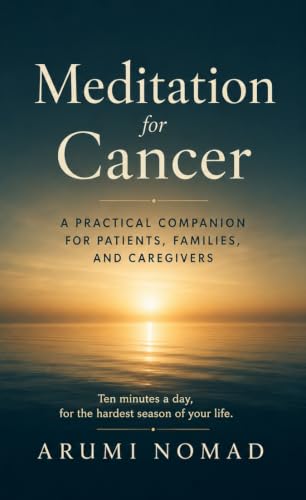
Meditation for Cancer: A Practical Companion for Patients, Families and Caregivers by Arumi Nomad
What if the strongest medicine you carried couldn’t fit inside a bottle? Discover how Meditation for Cancer by Arumi Nomad explores that surprising question in our complete review.
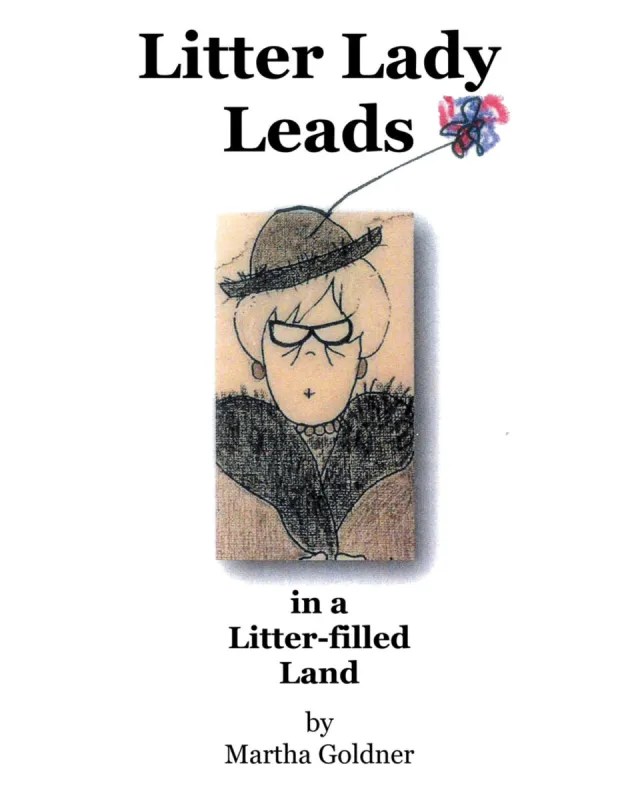
Litter Lady Leads by Martha Goldner
Can one person’s strange habit quietly change an entire neighborhood? Discover why Litter Lady Leads by Martha Goldner asks an unexpected question—and why the full story offers the answer.
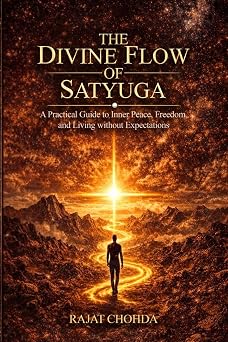
The Divine Flow of Satyuga by Rajat Chohda
What if the heaviest suitcase you carry has no handle and no weight? Discover how The Divine Flow of Satyuga by Rajat Chohda explores that mystery in the full review.


