
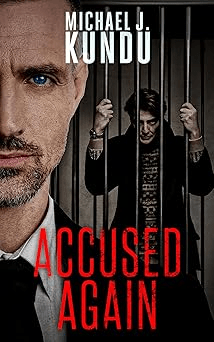
What happens when freedom feels more frightening than a prison cell? This review explores that question through Accused Again by Michael J. Kundu. Read on to discover why.
Book Title and Author
Accused Again by Michael J. Kundu
Genre, Sub-genres, and Themes
- Genre: Legal Thriller
- Sub-genres: Courtroom Drama, Psychological Fiction
- Themes: Justice, wrongful conviction, moral responsibility, resilience, truth versus perception, societal systems
Review
Most people associate justice with finality: a verdict is delivered, a sentence is served, and life moves on. Accused Again challenges that assumption by asking a quieter, more unsettling question—what happens to a person after the system declares the story complete?
Michael J. Kundu’s novel follows a man re-entering society after decades of incarceration, only to find that freedom does not erase suspicion, memory, or institutional momentum. This premise alone places the book within a well-established legal thriller tradition, yet the execution distinguishes it. Rather than racing toward spectacle, the narrative lingers on procedure, psychology, and consequence. Readers are not rushed through the courtroom; they are seated in it.
Scientific studies on wrongful convictions consistently show that exonerees face lasting psychological effects, including hypervigilance, distrust of authority, and difficulty reintegrating into modern life. Kundu translates these findings into lived experience. The protagonist’s inner world feels shaped by time rather than plot convenience, and his reactions carry the weight of repetition—an aspect many thrillers avoid but this one embraces.
The courtroom scenes reflect a clear understanding of legal mechanics, from jury selection to evidentiary boundaries. More importantly, they show how law operates as a human system rather than an abstract ideal. Judges bring history with them. Attorneys carry regret. Jurors arrive with assumptions they may not recognize in themselves. These dynamics are presented without caricature, allowing readers to observe how justice is influenced by people, not merely rules.
What makes the novel unconventional is its willingness to shift perspective. At times, the focus moves away from the accused entirely, exploring how others interpret the same facts through personal frameworks shaped by culture, memory, and fear. This mirrors real-world research on cognitive bias, where individuals exposed to identical information reach different conclusions based on prior beliefs.
The book is for readers who appreciate patience, moral inquiry, and realism. It will resonate with those who enjoy courtroom dramas that prioritize process over spectacle and character over twists. It may not suit readers seeking fast-paced action or simplified resolutions, as the story values credibility and reflection over convenience.
Ultimately, Accused Again is less about whether justice is served and more about how fragile the idea of justice becomes when examined closely. It invites readers to sit with uncertainty, to question conclusions, and to consider how easily a life can be reshaped by decisions made in rooms most people never enter.
Content Warning
This book contains references to wrongful imprisonment, self-harm, and legal proceedings involving violent crime. All material is presented without graphic detail and within a serious, reflective context.
Book World Front Award

This book is a winner of the Book World Front Award, an accolade that celebrates extraordinary literature from around the globe. It honors stories that bring universal themes to life and resonate across cultures. Aligned with our mission to explore the world through words, this award spotlights voices that inspire, connect, and showcase the power of global storytelling—where every story takes center stage.
We’d love to hear from you!
What are your thoughts on this piece? Share your insights in the comments below!
- What stood out to you most about this post?
- Have you read a book recently that relates to the themes discussed here?
- What’s your favorite takeaway or reflection from this write-up?
Let’s keep the conversation going—your thoughts make this space richer!
Disclaimer: The content on this site is provided for informational and inspirational purposes only. While we strive for accuracy, the views expressed in reviews, articles, and recommendations are subjective and may not reflect the opinions of all readers.
We receive complimentary copies of all books we review. However, this practice does not compromise the integrity or honesty of our reviews. Every write-up reflects the contributor’s genuine impressions and critical analysis, ensuring transparency and trust with our readers.
For a complete understanding of our practices, please refer to our full Disclaimer, Privacy Policy, and Terms of Service. These documents outline how we manage your information, ensure transparency, and uphold your rights as a user.
To request for a review, to nominate your favorite book for an award, or for more details about our awards, click here.
Other Stories

Reimagining Life Through Words and Service with Debra J. White
What happens when life’s hardest blows lead to unexpected purpose? Discover how Debra turned trauma, recovery, and rescued animals into writing and volunteer work that inspires resilience and connection.
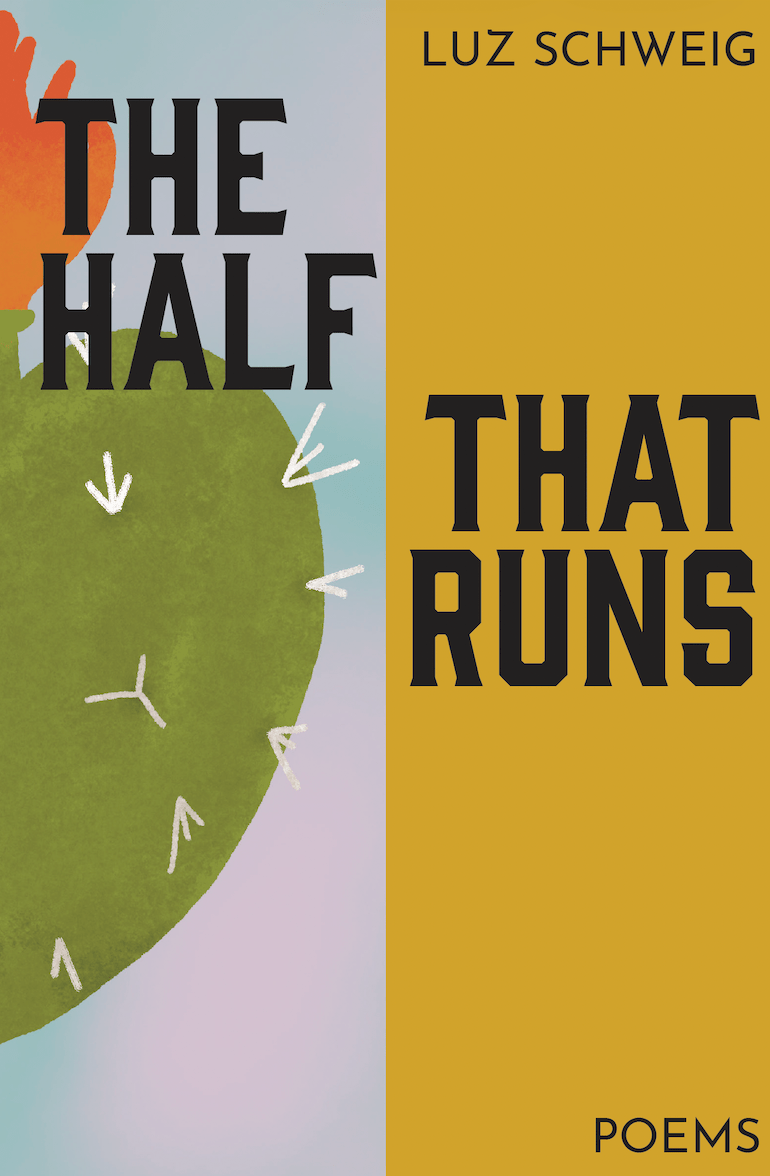
The Half That Runs by Luz Schweig
What if your memories had a geography—one that kept shifting under your feet like sand? Discover how The Half That Runs by Luz Schweig maps identity—read the full piece.
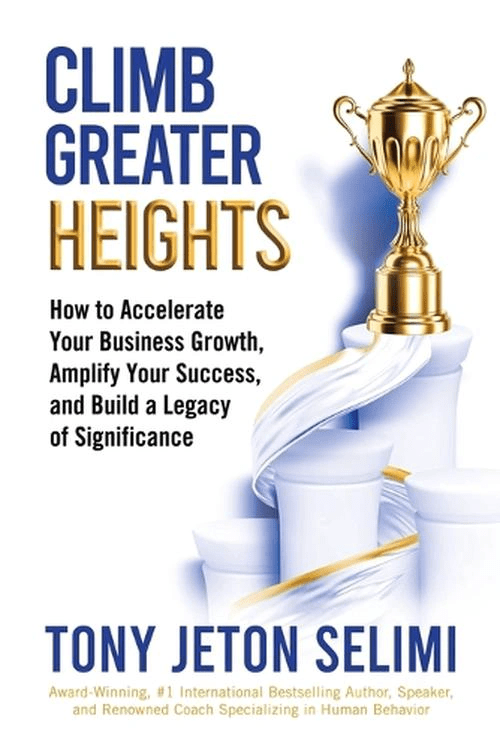
Book Review: Climb Greater Heights by Tony Jeton Selimi
What if your biggest business obstacle isn’t competition but something invisible within you? Discover the answer in Climb Greater Heights by Tony Jeton Selimi—read the full review to explore.

 OneTribune
