
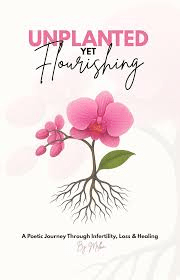
Have you ever wondered if silence can bloom into something living? This piece explores how loss might still give rise to growth—discover the answer in the following review.
Book Title and Author
Unplanted, Yet Flourishing by Melba Morel
Genre, Sub-genres, and Themes
- Genre: Poetry
- Sub-genres: Contemporary, Lyrical, Confessional
- Themes: Infertility, grief, resilience, nature as metaphor, healing, unseen struggles
Review
Some books arrive not as declarations but as whispers, and those whispers can sometimes carry the greatest weight. Unplanted, Yet Flourishing by Melba Morel is a poetry collection that dares to explore an often-silenced corner of human experience—the grief of infertility—and does so with uncommon gentleness. Unlike books that aim to prescribe or resolve, this one listens, lingers, and invites readers into a space where pain is acknowledged without being reduced.
Reading this collection feels less like reading and more like sitting beside a friend who doesn’t rush to fill silence. Each poem offers a snapshot of what it means to hold longing and sorrow in the same hands, while still finding traces of light. The use of natural imagery is striking; roots, petals, soil, and seasons don’t just illustrate—they embody the states of grief and renewal. Neuroscientists remind us that metaphors can light up sensory regions of the brain, and here, the reader feels both the barrenness and the bloom.
There is a paradox at work: the poems are intimate yet universal. While written from the lens of infertility, the emotional truths resonate with anyone who has carried a hope unfulfilled. Whether the hope was for a child, a dream, or even a version of self that never came to be, the words hold space for that ache. Consider how many people quietly bear losses invisible to the world. Melba’s poetry brings those unseen landscapes into gentle focus.
Stylistically, the collection is pared down, leaning on sparseness rather than ornament. This choice mirrors the subject itself—when something is missing, language doesn’t need to be crowded. It is the pauses, the white space, that give room for reflection. In a world saturated with noise, this is a rare gift.
But this is not a book only about sorrow. Like the stubborn wildflower breaking through concrete, these poems insist that beauty and growth can arise from absence. Not as replacement or compensation, but as transformation. In psychological studies of resilience, researchers note that meaning-making is central to healing after loss. Melba’s work exemplifies this: it does not erase pain but shapes it into presence.
Who is this book for? It is for anyone who has walked through an invisible grief, anyone who has questioned their place in a world that measures worth by outcomes. It is for readers who appreciate poetry that doesn’t demand unraveling but instead meets them where they are. Who is it not for? Perhaps readers seeking plot-driven narratives or prescriptive answers may find themselves unsettled. This is a book for feeling, not fixing.
Ultimately, Unplanted, Yet Flourishing is a quiet triumph. It shows that even when life does not take the shape we envisioned, something deeply human and profoundly beautiful can still grow. It reminds us that healing is less about arriving at certainty and more about learning to inhabit the in-between.
Content Warning: This collection contains themes of infertility and grief, which may be emotionally difficult for some readers.
Voyages of Verses Book Award

This book is a winner of the Voyages of Verses Book Award, a recognition for books that expand the horizon of what literature can achieve. We honor works that challenge preconceived notions, broaden worldviews, and celebrate the rich blend of voices that shape our global narrative. Whether it’s a novel that immerses you in a different culture, a collection of poems that captures the essence of shared humanity, or a nonfiction account that sparks critical thought, the Voyages of Verses Book Award celebrates stories that invite exploration and discovery.
We’d love to hear from you!
What are your thoughts on this piece? Share your insights in the comments below!
- What stood out to you most about this post?
- Have you read a book recently that relates to the themes discussed here?
- What’s your favorite takeaway or reflection from this write-up?
Let’s keep the conversation going—your thoughts make this space richer!
Disclaimer: The content on this site is provided for informational and inspirational purposes only. While we strive for accuracy, the views expressed in reviews, articles, and recommendations are subjective and may not reflect the opinions of all readers.
We receive complimentary copies of all books we review. However, this practice does not compromise the integrity or honesty of our reviews. Every write-up reflects the contributor’s genuine impressions and critical analysis, ensuring transparency and trust with our readers.
For a complete understanding of our practices, please refer to our full Disclaimer, Privacy Policy, and Terms of Service. These documents outline how we manage your information, ensure transparency, and uphold your rights as a user.
To request for a review, to nominate your favorite book for an award, or for more details about our awards, click here.
Other Stories

Growth Unlocked – Books That Show the Power of Transformation
Personal growth is often a journey of trials, resilience, and, ultimately, transformation. In literature, these journeys reveal the potential within us to change, evolve, and discover our truest selves—even in the face of adversity. “Growth Unlocked” stories tap into the essence of self-discovery, resilience, and the process of becoming something more than we once were.…
Learning from the Land: A Conversation with Cathryn Wellner on Life’s Unexpected Lessons
Ever wondered what it’s like to raise sheep, pigs, and camels while learning life lessons along the way? Cathryn Wellner shares her unexpected journey, and readers will discover how she adapted and thrived.
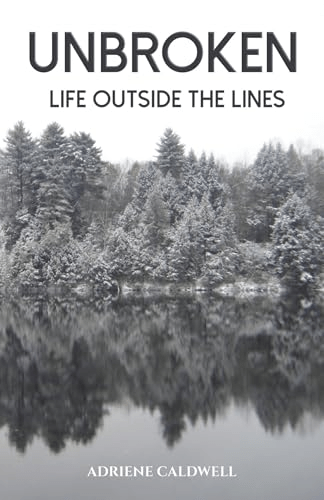
Book Review of Unbroken: Life Outside the Lines by Adriene Caldwell
What if your strongest survival tool wasn’t strength but instinct? In Unbroken: Life Outside the Lines by Adriene Caldwell, discover how one life answers that question—if you dare read on.

 OneTribune