What does a rattlesnake, a polar expedition, and a quiet laboratory desk have in common? The answer connects more deeply than you think, and you’ll discover why inside this piece.
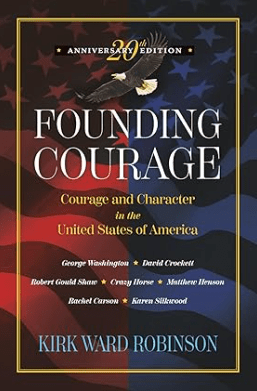
Founding Courage by Kirk Ward Robinson
Genre: Nonfiction
Sub-genres: History, Biography, Cultural Reflection
Themes: Courage, sacrifice, resilience, identity, moral choice
Content Warning: Includes descriptions of danger, war, and death presented in a factual and respectful manner.
Courage is a word that can feel overused until you are asked to define it. Kirk Ward Robinson’s Founding Courage attempts that definition, not with abstractions but through stories that span centuries. The book gathers figures as disparate as presidents, explorers, environmentalists, and whistleblowers, and quietly suggests that they are linked by something more than circumstance—they are linked by choice.
Reading these pages feels less like moving through a linear history and more like wandering a museum where the exhibits are people rather than artifacts. You meet George Washington, but you also meet Karen Silkwood, Rachel Carson, and Matthew Henson. Their settings differ wildly, yet each faced a moment where fear could have easily dictated silence or retreat. Instead, they did something else. Robinson doesn’t just tell us what happened; he shows us how those decisions echo beyond their lifetimes.
The book’s greatest strength lies in its willingness to explore courage as both physical and moral. It is easy to admire a mountaineer fighting frostbite in the Arctic, but it takes equal fortitude for a scientist at a desk to publish research that disrupts industries. In this way, Robinson stretches the reader’s idea of bravery, moving it from battlefields into classrooms, laboratories, and public squares.
There are moments where Robinson steps aside to consider what science has learned about fear and resilience. He reminds us that our bodies react chemically to crisis, but then nudges us to consider the human capacity to push beyond those reflexes. It is in that sliver—between what we are wired to do and what we decide to do—that courage lives.
The prose avoids dramatization, instead allowing the weight of events to carry themselves. This approach respects the subject matter and ensures the stories remain accessible. The narrative is neither sermon nor lecture but an invitation: if these people could act bravely within their circumstances, what might that mean for our own?
This is not a book for someone seeking a quick inspirational slogan or a simplified tale of heroes. It is for readers who value the complexity of history and who are willing to sit with layered examples. It is for anyone who has asked, in quieter moments, how ordinary people become remembered for extraordinary acts.
What lingers after the final page is not just admiration for historical figures but a subtle shift in perspective. Courage is no longer an abstract ideal tied to uniforms or speeches; it is recast as an everyday possibility. Robinson does not demand we become heroes. He only asks us to recognize that we might already carry the seed of courage within, waiting for its moment.
Atlas of Stories Award
This book is a recipient of the Atlas of Stories Award, an accolade that celebrates works mapping the literary world with creativity and depth. Aligned with our mission of “Mapping the World Through Books,” this award honors stories that inspire, educate, and entertain while transcending cultural and imaginative borders. These remarkable narratives explore universal themes, fostering connection and understanding as they take readers on a journey through the richness of global storytelling.
We’d love to hear from you!
What are your thoughts on this piece? Share your insights in the comments below!
- What stood out to you most about this post?
- Have you read a book recently that relates to the themes discussed here?
- What’s your favorite takeaway or reflection from this write-up?
Let’s keep the conversation going—your thoughts make this space richer!
Disclaimer: The content on this site is provided for informational and inspirational purposes only. While we strive for accuracy, the views expressed in reviews, articles, and recommendations are subjective and may not reflect the opinions of all readers.
We receive complimentary copies of all books we review. However, this practice does not compromise the integrity or honesty of our reviews. Every write-up reflects the contributor’s genuine impressions and critical analysis, ensuring transparency and trust with our readers.
For a complete understanding of our practices, please refer to our full Disclaimer, Privacy Policy, and Terms of Service. These documents outline how we manage your information, ensure transparency, and uphold your rights as a user.
To request for a review, to nominate your favorite book for an award, or for more details about our awards, click here.
Other Stories
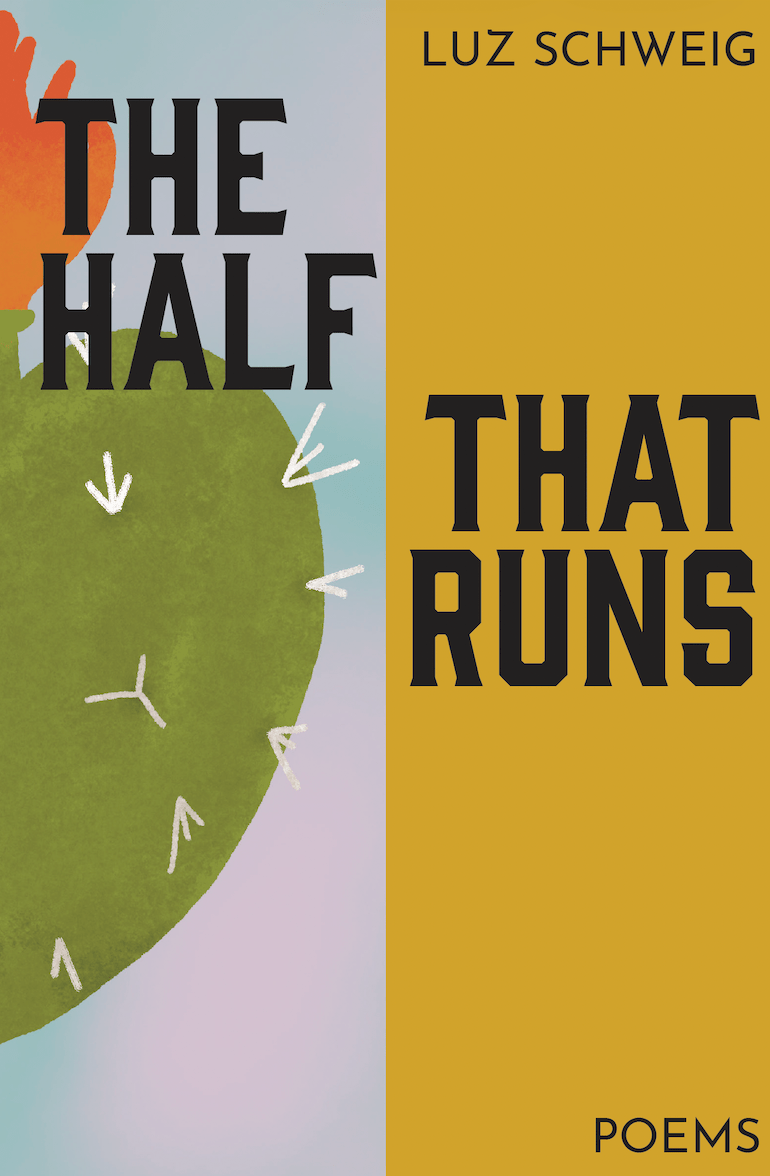
The Half That Runs by Luz Schweig
What if your memories had a geography—one that kept shifting under your feet like sand? Discover how The Half That Runs by Luz Schweig maps identity—read the full piece.
Book Review: Climb Greater Heights by Tony Jeton Selimi
What if your biggest business obstacle isn’t competition but something invisible within you? Discover the answer in Climb Greater Heights by Tony Jeton Selimi—read the full review to explore.
Review of The Sound of an Ordinary Life by Alis Cerrahyan
There are many ways to tell the story of a life. Some choose grand narratives, sweeping arcs of triumph and tragedy. Others, like The Sound of an Ordinary Life, find meaning in the quiet spaces, the moments that seem small but carry the entire weight of a person’s existence.

 OneTribune