
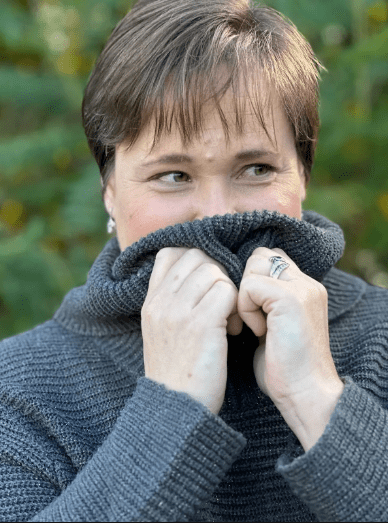
Brigid Barry describes a nonlinear path to her current work, which combines military service, legal studies, and real estate with long-term writing efforts. Her debut novel, Straw Girl, integrates personal experience with fiction to explore complex themes. The following interview looks into her writing process and the story behind her novel.
Editor’s Note: This interview touches on themes of trauma, mental health struggles, and emotional vulnerability. Reader discretion is advised for those sensitive to discussions of assault, grief, and personal hardship.
Brigid, thank you for making time for this conversation. For our readers who may be new to your work, could you please introduce yourself in your own words—who you are, what you do, and what motivates your writing?
As for who I am, I did everything out of order. I went straight to work after high school, but joined the Air Force after 9/11. I was honorably discharged due to an injury and went back to my manufacturing job for another stretch before quitting and going to college. I got an associate’s degree in paralegal studies through the VA’s Vocational Rehabilitation program, and when I was offered the opportunity to get a bachelor’s, I took it. I’ve been working in real estate since graduation.
I’ve been writing for so long that I can’t remember why anymore. Part of it is writing a story I’d like to read, but I have story ideas like some people have earworms. I can’t concentrate on anything until I get the story down on paper.
Your novel Straw Girl blends vivid personal reflection with fiction. What was the process like for deciding how much of your real experiences to include, and how did you draw the line between truth and storytelling?
I laughed at this question. There reached a point that Mel was such a train wreck that I had to pull back because no one would believe someone that broken could possibly be functional. It put a few things in perspective for me!
100% of the ghostly encounters in Straw Girl actually happened, from the footsteps on the porch, to the dogs, to what happened with the baby. A few readers were horrified to discover that every EVP is verbatim from the paranormal investigations—they thought they were made up.
On the other hand, my personal experiences, from the assault to the fat shaming, were fictionalized to soften some edges. It exposed me a little less while leaving the core there. People I don’t know will be reading it, and I can only expose so much of my wounds.
Many readers are struck by the emotional honesty in your writing. How do you approach writing about emotionally heavy material in a way that’s constructive—for both yourself and your readers?
I’m really glad that it’s resonating with people emotionally. That’s why I put it out there. The best answer I have is that not only is Mel a survivor, she’s thriving. It took her some time and a few stumbles, but she gets her happily ever after. When you’re in the middle of a situation, it can seem like you’ll never get out and that that’s what life will be forever. It’s not true, and I hope Mel’s new beginning at the end of Straw Girl helps readers see that.
The house in Straw Girl almost feels like a character itself. When you write about places—especially those tied to memory—how do you build them to serve both emotional and narrative roles?
First, I want to say how happy I am that this came through. I get so absorbed in what I’m writing I can’t always see how other people will take things!
The narrative part is easy. A building is a thing to be interacted with, like a set on a stage. To get the emotional role, the place has to feel alive. At the moment, it’s unique to Straw Girl, where Mel perceives a threat from the house and thinks of it as a living, breathing thing, rather than just a building.
You mentioned in your author’s note that your story was inspired by rediscovered diaries and recordings. What role does archiving—whether through writing, audio, or memory—play in your creative process?
Straw Girl is the only manuscript I’ve ever written using archived materials, and I have to say it was really, really fun. I started with the EVPs and diary entry, and then built Mel’s story around it.
My memory is where I get the emotional ties. I may not remember every single detail, but the emotions tied to an event are there if I look. Since my main goal in writing is to evoke some type of feeling in my reader, I always dig to find the right one.
Are there particular techniques, rituals, or routines you use to get into a grounded, healthy headspace when writing scenes that come from personal or intense emotional terrain?
I am not sure how to answer this one, because my techniques are largely subconscious and may not be considered healthy by all. I compartmentalize a lot, and put things into little boxes and hide them away in the recesses of my memory. I can dig the box out, see what’s in it, and put it away, especially if it’s not something I’m ready to deal with.
The contents of Straw Girl took place many, many years ago, and I’ve done a lot of work to move on. In a more recent project, I poured fresh grief over a family situation onto the page. Even if the words don’t survive to the end of the process, writing them down really helped me navigate the emotional terrain.
In writing and revisiting formative life events, what have you learned about resilience and the long-term process of personal growth that you think might benefit others?
It’s hard. Some days it feels absolutely impossible. As independent as I consider myself, I couldn’t have done any of it alone. I had to find my people to lean on. When they leaned back, it made me stronger.
In your experience, what are some of the most helpful ways storytelling can support others who may be going through transition, healing, or personal reinvention?
Seeing yourself, regardless of media, gives a feeling of validation. There’s a person who’s like me, going through something I’ve gone through or am going through. You’re suddenly not invisible, trying to navigate some thing that no one else on the planet has ever navigated before.
This is why representation in media is so important. Not being seen is like being erased, and it’s a terrible feeling.
Have you received any responses from readers who felt seen or validated by Straw Girl? How do these interactions shape your view of your work’s purpose or reach?
I did have a reader who felt very seen by Straw Girl, but it wasn’t because of anything Mel went through, but a quick line from her best friend, Alexandra, about family life.
Someone else mentioned the “most real portrayal of plus-size dating,” so I can only presume that was another instance someone felt seen.
The whole reason I write is to connect with others, whether it’s in a small way or a big way. My characters may be messes, but life is messy so it’s relatable. I want readers to feel seen, even if it’s just one line.
What’s next for you as a writer? Are there themes or genres you’re looking to explore more deeply—or differently—in future projects?
There is, of course, a sequel to Straw Girl (Inside the Box) in the planning stages, but I unfortunately often lose my battle with AuDHD and it can take me a while to finish something. I don’t want to give too much away, but Mel’s past comes back to haunt her, both literally and figuratively. It will explore the choice of reopening old wounds in an attempt to heal via closure, or letting a painful past lie.
I am currently working on perfecting a very light, sweet fantasy romance (A Slipped Crown) that I wrote to escape. Bad things happen, but nothing terrible, and it has an ending so happy my teeth hurt. The main character has to acknowledge and face her privilege, and has some subtle anxiety.
My work in progress is a fantasy that isn’t quite cozy, which explores grief and conflicting loyalties (Where Loyalty Lies). The main character is another mess, trying to do the right thing when either thing can be wrong or right, depending on which side she chooses to be on. So which side does she choose?
If you had to tell your life story in your own words, what would you say?
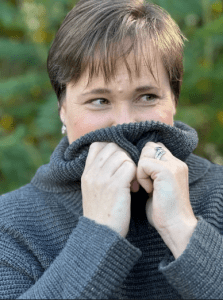
I call myself a recovering Navy brat, as my father was a career Navy man. Born in Florida, I spent a few years in Virginia before moving up to Maine. I’ve been here ever since and can’t see myself anywhere else.
I’ve been a horse nut all my life. I started with Western, moved to Hunter Jumpers, then I had a very special horse that led me to Eventing, and now I do Dressage. There is a horse in every one of my books!
My twin daughters are starting college in the fall, and I live with my favorite husband on a small hobby farm with dogs, cats, chickens, ducks, geese, and goats. During the summer, we also take in dozens of Monarch caterpillars.
Despite all I do—whether it’s teaching adult ed classes, canning, woodworking, or constructing something—I’m like Bigfoot. People know I exist, but there’s very little photographic evidence.
Straw Girl is my debut, and my paranormal short, The Widow’s Hand, is part of Rowan Prose Publishing’s After Dark: Volume 1 anthology, coming out this September.
Related

Straw Girl by Brigid Barry
What do you say when a haunted house remembers more about you than you remember about yourself? The answer isn’t what you think—but you’ll find out by reading this review.
Keep reading
Rajat Chohda: Exploring Conscious Living Through Reflection and Everyday Practice
Can a question about an ordinary family conversation change how you define success? Rajat Chohda explores this journey through his experiences, ideas, and writing; read the full interview to discover.
Keep reading
Alder Brandon: Exploring Imagination, Storytelling, and the Craft of Building Fictional Worlds
Can a walk around the block solve a story no outline can? Discover how one young horror author transforms ideas into fiction by reading this thoughtful interview with Alder Brandon.
Keep readingWe’d love to hear from you!
What are your thoughts on this piece? Share your insights in the comments below!
- What stood out to you most about this post?
- Have you read a book recently that relates to the themes discussed here?
- What’s your favorite takeaway or reflection from this write-up?
Let’s keep the conversation going—your thoughts make this space richer!
Disclaimer: The content on this site is provided for informational and inspirational purposes only. While we strive for accuracy, the views expressed in reviews, articles, and recommendations are subjective and may not reflect the opinions of all readers.
We receive complimentary copies of all books we review. However, this practice does not compromise the integrity or honesty of our reviews. Every write-up reflects the contributor’s genuine impressions and critical analysis, ensuring transparency and trust with our readers.
For a complete understanding of our practices, please refer to our full Disclaimer, Privacy Policy, and Terms of Service. These documents outline how we manage your information, ensure transparency, and uphold your rights as a user.
To request for a review, to nominate your favorite book for an award, or for more details about our awards, click here.
Other Stories
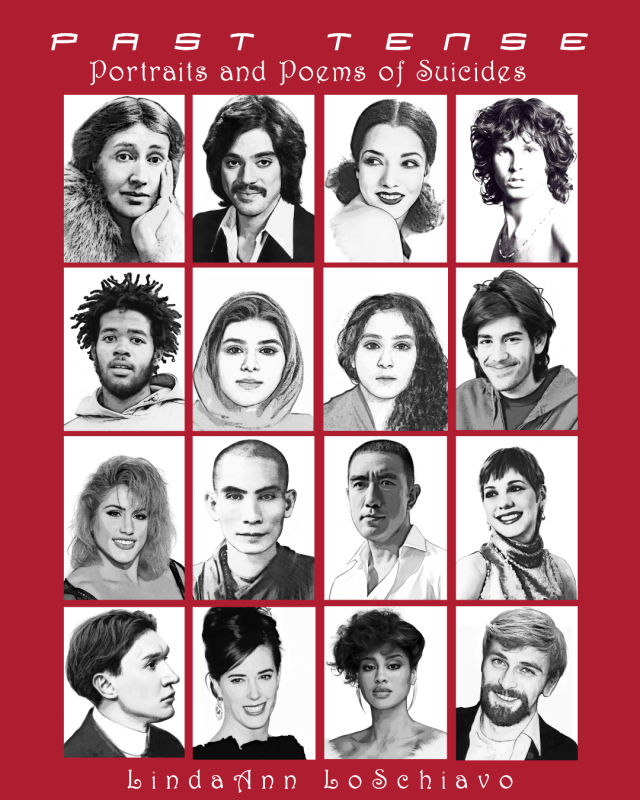
Past Tense by LindaAnn LoSchiavo
Can twenty-three different poetic forms make silence speak without pretending to know everything? Past Tense by LindaAnn LoSchiavo invites readers to investigate through poetry together.
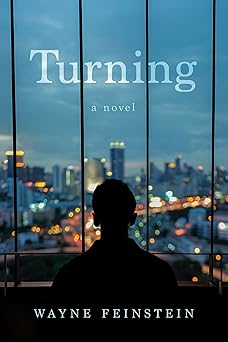
Turning by Wayne Feinstein
What if the loudest room you’ve ever entered was your own memory? Discover how Turning by Wayne Feinstein explores that unexpected question in our full review.
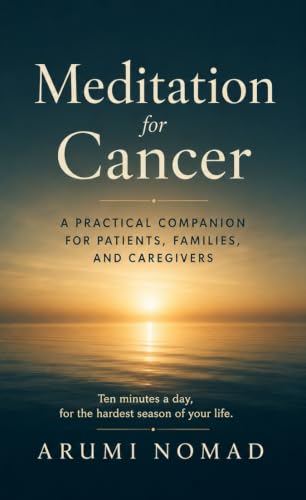
Meditation for Cancer: A Practical Companion for Patients, Families and Caregivers by Arumi Nomad
What if the strongest medicine you carried couldn’t fit inside a bottle? Discover how Meditation for Cancer by Arumi Nomad explores that surprising question in our complete review.


