

Aaron Sher, a software engineer and martial artist, authored Applied Leverage, the first book in The Origin Key Series. The novel features Connor Rourke, a psionic locksmith tackling a world dominated by mages. In May 2025, Applied Leverage received a Book Excellence Award. In the following interview, Sher discusses his writing process, character development, and the themes explored in his work.
Aaron, thanks so much for being here. Let’s begin by letting readers get to know you a little better—could you share your story in your own words? What do you do, where do you live, what led you to writing, and what are you aiming to explore with your work?
Thank you for inviting me to contribute! In my day job I work as a software engineer, which annoyingly takes up a great deal of my time that I could be using for writing books, and that’s enough said about that.
I came up with the fundamental idea for the Origin Key series back around 2010 some time. I worked on the idea on and off but I couldn’t make the story come together in my mind, and there was always that thought: “I can’t really write a novel, I won’t finish it and I certainly won’t publish it.”
It wasn’t until 2022 that I decided it needed to be an urban fantasy; there was a memorable evening when I couldn’t go to sleep and I ended up writing the whole first paragraph of Applied Leverage in my head. The next day I sat down and started writing the thing, and that first paragraph made it through all the drafts almost unchanged and is in the published book today.
The biggest influence for the series is definitely Jim Butcher’s Dresden Files. I think of that as kind of the canonical urban fantasy series; it has all the fantasy tropes plus all the noir tropes, all turned up to 11 and set on fire. If there are any urban fantasy fans in the audience who haven’t read it, what are you doing with your lives? Go read it right now and we’ll pretend this never happened.
That said, I wanted to be very careful not to make my books derivative, so I consciously avoided as many of the tropes as I could without removing myself from the genre altogether. For example: the main character Connor is not a detective or related to law enforcement in any way, nor is he even a mage. There are no immortal or even especially long-lived characters. There are no fae, vampires, werewolves, or any other kind of nonhuman creatures in the world… so far, anyway. You get the idea.
I’m a big fan of worldbuilding, so I think my goal for the series—beyond just telling satisfying adventure stories, anyway—is to explore the outer edges of this world I’ve imagined. What does it mean that there are mages and psionics in the modern world? What are the implications of these massive power imbalances? What factions and cliques are there in the community, and how do they relate to each other? There are more questions, but they’d be spoilers—let’s just say that when I reach the end of the series you’ll have a much better understanding of how and why everything is the way it is.
Applied Leverage throws us into a world where psionics and mages exist in uneasy balance, and your protagonist Connor just wants to keep his head down. What drew you to write a story about someone who doesn’t want to be a hero?
The reluctant hero thing pretty much fell out of the idea that Connor is an everyman. He’s a blue-collar regular guy; he doesn’t aspire to heroism or adventure. He’s obviously not going to get his wish on that one (and he’s not going to spend the whole series whining about having his life disrupted), but I wanted to strike a balance between making him a believable protagonist in an adventure story while still making him relatable.
I mean, if you found yourself in an “evil torture dungeon” (cue Elise: “there wasn’t any… never mind”), would you risk recapture in order to try to help a hypothetical stranger, or would you get yourself out and worry about other people afterward? I suspect most people would do what Connor did in that situation.
It’s also, of course, the primary character arc in Applied Leverage. Connor moves from being relatively self-centered to being someone who is willing to place himself in danger in order to avert a greater harm. There’s a bit of the classic hero’s journey going on: Connor receives his “call to adventure” when he’s placed in danger (trying not to be too spoilery here), “refuses the call” when he tries to solve it only for himself without considering any wider implications, “crosses the threshold” when he fully accepts the job of understanding the problem, and so on. This is what will make him a viable protagonist for the series—if he was always asking “why me,” that would get old pretty quickly.
He’s still thinking of himself as a regular guy, though, and he’ll keep doing that long after it has stopped being true. I don’t want to call him an unreliable narrator because that implies that he’s actually lying to the reader, but in every first-person story what you read is the perspective of the main character. How Connor sees the world is not how other people do, and how he sees himself is definitely not how other people see him. Nia, for example, sees Connor as brilliant but likely to run into traffic if she’s not there to stop him; Connor thinks she’s a good friend who’s occasionally a bit overbearing.
There’s a strong undercurrent of class struggle and imbalance in your book—powerful mages, overlooked psionics, and invisible systems at play. Why was this theme important to you, and how do you think speculative fiction helps us explore real-world inequities?
It’s important because so often the protagonist of a book is “special.” Harry Dresden is a powerful magician who spends his time with fae queens and gods, for example. Alex Verus can see the future and runs a shop selling magic items. I wanted Connor to be relatable; he’s not the Chosen One, he doesn’t have a Destiny, he’s just inquisitive and too smart for his own good. When he can get the work, he replaces locks or opens safes; most of the time, he’s doing drywall in somebody’s basement. Once in a while he has adventures, not always voluntarily.
We’ve all had the experience of being swept along by a system that’s much more powerful than us—think about the last time you had trouble at the DMV, for example, or got an unexpected medical bill. In Applied Leverage the story happened to him; as much as he tried to drive the action, ultimately he was the victim and not the hero. While later books in the series will give him more agency, fundamentally he’s swept up in events beyond his ability to control and he’s just doing the best he can.
Connor’s skill set is refreshingly unique—he’s a supernatural locksmith. What inspired that choice? Did it serve as a metaphor, and if so, for what?
I didn’t intend it to be a metaphor initially—I was just picking a blue-collar profession that I thought telekinesis would be especially useful for, and one that would play well into the story. As it turns out, though… well, the series is named Origin Key. Read into that what you will.
Writing first-person snark without veering into cliché is no small feat. How did you shape Connor’s voice, and what does he let you say as a narrator that you couldn’t through a more traditional hero?
Connor is perpetually somewhat amused by everything going on around him, and playing into that allows me to build a lot of humor into the books that isn’t necessarily present in the actual narrative. Even in fairly serious situations, Connor’s take on things lets me lighten the mood some without detracting from the actual stakes in the story.
It also provides a fairly broad window into his personality. The things he chooses to comment on illustrate his priorities and attitudes, and doing so with humor lets me highlight specific things in a way that’s not “hey, Connor is noticing this.” Connor doesn’t mostly make jokes—he’s not a “funny guy” most of the time—but the view inside his head gives me a platform to comment on the world, and the humor makes that commentary more fun.
As someone who’s also a software engineer and martial artist, did any of those disciplines sneak into your worldbuilding or character development in unexpected ways?
Unexpected? No. My martial arts experience is definitely influencing the story, however, and will do so more as it goes along and Connor gets a bit better at the things he finds himself doing. In the first book, he’s largely useless in a hand-to-hand fight, and my experience lets me illustrate what that looks like to somebody who hasn’t been in many fights: flashes of impression, chaotic scenes, jumps in time where things have happened that he wasn’t aware of.
As you go along, careful readers will notice that he’s getting better at following—and eventually controlling, to some extent—the action.
In Mechanical Advantage, Connor has decided that he needs to learn to fight, at least enough so that he’s not quite as helpless as he was in Applied Leverage. He conveniently has his friend Nia to help with that, which she does in true Nia style by hitting him repeatedly. I’m definitely drawing on my experience to write those scenes.
So far, I haven’t found any opportunities to work software into the story, and it’s not looking promising for the future. You think a twelve-page digression on complexity analysis of recursive algorithms would be interesting? Elise would like it, but I’m not sure anybody else would.
Applied Leverage is packed with vivid action and tightly built suspense. How do you approach pacing and tension in your writing? Do you plan those moments or let them unfold naturally?
I certainly have a plan for every scene I write. The overall story has an up-and-down tempo to it; you have to leave some space between the action to let readers breathe, or else there’s no contrast to make the tense scenes tense.
There are a couple of scenes in each book that are written to be especially nerve-wracking—in Applied Leverage, the climactic fight in particular needed to make you squirm a bit. I rewrote that several times to try to amp up the action as much as possible.
What did you learn about yourself—either as a writer or a person—through the process of completing your first full-length novel?
I learned I could write a novel! I went into it thinking that there was at least an 80% chance that I’d get bogged down and never finish. I pushed hard to get the first draft done in three months, and then I learned that editing is at least twice as hard as writing.
It took me almost two years to publish it… and then I learned about the hell that is marketing.
For all the pain along the way, though, I really enjoy having written a book and I intend to have written more in the future. If there weren’t this annoying stage in the middle, that would be ideal.
Many indie authors struggle with the “invisible” side of storytelling—editing, publishing, or building a readership. What has your experience been like navigating this terrain, and what have been the most rewarding (or surprising) parts?
Certainly, as a self-published independent author it’s very hard to get visibility. I’m just starting out on this road, so I’m hopeful that once I have more books available I’ll get to the point where I at least have a base level of consistent readership—as opposed to now, where I feel like I’m scraping for every reader.
I guess the most rewarding and also the most surprising part is that there are people who actually want to read my book? I did my first author event a few weeks ago, and the community of authors has been tremendously welcoming and supportive.
Now I just have to stop comparing myself to the people who’ve written dozens of books already.
Your book Applied Leverage recently won a Book Excellence Award from Book Excellence Media—congratulations! What does this recognition mean to you, especially as a debut indie author, and how has it shaped your perspective on your writing journey so far?
I hadn’t actually heard about this award when I got the questions—I thought it was a mistake! I’m flattered to be recognized, certainly, and I’m definitely going to call it an “award-winning novel” for the rest of time.
As to how it’s shaped my perspective, I guess it helps a little bit to counter the massive imposter syndrome that I would guess every debut author (and probably a lot of experienced authors) gets. Especially as a self-published author, there are no gatekeepers who will tell me if my novel is garbage, so there’s always this suspicion that maybe everybody is just humoring me.
I don’t think the judges have any particular incentive to stroke my ego, so I guess maybe the book doesn’t actually suck? Someday I might convince myself of that, but it’s not this day.
If a reader walks away from Applied Leverage thinking deeply about one idea or question, what do you hope that is—and how do you hope it sticks with them?
In a metatextual context, I’d like the central message to be “a little power, properly applied, can be more effective than all the brute force in the world.”
I’ve been asked about the title because there’s nothing in the story that very obviously explains it, and this is why. Connor doesn’t have the brute force; he’s always looking for the spot where he can apply just a little bit of pressure and get big results.
There are other meanings for the title, but that’s the most important one.
That said, I didn’t write the book to have a deep message—it’s intended to be a fun adventure story with an interesting world behind it. There are deliberately questions left unanswered about that world, and those will be explored in future books in the series; I could call out what I think are the biggest questions, but those would be spoilers!
If you had to tell your life story in your own words, what would you say?
In addition to being a fantasy author, I’m also a software engineer, a martial artist, a pretty decent cook, a very (very) amateur blacksmith and bladesmith, and—when called upon to serve—expert furniture for my cats. Not necessarily in that order.
I’ve been reading fantasy since I was a kid, which is a concerningly long time ago now, and I started writing it in the form of character backstories for my TTRPG campaigns. Some of those just might be a bit overkill; I wrote over 100k words of backstories for my current game. Maybe that will make it into a novel someday.
I live in Pittsburgh, PA in the United States with my wife and a varying but always-extravagant number of cats, fish, plants, and other miscellaneous wildlife.
Related

Reimagining Life Through Words and Service with Debra J. White
What happens when life’s hardest blows lead to unexpected purpose? Discover how Debra turned trauma, recovery, and rescued animals into writing and volunteer work that inspires resilience and connection.
Keep reading
Learning from the Land: A Conversation with Cathryn Wellner on Life’s Unexpected Lessons
Ever wondered what it’s like to raise sheep, pigs, and camels while learning life lessons along the way? Cathryn Wellner shares her unexpected journey, and readers will discover how she adapted and thrived.
Keep readingWe’d love to hear from you!
What are your thoughts on this piece? Share your insights in the comments below!
- What stood out to you most about this post?
- Have you read a book recently that relates to the themes discussed here?
- What’s your favorite takeaway or reflection from this write-up?
Let’s keep the conversation going—your thoughts make this space richer!
Disclaimer: The content on this site is provided for informational and inspirational purposes only. While we strive for accuracy, the views expressed in reviews, articles, and recommendations are subjective and may not reflect the opinions of all readers.
We receive complimentary copies of all books we review. However, this practice does not compromise the integrity or honesty of our reviews. Every write-up reflects the contributor’s genuine impressions and critical analysis, ensuring transparency and trust with our readers.
For a complete understanding of our practices, please refer to our full Disclaimer, Privacy Policy, and Terms of Service. These documents outline how we manage your information, ensure transparency, and uphold your rights as a user.
To request for a review, to nominate your favorite book for an award, or for more details about our awards, click here.
Other Stories
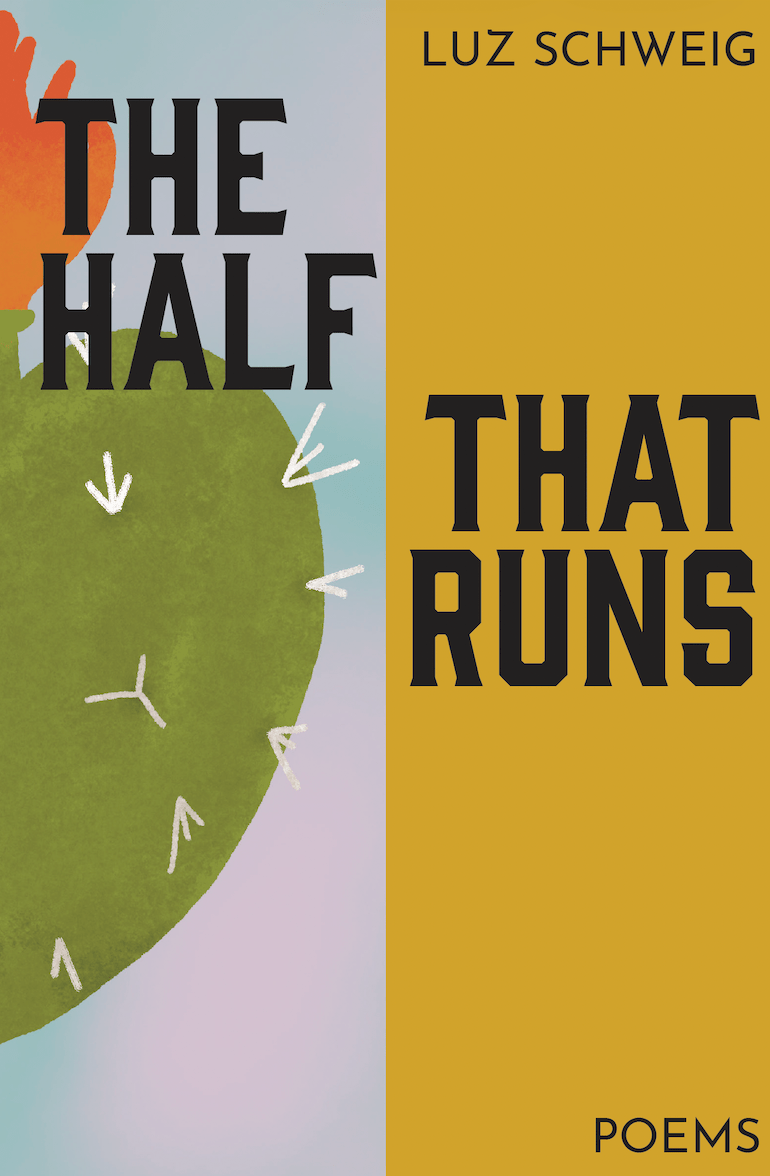
The Half That Runs by Luz Schweig
What if your memories had a geography—one that kept shifting under your feet like sand? Discover how The Half That Runs by Luz Schweig maps identity—read the full piece.
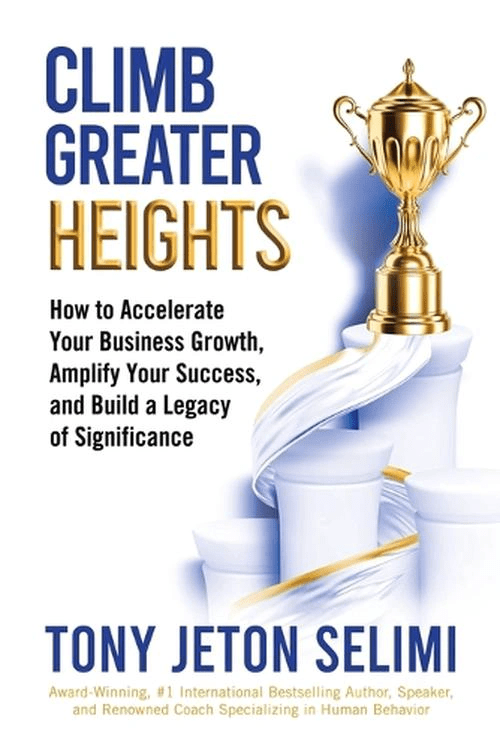
Book Review: Climb Greater Heights by Tony Jeton Selimi
What if your biggest business obstacle isn’t competition but something invisible within you? Discover the answer in Climb Greater Heights by Tony Jeton Selimi—read the full review to explore.
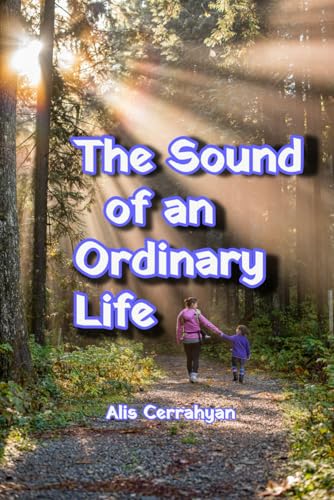
Review of The Sound of an Ordinary Life by Alis Cerrahyan
There are many ways to tell the story of a life. Some choose grand narratives, sweeping arcs of triumph and tragedy. Others, like The Sound of an Ordinary Life, find meaning in the quiet spaces, the moments that seem small but carry the entire weight of a person’s existence.

 OneTribune