Content Warning: This review touches on themes of imagination, loss of childhood wonder, and visual elements (e.g., skulls) that may be unsettling for sensitive readers.
Some books whisper to children. Others shout to adults in the quiet spaces between the pages. What Mommy Doesn’t See does both, weaving a tale that operates in the liminal space between childhood wonder and adult disillusionment. On the surface, this 176-word picture book appears to be a whimsical romp through a child’s imagination. But dig deeper—into the artwork, the sparse yet evocative text, and the emotional subtext—and you’ll find a poignant meditation on what we lose when we grow up.
Illustrations: A World of Hidden Wonders and Subtle Dangers
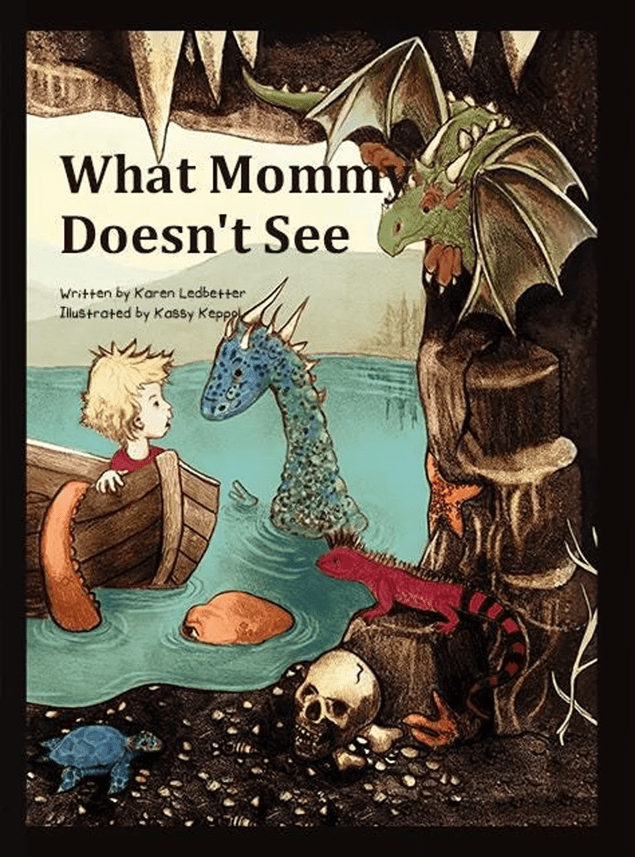
First, the illustrations. Kassy Keppol’s artwork is rich with detail, inviting the careful observer into a fantastical world layered with hidden creatures, vibrant personalities, and shadows of danger (hello, skulls and a pirate flag tucked into the tree).
The juxtaposition of a mundane rowing trip and fantastical beings raises an essential question:
Are these images a window into a child’s vivid imagination, or do they represent the remnants of a magical world that adults, blind to wonder, have abandoned?
The lurking skulls and spider webs add a layer of subtle menace. After all, what would a child’s world of unfiltered imagination be without its rough edges?
Text: A Lament Disguised as a Lullaby
Karen Ledbetter’s sparse verse is deceptively simple, but its cadence has the rhythm of a lullaby tinged with melancholy.
“The fairies all left… The forests are empty…”
These lines carry a lament, echoing the irreversible march from childhood’s enchanted forests to adulthood’s barren plains. It recalls J.M. Barrie’s observation in Peter Pan:
“You see, Wendy, when the first baby laughed for the first time, its laugh broke into a thousand pieces… and that was the beginning of fairies.”
But what happens when those fairies leave? The child narrator doesn’t mourn their absence; instead, they guide the parent, cheerfully unaware of the adult’s loss.
The Hidden Narrative: Love in the Face of Lost Magic
Here’s the brilliance of the story: the mother retains a “shiny miracle” of love for her child. And yet, her journey through the pages is a painful contrast to her child’s carefree engagement with mermaids, dragons, and playful sea creatures.
She is present, loving, and attentive—but oblivious to the magic teeming around her. Her child’s world is bursting with life, yet she can only see its echo.
The book also gently critiques the modern obsession with practicality, which sidelines whimsy.
Have we, as parents and adults, forgotten how to see the dragons in the cave, the starfish with secret stories, or the tortoise crawling by with wisdom untold?
A 2018 study by Dr. Alison Gopnik found that children engage in imaginative play up to 65% more than adults, a staggering loss that What Mommy Doesn’t See frames not as inevitable but tragic.
The Dual Audience: A Message for Adults and Children
In one particularly affecting image, the child leans over the boat to greet a sea serpent, oblivious to the mother’s worried, practical gaze fixed on the water ahead.
It’s a scene that brought to mind Neil Gaiman’s reflection:
“Adults follow paths. Children explore. Adults are content to walk the same way, hundreds of times, or thousands; perhaps it never occurs to adults to step off the paths.”
What sets this book apart is its dual audience. To children, it’s a validation of their wild, limitless imaginations. To adults, it’s a bittersweet reminder to embrace the “shiny miracle” that is their child’s ability to see the unseen.
The Unanswered Question: Can Magic Be Reclaimed?
But the question lingers long after the final page:
Is the loss of magic inevitable, or can it be reclaimed?
Is it possible to teach ourselves to see the mermaid lounging by the shore or the sprite swinging from the branches? Ledbetter doesn’t answer this question; instead, she leaves it in our hands, just as the child does for their mother in the story.
Final Thoughts: A Call to Action in Disguise
In the end, What Mommy Doesn’t See is less a book than a call to action—a reminder to slow down, look closer, and try, just try, to see the world through the eyes of the children we once were.
Would you take up the challenge?
Or, as the unicorn gallops away, will you simply shrug and return to the picnic?
Ink and Horizons Book Award
This book is a winner of the Ink and Horizons Book Award, an accolade dedicated to honoring books that explore the uncharted territories of human experience—stories that invite readers to journey beyond the familiar and engage with the universal themes that unite us all. Whether through vivid fiction, thought-provoking nonfiction, or evocative poetry, the award highlights works that embody the spirit of literary exploration.
We’d love to hear from you!
What are your thoughts on this piece? Share your insights in the comments below!
- What stood out to you most about this post?
- Have you read a book recently that relates to the themes discussed here?
- What’s your favorite takeaway or reflection from this write-up?
Let’s keep the conversation going—your thoughts make this space richer!
Disclaimer: The content on this site is provided for informational and inspirational purposes only. While we strive for accuracy, the views expressed in reviews, articles, and recommendations are subjective and may not reflect the opinions of all readers.
We receive complimentary copies of all books we review. However, this practice does not compromise the integrity or honesty of our reviews. Every write-up reflects the contributor’s genuine impressions and critical analysis, ensuring transparency and trust with our readers.
For a complete understanding of our practices, please refer to our full Disclaimer, Privacy Policy, and Terms of Service. These documents outline how we manage your information, ensure transparency, and uphold your rights as a user.
To request for a review, to nominate your favorite book for an award, or for more details about our awards, click here.
Other Stories

Reimagining Life Through Words and Service with Debra J. White
What happens when life’s hardest blows lead to unexpected purpose? Discover how Debra turned trauma, recovery, and rescued animals into writing and volunteer work that inspires resilience and connection.
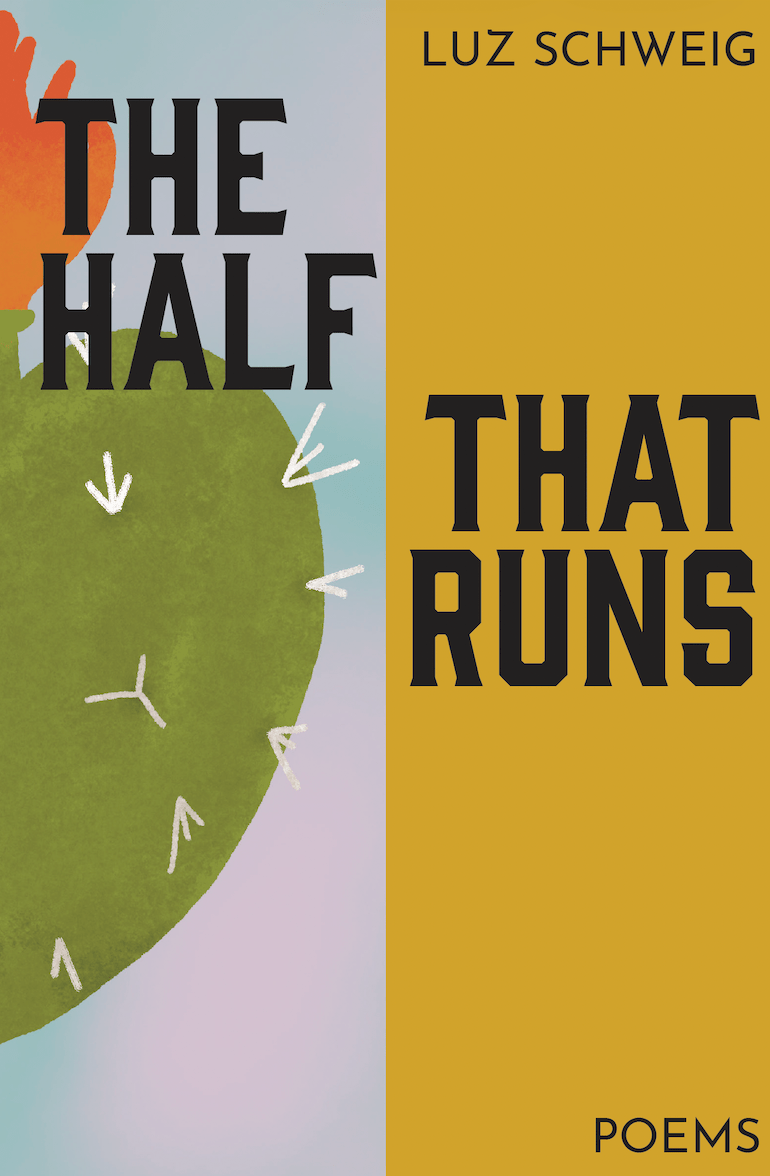
The Half That Runs by Luz Schweig
What if your memories had a geography—one that kept shifting under your feet like sand? Discover how The Half That Runs by Luz Schweig maps identity—read the full piece.
Book Review: Climb Greater Heights by Tony Jeton Selimi
What if your biggest business obstacle isn’t competition but something invisible within you? Discover the answer in Climb Greater Heights by Tony Jeton Selimi—read the full review to explore.

 OneTribune