
Content Warning: This review discusses themes of spirituality, existential reflection, and faith. It is suitable for all audiences but may invoke deep self-reflection.
Amazon link: https://www.amazon.com.au/Eternal-Love-C-Peggy-Atoche/dp/1666794120
Goodreads link: https://www.goodreads.com/book/show/114301973-eternal-love
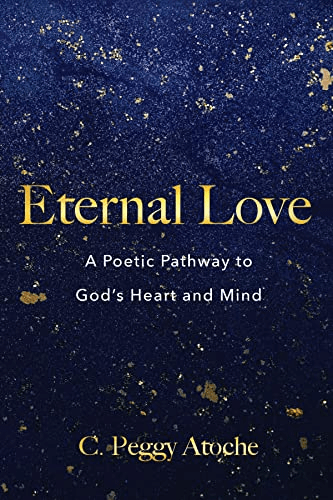
“Where does love end?” This is not just a rhetorical question but the foundation of C. Peggy Atoche’s poetic masterpiece Eternal Love: A Poetic Pathway to God’s Heart and Mind. In a world racing toward disconnection, Atoche’s verses remind us that love is not just an abstract ideal but the core of existence itself—a truth too often forgotten in the noise of daily life.
A Voice Beyond Time and Space
Much like Rumi’s timeless whispers, Atoche’s poetry carries a universal cadence. Take her poignant line:
“Love is indestructible, unseen, untouched, only felt by our hearts.”
It echoes across centuries, reminding us of the invisible threads binding humanity. Did you know that studies from Harvard University’s Human Flourishing Program reveal that spiritual practices and a sense of connection can significantly enhance well-being? Atoche doesn’t just write poems; she provides pathways to these connections, layering them with insights drawn from life’s trials.
The Personal and the Divine
One striking feature of Atoche’s work is her ability to humanize divinity. In “A Father’s Love,” she writes:
“Come to me, child. Father is waiting for you.”
It’s a simple invitation but carries profound weight when juxtaposed against her reflections on grief and longing in “Life Never Ends.” This duality—of intimate comfort and existential vastness—mirrors humanity’s search for meaning.
A Poetic Iconography
Atoche introduces the concept of “Poetic Iconography,” reminiscent of sacred art traditions. Each poem becomes a meditation, much like gazing upon a Renaissance icon or hearing the chants of Gregorian monks. For instance, “Looking at the Eyes of Jesus” is not just a poem but a spiritual experience.
Akiane Kramarik’s painting, Prince of Peace, inspired this piece. Atoche reflects:
“One side of Jesus’ face is illuminated, the other shadowed—symbolizing both the trials we endure and the hope that sustains us.”
It’s a brilliant artistic interpretation that draws readers into an age-old question: How do we reconcile suffering with faith?
Why It Resonates Globally
Eternal Love is not merely for devout believers but for anyone yearning for light amidst life’s darkness. It transcends religious labels, weaving threads of hope, forgiveness, and compassion that resonate universally.
Atoche writes,
“Forgiveness is hard, not impossible. Love is indestructible.”
These truths could be the mantra for a fractured world.
Final Reflections
Reading Eternal Love is akin to sitting in a quiet chapel, sunlight streaming through stained glass. It’s a reminder of life’s greater tapestry—one woven with threads of struggle and beauty, despair and hope.
If you’re looking for a book that doesn’t just entertain but enlightens, Eternal Love is a gift waiting to be unwrapped. It’s not just poetry—it’s a lifeline, a beacon, a reminder that we’re never alone.
Global Spines Book Award

This book is a winner of the Global Spines Book Award, which honors exceptional works of literature that transcend borders and speak to universal human experiences. This award celebrates stories that connect readers across the globe, offering fresh perspectives and exploring the richness of cultural diversity. Each winning book reflects the spirit of Global Spines—stories that bridge gaps, foster understanding, and resonate with readers from all walks of life. By recognizing these powerful narratives, we aim to inspire deeper connections and celebrate the power of global storytelling.
We’d love to hear from you!
What are your thoughts on this piece? Share your insights in the comments below!
- What stood out to you most about this post?
- Have you read a book recently that relates to the themes discussed here?
- What’s your favorite takeaway or reflection from this write-up?
Let’s keep the conversation going—your thoughts make this space richer!
Disclaimer: The content on this site is provided for informational and inspirational purposes only. While we strive for accuracy, the views expressed in reviews, articles, and recommendations are subjective and may not reflect the opinions of all readers.
We receive complimentary copies of all books we review. However, this practice does not compromise the integrity or honesty of our reviews. Every write-up reflects the contributor’s genuine impressions and critical analysis, ensuring transparency and trust with our readers.
For a complete understanding of our practices, please refer to our full Disclaimer, Privacy Policy, and Terms of Service. These documents outline how we manage your information, ensure transparency, and uphold your rights as a user.
To request for a review, to nominate your favorite book for an award, or for more details about our awards, click here.
Other Stories

Danielle Simone on Curiosity, Courage, and Learning Through Story
Have you ever wondered what happens when curiosity goes missing in childhood? This interview explores one educator-author’s response—and how stories can invite exploration, reflection, and care for the world around us.
The Sound of an Ordinary Life by Alis Cerrahyan
If The Sound of an Ordinary Life teaches anything, it is the delicate art of letting go—of guilt, of old wounds, of the need for closure that may never come.

Review of “Holy Parrot” by Angel A
In Holy Parrot, Angel A doesn’t tell you what to believe. Instead, the author hands you a kaleidoscope and dares you to keep it still.

 OneTribune