

This interview explores how multi-award-winning author Greg Fields employs lyrical prose to convey themes of suffering and resilience in his novel. We look into his stylistic choices, literary influences, and the impact of poetic language on storytelling.
Greg, thank you for joining us. Could you please introduce yourself and share a bit about your background and the journey that led you to write “The Bright Freight of Memory”?
The Bright Freight of Memory is my third novel. My first was published in 2017 by Koehler Books, who took a huge risk on a new author with no readership and little clue about how to write a readable book. Under Koehler’s guidance, though, I became a bit better at all this. My second novel, Through the Waters and the Wild, was released in 2021 and won a number of awards. I think I’ve learned to rein in the passions of whatever narrative I’ve tending to let the story unfold in its own momentum. I’m a much more patient writer now than I ever was.
Each Saturday I Zoom into a writers group at the Irish Writers Centre in Dublin. We banter for a bit, usually where they make fun of the token Yank, and then we write to a prompt provided by the leader. After an hour or so, we can read what we write for critique and comment.
I created the two main characters in The Bright Freight of Memory in part through these prompts. Each week I would place one of them in response to whatever prompt was given, and in so doing, I fleshed them out. I put them in different situations, in different places and reacting to the circumstances of these prompts. After a time I was able to build them into fully-formed characters, then devised a narrative that reflected who they were and what they were about.
Your prose has been described as lyrical and evocative. How did you develop this writing style, and what authors or works have influenced it?
In college I discovered the works of Thomas Wolfe, reading Look Homeward Angel and Of Time and the River, and I fell more deeply in love with the lyricism, the musicality that the written word might spin. After college I set about reading all those authors I should have read before – Fitzgerald, Hemingway, Philip Roth, and so on – and each of them told me something about style and content and theme.
But the most influential moment for me was a chance meeting with Pat Conroy. My wife had bought me a ticket to a VIP reception after Pat’s lecture at a local literary club. Not knowing anyone in a crowd of 50 or so, I made my way to the hors d’oeuvres table so that the event wouldn’t be a total loss. As I loaded my plate with cocktail shrimp, I felt a hand on my shoulder.
“We’ve not met. I’m Pat Conroy.” We ended up talking one-to-one in a corner of the room for about 25 minutes while everyone else circled about. We learned we shared the same birthday, the same literary influences and many of the same experiences. When I told him I was in the midst of writing my first novel, he asked if I could recite any of it. I was able to cite some of the Prologue, after which Pat became quite serious and told me that he would like to read it and, if it were all that good, he would be pleased to offer a jacket quote. We corresponded after that, he offered advice and insights, and helped polish what I had. Pat passed in early 2016, shortly before the novel was finalized. We’re all the poorer for it.
Niall Williams, the great and very humble novelist whom I’ve considered the Irish Pat Conroy, has since been quite helpful, offering encouragement in the development of Through the Waters and the Wild. I once told Pat that on my best day I couldn’t approach what he could accomplish on his worst, and I feel the same about Niall’s bold, lyrical writing. I’m honored and humbled by their friendships, and their constant inspiration.
In the novel, how do you balance the beauty of poetic language with the depiction of harsh realities?
In even the harshest realities and the most sorrowful circumstances, there’s an inherent dignity – the simple processes of being alive, the struggles to derive some sense of place and purpose, the chase for belonging. And within all that is the inherent dignity with which we are born and which we possess until our dying day. We’re a remarkable species, filled with resiliency, passion and fire. It’s those things that inspire my work, and I try to honor the dignity of my characters throughout their struggles. If that translates lyrically, then my work might be more accessible, more readable, and that can build a bridge between the reader and those who walk through the pages I write.
Can you discuss a specific passage where you used lyrical prose to enhance the emotional impact of a scene?
Because The Bright Freight of Memory spans several years, its characters age and their bodies undergo the usual changes that aging brings. One of the purest characters, Gina Morelli, is spared much of the anguish that the other characters experience, but she is not spared distress of growing older, and becoming something other than what she once was:
In a final check, Gina turned to the mirror in her small living room. The dress was perfect. What lay under it was not, though, and she saw every flaw, every line, every chunk of extra flesh. Not always so, she thought. Once young men elbowed one another aside to dance with me, and to sneak a kiss. To grab my hand and not let go lest a competitor took his place. And Thomas, who cried the first time we made love, that night after our wedding, that night when the world spun around me at its center and every light, every prayer, found its way into my deepest soul. Once it was, and now I’m left with this.
I wanted to convey her anguish gently, but indelibly. She can’t escape what none of us can escape, and it shows here
How does your Irish heritage influence your narrative style and the themes you explore in your writing?
I opened my second novel, Through the Waters and the Wild, with a letter written by the main character’s Irish grandfather.
As a boy in Ireland, I heard tales told by firesides, across the tables of family and friends, and in the pubs of Dungarvan. We are a people that preserves its soul through our shared stories. In that tradition, I write to you now.
I believe the Irish cherish their stories as much as any culture possibly could. From their very beginnings, they honored their bards, and those honors continues today. To be even a small part of that tradition is something I cherish.
What role does music or rhythm play in your writing process? Do you consider the cadence of your sentences as you write?
I read aloud everything I write. If it sounds tinny, or false, or wooden, then it needs an edit. I think the language is amazingly lyrical. There’s music in it, and the best writing can bring it out.
But beyond that, there’s always the challenge of engaging the reader. I think it’s more likely that a reader will stay with a story that soars a bit on language that carries a tune, so to speak.
How do you ensure that your lyrical style serves the story and characters without overshadowing them?
Language carries the narrative and forms the characters. At its heart, it’s a vehicle that takes the reader to the core of the author’s purpose. But a writer absolutely has to stay true to his vision and to his themes. That’s the reason writers do what they do. Even the most lyrical language is a gloss that can make those themes more radiant, but it should never be an end in itself.
Can you share any challenges you faced in maintaining a lyrical tone throughout the novel?
In college I had an English professor who once told me, “Mr. Fields, you write as if you had just swallowed a dictionary and are now just burping up words.” He was right. I had fallen in love with the cadence of what I was writing at the expense of clarity, focus and purpose.
There’s always the danger of overwriting. I’ve been told lately by another writer that it seems I’ve never met an adjective I didn’t like. So I have to watch myself. I think I’ve gotten better at it. My first novel was 240,000 words, most of which could have been discarded. I’ll never make those mistakes again.
How do readers typically respond to your prose style, and has any feedback surprised you?
I’m always gratified, and maybe a little surprised, when a reader tells me that something I’ve written stirred them in some way. Every writer seeks connection. We all want to know that the work we’ve done, and in which we’ve invested a sliver of ourselves, has reached another soul and provoked a response. I’ve had readers tell me that my writing is ‘beautiful.’ But I know that beauty is subjective. What’s not subjective is honesty, and I try very hard to write openly and without pretense or manipulation.
What advice would you give to aspiring writers who wish to incorporate lyrical elements into their storytelling?
Listen – really listen – to the rhythm and pace and music of what you write. Don’t be afraid of the discordant notes. You can correct those, and play with the words until you find the ones that hit the right chords, the ones that play in your own mind.
We’d love to hear from you!
What are your thoughts on this piece? Share your insights in the comments below!
- What stood out to you most about this post?
- Have you read a book recently that relates to the themes discussed here?
- What’s your favorite takeaway or reflection from this write-up?
Let’s keep the conversation going—your thoughts make this space richer!
Disclaimer: The content on this site is provided for informational and inspirational purposes only. While we strive for accuracy, the views expressed in reviews, articles, and recommendations are subjective and may not reflect the opinions of all readers.
We receive complimentary copies of all books we review. However, this practice does not compromise the integrity or honesty of our reviews. Every write-up reflects the contributor’s genuine impressions and critical analysis, ensuring transparency and trust with our readers.
For a complete understanding of our practices, please refer to our full Disclaimer, Privacy Policy, and Terms of Service. These documents outline how we manage your information, ensure transparency, and uphold your rights as a user.
To request for a review, to nominate your favorite book for an award, or for more details about our awards, click here.
Other Stories

Reimagining Life Through Words and Service with Debra J. White
What happens when life’s hardest blows lead to unexpected purpose? Discover how Debra turned trauma, recovery, and rescued animals into writing and volunteer work that inspires resilience and connection.
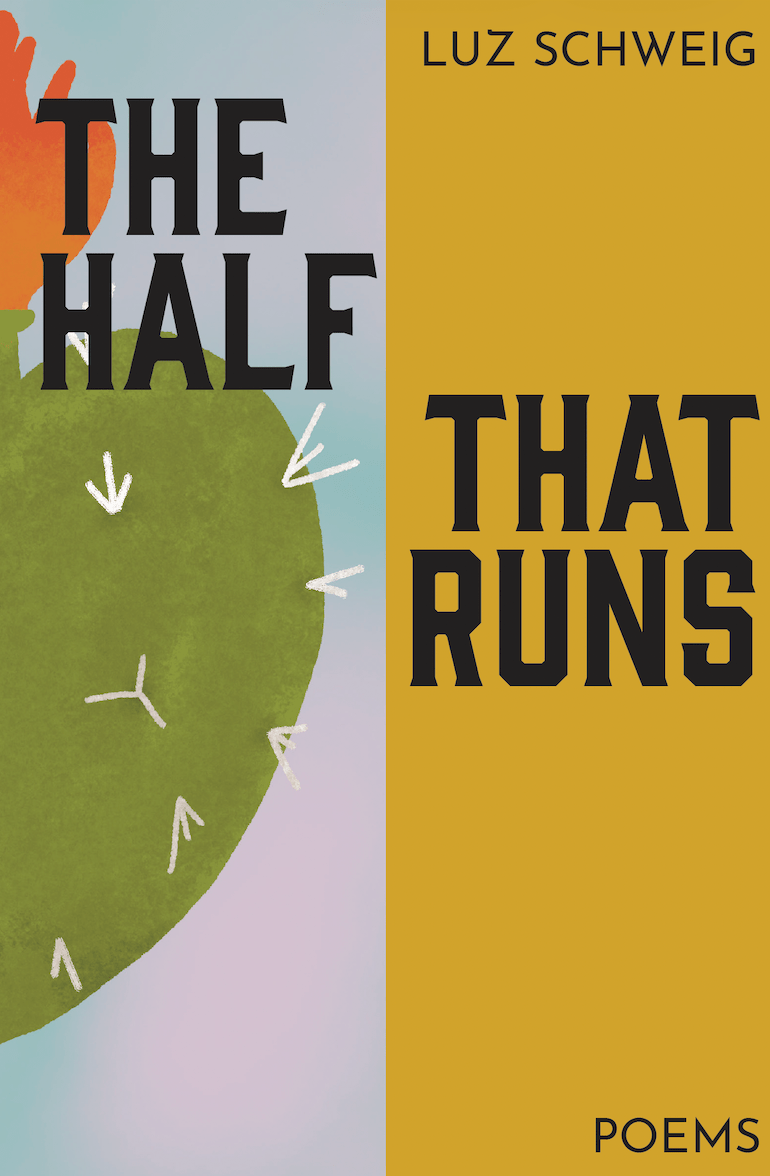
The Half That Runs by Luz Schweig
What if your memories had a geography—one that kept shifting under your feet like sand? Discover how The Half That Runs by Luz Schweig maps identity—read the full piece.
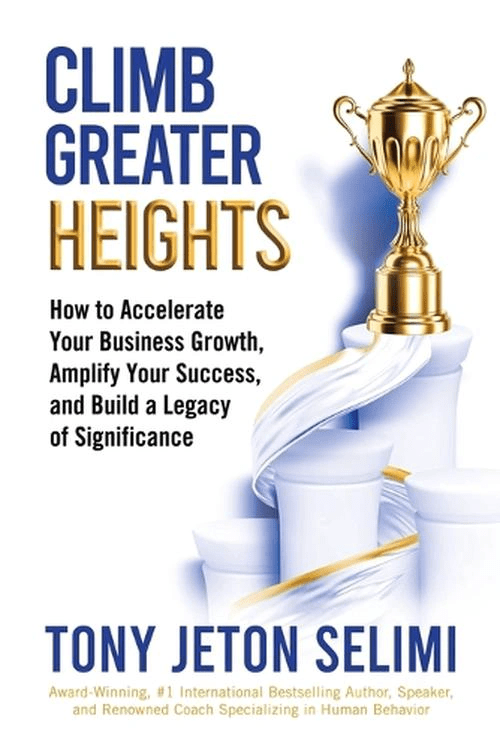
Book Review: Climb Greater Heights by Tony Jeton Selimi
What if your biggest business obstacle isn’t competition but something invisible within you? Discover the answer in Climb Greater Heights by Tony Jeton Selimi—read the full review to explore.

 OneTribune