
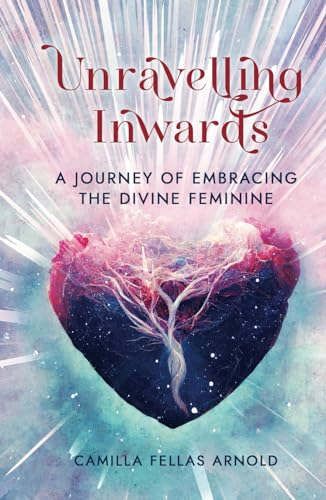
Amazon link: https://www.amazon.com.au/Unravelling-Inwards-Journey-Embracing-Feminine/dp/B0CK441B36
What happens when a book doesn’t just tell a story but demands its reader to confront the essence of self, pain, and transformation? Unravelling Inwards by Camilla Fellas Arnold is not merely a guide to the divine feminine; it is an invitation to dismantle societal constructs, heal ancestral wounds, and rebuild from ashes with the grace of a phoenix. This is not a manual for the faint-hearted—it’s a call to war, fought with teaspoons and culminated in transcendence.
The Goddess as Archetype: History, Myth, and Modern Reclamation
Fellas Arnold’s exploration of goddess archetypes—Lilith, Kali, Hecate, and others—is more than spiritual symbolism. It’s a reclamation project centuries in the making. Consider Lilith, whom Fellas Arnold places at the forefront of the narrative. Historically, Lilith has been vilified, transformed from Adam’s equal to a figure of fear and taboo. Yet Fellas Arnold reclaims her as a symbol of rebellion and self-worth, casting her departure from Eden not as a fall but as an act of autonomy.
In The Book of Genesis, Lilith’s absence is glaring. Why? Because her story challenges patriarchal structures. Fellas Arnold doesn’t just unearth these archetypes; she wields them as tools for contemporary readers to confront their own oppression, asking: When will you choose to leave the Garden of societal expectations?
The Economics of Emotional Labor
One striking layer often overlooked is Fellas Arnold’s implicit critique of the emotional labor economy. Emily, Fellas Arnold’s steadfast guide, shows up every day, armed with metaphoric teaspoons to bail out a sinking emotional boat. But here’s the question: why do so few Emilys exist in the lives of modern women? Studies reveal that women disproportionately shoulder emotional labor, a burden exacerbated by a society that isolates rather than unites.
Could the archetypes of Unravelling Inwards be read as blueprints for rebalancing this inequity? Are Lilith and Kali not merely goddesses but symbolic leaders of a feminist uprising against the invisibility of emotional labor?
Shadow Work: A Psychological and Cultural Parallel
Fellas Arnold’s shadow work mirrors Carl Jung’s theories, yet it takes a distinctly feminine approach. Jung saw the shadow as the repressed self, buried under societal norms. Fellas Arnold amplifies this by layering ancestral trauma and the sisterhood wound—issues women have been carrying for millennia. When she writes of “exhuming graves,” it feels literal, as if each page is a trowel scraping away centuries of repression.
But here’s where it becomes compelling: Fellas Arnold doesn’t ask readers to dwell in this darkness. Instead, she insists on transformation. This aligns with the cyclical patterns of indigenous cultures, where healing is seen as a process of death and rebirth. She essentially asks: Are you ready to burn the old you for the possibility of emerging anew?
Feminism in the Form of Fire
Kali’s rage—a central theme—is depicted as sacred, a concept long dismissed in patriarchal societies. Historically, women’s anger has been pathologized: from Victorian “hysteria” to modern “Karen” stereotypes. Fellas Arnold flips this script, positing that rage is not something to suppress but to channel. In Kali’s wrath lies wisdom, in her destruction lies creation. The catharsis Fellas Arnold describes—tears in the fields, shouting into the void—reminds us that sometimes breaking is a prerequisite for healing.
Is this not a feminist manifesto, thinly veiled as spiritual exploration?
The Numbers Hidden in the Narrative
Consider this: According to a 2022 WHO report, mental health disorders are rising fastest among women, exacerbated by societal pressures and gender inequities. Unravelling Inwards is a response to this crisis, albeit a deeply personal one. The book offers tangible tools: EFT tapping, breathwork, kinesiology—all practical, evidence-based techniques reframed through the lens of spirituality.
Fellas Arnold’s narrative feels like an answer to the question: How can modern women reclaim mental wellness without relinquishing their femininity?
An Anecdote as a Metaphor
Fellas Arnold describes the moment she began drinking tea—a seemingly trivial detail that speaks volumes. Tea, historically tied to ritual and community (think Japanese tea ceremonies or British high tea), becomes her symbol of transformation. It’s not the tea itself but the act of reaching for a second cup that signifies a shift in identity. Is it a coincidence that revolutions have often been brewed alongside tea?
Final Thoughts: A Mirror for the Brave
Unravelling Inwards isn’t just a book; it’s a companion for anyone willing to unearth the truths buried within. Fellas Arnold challenges her readers not merely to consume her words but to confront their own darkness, rage, and power. Whether you approach it as a spiritual guide, a feminist critique, or a psychological roadmap, the book leaves a lasting mark.
Fellas Arnold’s work offers a bold and deeply personal exploration of healing, self-discovery, and embracing the divine feminine. Her writing challenges societal norms and encourages readers to confront their inner shadows, using archetypes and spiritual practices as tools for transformation. While the ideas she presents may resonate deeply with some, others may approach them with questions or hesitation, shaped by their own beliefs and experiences.
What’s clear, however, is that Fellas Arnold’s journey is an invitation—a perspective to consider, not a prescription. Readers might find themselves inspired, or even challenged, to reflect on their own paths of healing and self-awareness.
We’d love to hear from you!
What are your thoughts on this piece? Share your insights in the comments below!
- What stood out to you most about this post?
- Have you read a book recently that relates to the themes discussed here?
- What’s your favorite takeaway or reflection from this write-up?
Let’s keep the conversation going—your thoughts make this space richer!
Disclaimer: The content on this site is provided for informational and inspirational purposes only. While we strive for accuracy, the views expressed in reviews, articles, and recommendations are subjective and may not reflect the opinions of all readers.
We receive complimentary copies of all books we review. However, this practice does not compromise the integrity or honesty of our reviews. Every write-up reflects the contributor’s genuine impressions and critical analysis, ensuring transparency and trust with our readers.
For a complete understanding of our practices, please refer to our full Disclaimer, Privacy Policy, and Terms of Service. These documents outline how we manage your information, ensure transparency, and uphold your rights as a user.
To request for a review, to nominate your favorite book for an award, or for more details about our awards, click here.
Other Stories
Grieving Ic by Edward Michael Supranowicz
What does a feeling look like when it turns symmetrical? Spend time with Edward Michael Supranowicz’s artwork, let its forms speak, and discover meaning by lingering with the image quietly.

Book Review: The Stress Book by Dr. D. Terrence Foster
If an octopus could text, juggle, cook, plan a future, soothe trauma, and still feel behind—would it read The Stress Book? You’ll find out why that’s relevant as you read on.

Once A King, Now A Prince by Ira Blacker
What happens when imagination becomes a survival skill instead of a pastime? Once A King, Now A Prince by Ira Blacker reveals the answer—if you’re willing to follow the journey.

 OneTribune