

This interview looks into the creative journey of S.S. Turner, the author of The Connection Game, a Book World Front Award-winning novel that intertwines themes of resilience, genius, and the fragility of identity. Turner shares insights into his creative process, the inspirations behind his characters, and the profound message his book conveys about connection and human strength. Through this discussion, readers will gain valuable perspectives on storytelling, perseverance, and the transformative power of recognition in the literary world.
Thank you, S.S. Turner, for joining us today! To start, could you introduce yourself, share a bit about your background, and tell us what inspired you to pursue writing?
Thanks for having me! It’s great to be here. So a little of my story … I’ve been writing all my life. Back in school, I remember my English teacher telling me I was a natural writer and that I should consider it as a career option. However, for the next couple of decades, I wrote only for myself and had no intention of pursuing publication. Life took over in all its glory and I was happy to let it. In truth, I wasn’t ready to be a real writer — probably because I hadn’t yet lived enough to be able to write believable stories with depth to them. During all those years, which were largely spent travelling the world for work, I viewed writing as a wonderful tool to help me make sense of the world, to help me cope with life’s challenges, and to enable me to laugh about my life. Then, about seven years ago, I just knew it was the right time for me to become more serious about my writing. Call it a sixth sense which had been watching and waiting to come alive as soon as I was ready to honour the writer residing inside me. I listened to that voice. Over the next few months, I sat down and allowed my first novel, Secrets of a River Swimmer, to gush out of me — and that’s literally what it felt like. It was surreal how natural the experience was. It felt like I was writing my twentieth novel rather than my first one. In hindsight, my experience of becoming a real writer was like I suddenly recognized the face looking back at me in the mirror for the first time. It was both comforting and exciting — and it confirmed what I’d long suspected about myself, but hadn’t previously had the courage to admit. I haven’t looked back. Since my first novel, Secrets of a River Swimmer, was published by The Story Plant, I’ve written three more novels: The Connection Game, Golden, and The Toll Collector, all of which had been traditionally published.
Your book, The Connection Game, recently won the prestigious Book World Front Award. Congratulations! Could you tell us what this recognition means to you personally and professionally?
Thank you! I’m honoured to have received the Book World Front Award. It’s always uplifting as a writer when your writing is recognised by a respected platform like Book World Front who are focused on celebrating great writing. I’m mighty grateful for the uplift. I’m not sure yet what it means professionally, but here’s hoping the recognition helps me connect with a few more readers who enjoy suspenseful literary fiction which asks big questions.
The novel explores the complexities of resilience and the impact of brilliance on identity and family dynamics. What inspired you to write about these themes, and how do they connect with your own experiences or observations?
Indeed, the realities of being brilliant, or rather, a genius, while trying to survive in a dangerous world are core themes of the novel. Throughout my life, I’ve encountered a lot of geniuses, and I noticed how chaotic their lives generally were. In many cases, their greatest asset, their intelligence, also seemed to be their arch-nemesis, and the source of endless personal challenges. So I viewed the concept of genius as a fascinating kind of tug of war, and was inspired to write about it as a core theme of the novel. By creating a main character like Benny Basilworth who’s a genius, I was able to explore the vast difference between intellectual excellence and emotional wellbeing. I was also able to explore how that glaring gap impacts on a person’s identity — as well as their family. Spoiler alert: the impacts are extreme. For example, at the start of the novel, Benny’s mental powers appear to be a gift for him. He’s excelling in his career as a computer programmer and he wins a gameshow billed as ‘the world’s hardest gameshow’. However, when the Basilworths lose everything and are forced to move into welfare housing, it starts to become clear that Benny’s life-path is far from easy — and that also seriously impacts his family’s situation and wellbeing. I’d go so far as to say that Benny’s genius is inextricably linked with his resilience because being a genius creates huge challenges for him which require resilience to survive. It’s a fascinating theme the novel explores in more depth as it progresses.
Benny Basilworth is such a compelling character, straddling the line between genius and obsession. How did you approach crafting his personality, and what challenges did you face in bringing his story to life?
I found Benny Basilworth a fascinating character to create from a psychological perspective due to his genius and obsessive tendencies. I based elements of Benny’s character on the various geniuses I’ve worked with over the years, but I also purposefully weaved a lot of charm into his character. I wanted the reader to be equally exasperated and charmed by him. I also wanted Benny’s genius to be a form a currency which had originated in his childhood so readers could understand the challenges of being so focused on intellectual excellence. Case in point: Benny’s father never loved him or showed him any affection. In fact, the only time his father ever praised him was when he won prizes and awards. As a result, Benny learnt from a young age that his only real value in the world was through his mental abilities. So that’s all Benny focused upon developing in himself. I think there are many people like Benny Basilworth in the world today, particularly men who don’t invest in their emotional or spiritual wellbeing. Benny’s story is the story of where this obsessive, intellectual pathway can lead when it is untethered to emotional health. I can’t recall too many challenges in bringing Benny’s story to life. In hindsight, he was the easiest character in the novel to create for the simple reason he’s such a fascinating character to visualise and get to know.
Bell, Benny’s wife, is a character that many readers have found deeply relatable. How did you develop her voice, and why was it important to include her perspective in the narrative?
Since The Connection Game is a story which by its very nature questions the reality of what’s being presented to the reader, I needed a reliable narrator, a voice of reason who, like the reader, is trying to understand what’s really happening. When I was considering potential narrators, I quickly excluded Benny Basilworth for the role due to his lack of emotional intelligence and tendency to be unreliable in his relationships. It was clear to me that Bell was the perfect narrator. In contrast to Benny’s high IQ, she’s got excellent emotional intelligence and has a down-to-earth, balanced view of the Basilworths’ place in the world. If I’m honest, I think elements of my own character subconsciously seeped into Bell’s character as I created her. So, like many readers, I can relate more to Bell than Benny.
Your book touches on themes of financial hardship and public scrutiny—topics that resonate with many people today. How did you balance these heavier elements with moments of humor and hope in the story?
Great question. I believe that to experience positive emotions like hope in a story, readers need to travel through some challenges and hardships alongside the main characters — in this case the Basilworth family. The feedback I’ve received suggests a lot of readers did indeed feel the Basilworths’ pain as their financial challenges and Benny’s very public fall from grace took a dramatic emotional toll. So balancing the heavier themes like financial hardship with the novel’s inherent humour and hope was a balancing act with the heavier themes opening the door to the levity and more positive emotions. For example, I often found humour acted like a release valve which I could call upon when the novel’s intensity was particularly high. An underlying feeling of hope is also weaved into most parts of the narrative. I felt this was important so as to encourage readers to continue riding the emotional rollercoaster being experienced inside the little flat where the novel is set.
The idea of connection—both personal and societal—is central to the novel. What message do you hope readers take away about the power and complexity of human connections?
I think most people would agree that as the world has become more digitally connected, people are feeling more emotionally disconnected from one another. We’re seeing it on social media, but we’re also seeing these impacts offline as well. For example, I read the other day that 22% of American Millennials admit they have no friendships versus 9% of Baby Boomers. That’s a big change, a concerning change. Amidst this increasingly disconnected world, many people are more dependent than ever on their families for emotional support, so the family structure is increasingly needed to function like a port in a storm. Family has always represented love and support, but I feel its role has evolved into something more important and influential than ever. That’s also the case for the Basilworths during the course of the novel, although the more connected they become as a family the more disconnected from the rest of the human race they feel. They often see themselves as living on a separate planet from others, and I think that’s an analogy some families and individuals may be able to relate to these days. In some ways, The Connection Game is a cautionary tale on this front, but there’s also the beating heart of hope residing within the disconnected chaos. I hope readers connect with that beating heart and take away the message that connections of all sorts, whether they be family, friendships, or community, ultimately make us stronger and more whole.
Every author has a unique creative process. Can you share how you approach writing, from initial ideas to the final draft? Do you have any rituals or habits that help you stay inspired?
As readers may be aware, writers are often categorised as pantsers, who tend to fly by the seat of their pants, or plotters, who tend to plan their writing. I’m essentially a pantser who’s learnt to plot. Whilst writing freely and creatively is what comes naturally to me, I’ve learnt over the years that doing some planning before I start writing is an effective way to ensure I remain on track, at least initially, with a story’s structure. Having said that, as a pantser, I also allow myself the freedom to veer off track whenever a story requires once I start writing. This is important for me since I tend to write in flow, which means my subconscious is often more in the driver’s seat than my conscious mind. So by the time I finish a draft of a novel, it’s invariably got a very different plot versus what I’d planned, although some elements of the structure are likely to remain aligned with the initial plan. In terms of rituals and habits that help me stay inspired, music is my main one. I always listen to it when I’m writing. As the music geek I am, I even match the music to the vibe of the scene I’m writing. For example, if I’m writing a mysterious scene with a lot going on beneath the surface, I’ll often listen to Max Richter’s beautifully enigmatic music. And if I’m after something a little more energetic, I’ll often turn up Of Monsters and Men to get my creative juices flowing. Listening to inspiring music helps me a lot.
Winning an award like the Book World Front Award often brings new opportunities. How has this recognition impacted your journey as an author, and what are your hopes for the future?
I remember a famous author once described that being an author is like walking through a barren desert without food or water, and hoping you can make it through to the other side. All you’ve got to sustain you on your journey is your belief, self-esteem, and work ethic. So winning an award like the Book World Front Award is the equivalent of a friendly guide appearing in the desert to tell me I’m on the right path and will make it to the other side of the desert if I keep going. Needless to say, I appreciate the guide’s appearance very much (thanks again!). It’s my hope that as I keep going on my writing journey, I’ll connect with more and more beautiful readers who are looking for books like mine.
Finally, what advice would you offer to aspiring authors who aim to write stories with profound themes and meaningful connections?
In my experience, developing your writing skills is like going to the gym. So if aspiring authors of profound stories want to significantly improve their writing fitness, I believe it’s worth focusing on all aspects of their writing workout plan — a bit like a fit person works on their strength, endurance, and flexibility. In my opinion, there are three basic elements of any writing workout plan… ♣ Writing strength comes from writing and reading every single day. If you’re aiming to write meaningful, deep stories, these muscles needs to be worked out regularly for them to develop to their full potential. ♣ Writing endurance comes from achieving a minimum writing word count every day — Stephen King swears by 2000 words a day. Who am I to argue with the great man? ♣ Writing flexibility comes from consistently editing your own work, which means killing your darlings, otherwise known as deleting all unnecessary words without remorse. Doing this regularly improves your technical writing skills no end. It’s the equivalent of a daily stretching class followed by a remedial massage. By working on all these aspects of writing fitness, the potential for improvement is immense, as is the potential to write about profound, meaningful themes.
Share Your Thoughts
We’d love to hear your thoughts! Share your insights in the comments below:
- Which themes in the article resonated with you the most?
- How do you think emotional intelligence and intellectual excellence balance in real life?
- What role does hope play in your favorite stories?
Your voice matters—join the conversation!
Links
- Goodreads: https://www.goodreads.com/author/show/21894897.S_S_Turner,
- Author Website: https://ssturnerblog.com,
- Facebook: https://www.facebook.com/SSTurnerWriter,
- Twitter: https://x.com/SSTurner7,
- Linkedin: https://www.linkedin.com/in/simon-turner-727892144/,
We’d love to hear from you!
What are your thoughts on this piece? Share your insights in the comments below!
- What stood out to you most about this post?
- Have you read a book recently that relates to the themes discussed here?
- What’s your favorite takeaway or reflection from this write-up?
Let’s keep the conversation going—your thoughts make this space richer!
Disclaimer: The content on this site is provided for informational and inspirational purposes only. While we strive for accuracy, the views expressed in reviews, articles, and recommendations are subjective and may not reflect the opinions of all readers.
We receive complimentary copies of all books we review. However, this practice does not compromise the integrity or honesty of our reviews. Every write-up reflects the contributor’s genuine impressions and critical analysis, ensuring transparency and trust with our readers.
For a complete understanding of our practices, please refer to our full Disclaimer, Privacy Policy, and Terms of Service. These documents outline how we manage your information, ensure transparency, and uphold your rights as a user.
To request for a review, to nominate your favorite book for an award, or for more details about our awards, click here.
Other Stories
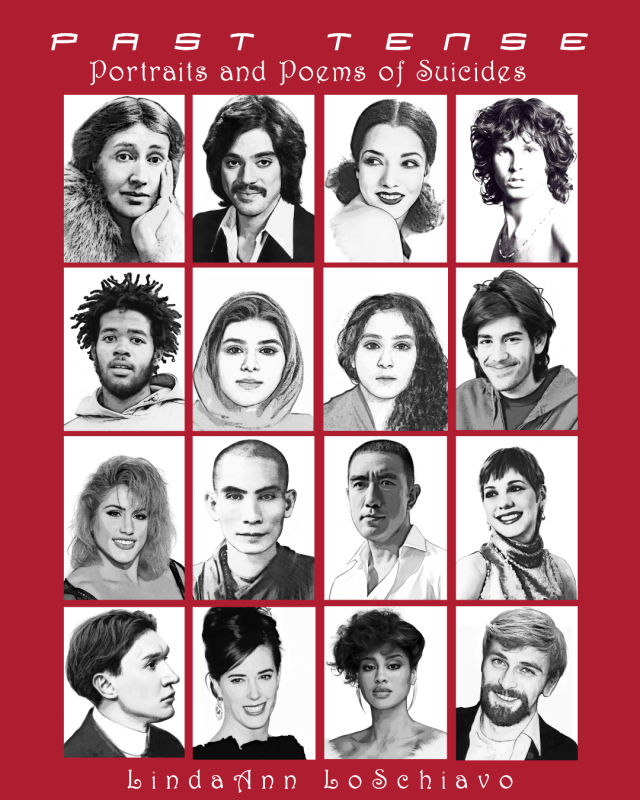
Past Tense by LindaAnn LoSchiavo
Can twenty-three different poetic forms make silence speak without pretending to know everything? Past Tense by LindaAnn LoSchiavo invites readers to investigate through poetry together.

Rajat Chohda: Exploring Conscious Living Through Reflection and Everyday Practice
Can a question about an ordinary family conversation change how you define success? Rajat Chohda explores this journey through his experiences, ideas, and writing; read the full interview to discover.
Turning by Wayne Feinstein
What if the loudest room you’ve ever entered was your own memory? Discover how Turning by Wayne Feinstein explores that unexpected question in our full review.


