
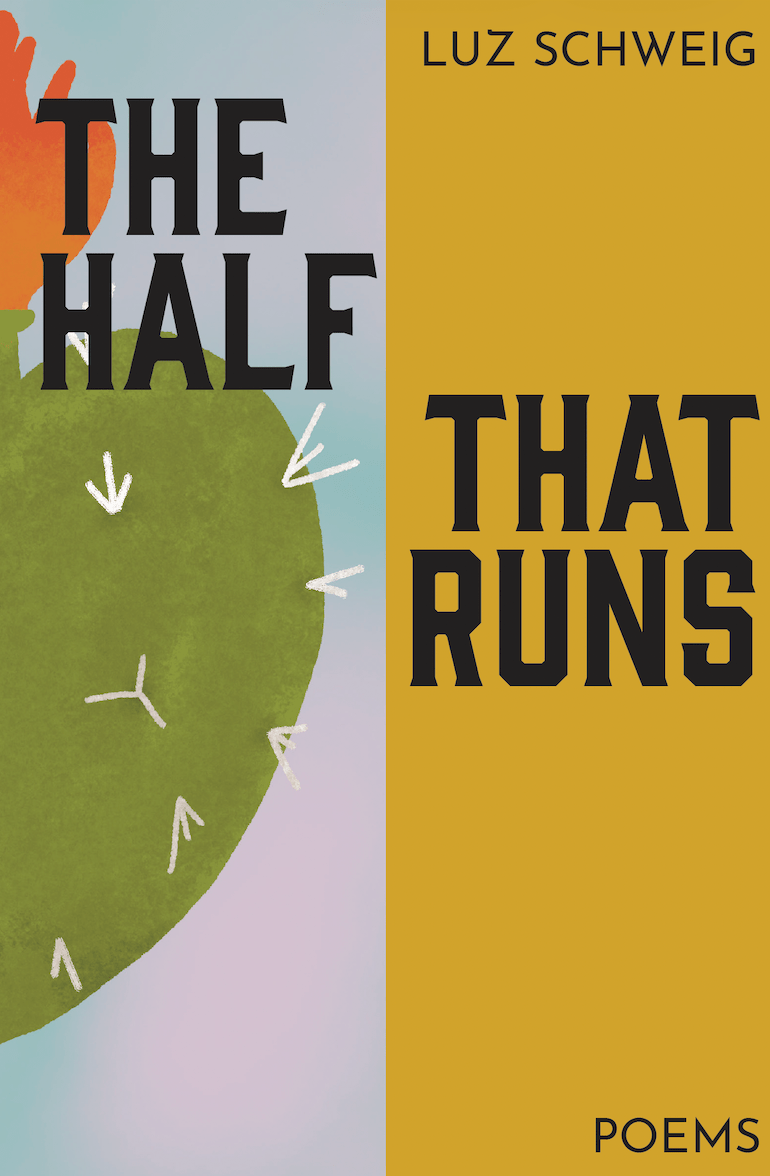
What if your memories had a geography—one that kept shifting under your feet like sand? Discover how The Half That Runs by Luz Schweig maps identity—read the full piece.
Book Title
The Half That Runs by Luz Schweig
Genre
- Genre: Poetry
- Sub-genres: Literary Poetry, Cultural/Identity Poetry, Diaspora Literature
- Themes: Identity, migration, ancestry, grief, resilience, memory, belonging
- Audience: Teens and adults (15+)
Review
There’s a well-documented phenomenon in neuroscience called “memory reconsolidation”—every time we recall a memory, we subtly rewrite it. Luz Schweig’s The Half That Runs feels like an extended act of that process, where memory is not a fixed archive but a living terrain, constantly reshaped by language, culture, and time.
This is not a collection you “read” in a conventional sense. It’s one you move through, almost like walking across uneven ground where each step reveals something buried—ancestral echoes, fragments of family history, or the quiet persistence of identity. The poems don’t follow a linear narrative, yet they form a clear emotional progression: from rooted origins to rupture, from fragmentation to a kind of reassembly.
What stands out immediately is the density of imagery. Scientists often note that the human brain processes images faster than words, and Schweig seems to leverage this instinctively. A single line can carry layers of geography, history, and emotion—volcanoes, deserts, rivers, and bodies become interchangeable landscapes. In one moment, identity is described through maize and soil; in another, through migration and language loss. These are not decorative metaphors—they are structural.
The family figures—Mami, Papi, Leti, Abuelita—serve as emotional anchors. They are not developed in a traditional narrative arc, yet they feel vividly present, almost like constellations you learn to recognize over time. Their stories emerge in fragments: a memory here, a gesture there, a silence that says more than dialogue ever could. It mirrors how people actually remember their families—not as complete biographies, but as flashes of meaning.
The collection also engages deeply with cultural specificity, particularly through Nahuatl language and Indigenous references. Rather than explaining these elements for the reader, Schweig allows them to exist as they are. This choice is significant. It resists simplification and invites readers into a space where understanding requires attention, not translation. In doing so, the poems reflect a broader truth: identity is not always meant to be easily decoded.
Who is this book for? It’s for readers who appreciate poetry that asks for patience and offers reward in return. It’s for those interested in themes of migration, heritage, and the interplay between personal and collective memory. It’s also for anyone who has ever felt split between places, languages, or versions of themselves.
Who might find it challenging? Readers looking for straightforward narratives or immediate clarity may find the density and symbolism demanding. This is not a collection that explains itself quickly—it unfolds gradually, like a landscape coming into focus at dawn.
Ultimately, The Half That Runs operates less like a story and more like a living archive. It doesn’t resolve its tensions neatly, nor does it try to. Instead, it honors them. And in doing so, it captures something both specific and universal: the experience of carrying multiple histories within a single body.
Content Warning
Includes themes of loss, migration-related hardship, and references to violence and illness (non-graphic, poetic in nature).
Voyages of Verses Book Award

This book is a winner of the Voyages of Verses Book Award, a recognition for books that expand the horizon of what literature can achieve. We honor works that challenge preconceived notions, broaden worldviews, and celebrate the rich blend of voices that shape our global narrative. Whether it’s a novel that immerses you in a different culture, a collection of poems that captures the essence of shared humanity, or a nonfiction account that sparks critical thought, the Voyages of Verses Book Award celebrates stories that invite exploration and discovery.
We’d love to hear from you!
What are your thoughts on this piece? Share your insights in the comments below!
- What stood out to you most about this post?
- Have you read a book recently that relates to the themes discussed here?
- What’s your favorite takeaway or reflection from this write-up?
Let’s keep the conversation going—your thoughts make this space richer!
Disclaimer: The content on this site is provided for informational and inspirational purposes only. While we strive for accuracy, the views expressed in reviews, articles, and recommendations are subjective and may not reflect the opinions of all readers.
We receive complimentary copies of all books we review. However, this practice does not compromise the integrity or honesty of our reviews. Every write-up reflects the contributor’s genuine impressions and critical analysis, ensuring transparency and trust with our readers.
For a complete understanding of our practices, please refer to our full Disclaimer, Privacy Policy, and Terms of Service. These documents outline how we manage your information, ensure transparency, and uphold your rights as a user.
To request for a review, to nominate your favorite book for an award, or for more details about our awards, click here.
Other Stories
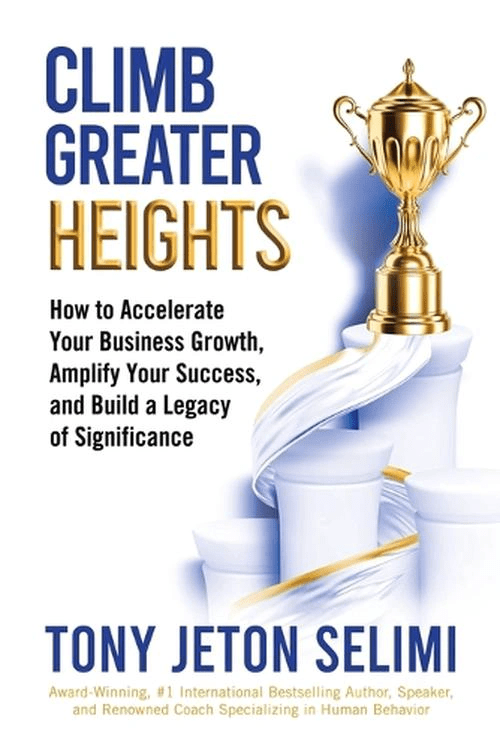
Book Review: Climb Greater Heights by Tony Jeton Selimi
What if your biggest business obstacle isn’t competition but something invisible within you? Discover the answer in Climb Greater Heights by Tony Jeton Selimi—read the full review to explore.
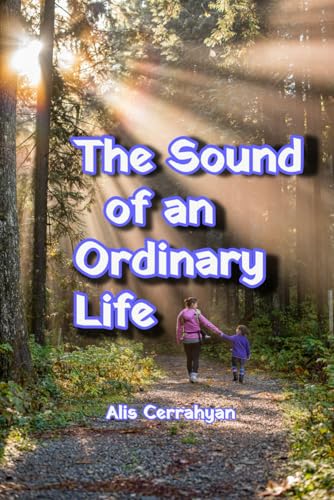
Review of The Sound of an Ordinary Life by Alis Cerrahyan
There are many ways to tell the story of a life. Some choose grand narratives, sweeping arcs of triumph and tragedy. Others, like The Sound of an Ordinary Life, find meaning in the quiet spaces, the moments that seem small but carry the entire weight of a person’s existence.

Unheard by Bhavini Bhargava
If grief could hold a pen, what would it say about the silence that follows loss? Find out how one book wrestles with that question and offers something most never expect: resonance.

 OneTribune