
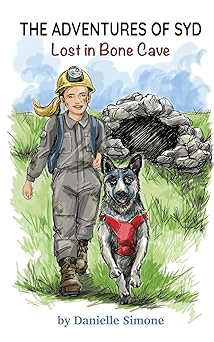
What would you notice first if the dark suddenly became your only map? Lost in Bone Cave by Danielle Simone explores that question—discover how by reading the full write-up.
Lost in Bone Cave by Danielle Simone
Genre: Children’s / Middle Grade Fiction
Sub-Genres: Survival Adventure, Nature Exploration
Themes: Courage, Problem-Solving, Self-Reliance, Respect for Nature, Fear and Growth
Review
There is a reason caves have fascinated humans for thousands of years. Archaeologists confirm that some of the earliest human art was created underground, in spaces where silence amplifies thought and darkness demands attention. Lost in Bone Cave taps into that ancient psychological response with surprising effectiveness, transforming a simple setting into a powerful emotional landscape.
Danielle Simone’s story does not rely on spectacle or exaggerated danger. Instead, it focuses on something far more relatable: the moment when confidence fades and instinct takes over. The cave is not portrayed as evil, but indifferent, much like nature itself. This distinction matters. Readers are not asked to fear the environment, but to understand it, observe it, and adapt within it.
The main character’s experience mirrors real cognitive responses studied in survival psychology. Research shows that calm observation and methodical thinking dramatically increase chances of safe outcomes in unfamiliar environments. The book subtly reinforces this idea through action rather than explanation, making it both engaging and quietly instructive.
What makes the narrative especially effective is its restraint. Fear is present, but it never overwhelms the story. Instead, it becomes a tool for awareness. The author understands that younger readers, in particular, benefit from stories that acknowledge fear without glorifying it. The result is a reading experience that feels tense but never unsafe.
The pacing is tight, the descriptions are clear without being heavy, and the emotional arc is grounded in realistic reactions rather than dramatic shortcuts. This is a book that trusts its readers to think alongside the character rather than simply watch events unfold.
Lost in Bone Cave is for readers who enjoy adventure rooted in realism, for parents and educators seeking stories that encourage resilience, and for anyone who remembers being curious enough to wander just a little too far. It is not for readers looking for fantasy creatures, fast-paced action sequences, or exaggerated danger. Its strength lies in authenticity, not spectacle.
Ultimately, the book reminds us that growth often happens in quiet, uncomfortable places. Sometimes, finding your way forward is less about knowing the path and more about learning how to pay attention.
Content Warning
Mild suspense involving a character temporarily lost in a natural cave environment. No graphic imagery, inappropriate language, or harmful themes.
We’d love to hear from you!
What are your thoughts on this piece? Share your insights in the comments below!
- What stood out to you most about this post?
- Have you read a book recently that relates to the themes discussed here?
- What’s your favorite takeaway or reflection from this write-up?
Let’s keep the conversation going—your thoughts make this space richer!
Disclaimer: The content on this site is provided for informational and inspirational purposes only. While we strive for accuracy, the views expressed in reviews, articles, and recommendations are subjective and may not reflect the opinions of all readers.
We receive complimentary copies of all books we review. However, this practice does not compromise the integrity or honesty of our reviews. Every write-up reflects the contributor’s genuine impressions and critical analysis, ensuring transparency and trust with our readers.
For a complete understanding of our practices, please refer to our full Disclaimer, Privacy Policy, and Terms of Service. These documents outline how we manage your information, ensure transparency, and uphold your rights as a user.
To request for a review, to nominate your favorite book for an award, or for more details about our awards, click here.
Other Stories
Stray: Breaking Free, Falling Hard, and Growing Stronger by Shannon O’Brien
Have you ever wondered why some people discover their strongest selves only after getting completely lost—literally and emotionally? This piece explores that question, and you’ll find the surprising insight within the full write-up.

Following the Story: Harker Jones on Writing Across Genres and Ages
What happens when stories choose their own form? In this interview, readers explore how a writer follows ideas across ages and genres, discovering the answer by reading the full conversation.
The Hiding by Alethea Lyons
What if the most dangerous thing you could lose wasn’t your life, but your voice? This piece explores how that unsettling idea unfolds—if you keep reading.

 OneTribune