

This interview is about the story at the centre of The City of Arches and the creative process that went into making it. The conversation looks at how stories shape understanding, how fiction mixes the past and the present, and how an author’s lifelong relationship with folklore, learning, and creative exploration affects her work. It does this by asking questions about character, craft, worldbuilding, and personal experience. Readers learn about storytelling with a purpose, being strong, how families affect people, and the careful artistry that goes into making fictional worlds that matter.
Q: Alisse, thank you for joining us. For readers meeting you for the first time, could you share a little about your background, the work you do, and what drives you creatively?
A: Thank you so much for having me do this. I am a Toronto-based author of YA Fantasy Fiction and Middle Grade novels. I am also a mother of triplets—two boys and one girl. I have been writing and creating stories my entire life. Ever since I knew what books were, I have been asking to have them read to me, and reading them myself. What drives me to create is largely my children. They are my test audience, and they are my inspiration for a lot of what I do. I’m always bouncing ideas off of them, and I want to prove to them that anything is possible.
Q: Your latest story explores hidden histories and generational connections. What inspired you to write about past events shaping present identity, and how does that theme resonate with your own experiences as a writer?
A: I truly believe that no one exists in a vacuum. We are all very much shaped by our parents, and they by theirs. Our families’ histories inform how we are raised and where we go in life. I was fortunate to grow up in a multi-generational home. I lived not just with my parents and siblings, but with one of my grandparents as well. My grandmother helped raise me, and I grew up on stories about her past. It fascinated me. For me, the greatest treasure was the old pictures and papers she had. Every little bit of it was full of stories. To put that idea down into a book—that bits of the past can inform the future—seemed like the most natural thing to me.
Q: Many of your books draw on folklore and imaginative traditions. How did your early interest in these subjects evolve into a foundation for your current storytelling approach?
A: Storytelling has always been an oral art form. We start off having stories told to us, read to us, and then only when we learn to read on our own does it become more solitary. I write my books almost as if I’m reading them out loud as I’m typing. I hear all the voices in my head, and it flows as if I’m telling it as opposed to writing it. Folktales and fairytales all have that almost conversational tone to them because that’s how they started. It’s how I learned most of my stories growing up, and it feels like the most natural way to write.
Q: Readers often find your characters tackling challenging circumstances with resourcefulness. What personal or professional experiences help you portray resilience and growth in such relatable ways?
A: Raising triplets is definitely about being resourceful and practising good problem-solving! My husband and I joke that we were outnumbered the day they were born. But watching them grow, and teaching them to problem-solve and rise up to challenges, has been a huge inspiration. Any parent can tell you that raising a child is one of life’s biggest challenges. On top of that, the whole writing journey has been an experiment in facing my own fears and putting myself out there. I’ve been learning marketing, social media, and getting people to learn that these books exist—all of this while creating as well. It’s been a challenge!
Q: You’ve worked in several formats—books, plays, and screen projects. How has exploring different storytelling mediums influenced the way you build worlds like the one in this book?
A: The books came first. For me, the bigger challenge was stripping away so much of the description in order to write scripts. In a book, I can spend time describing outfits, writing about the setting, spelling out the action, and the inner dialogue of the characters. There’s very little of that when you’re writing a play or a screenplay. I can write out the inner monologue going on in Sitnalta’s head, but in a script for the stage, I have to convey her thoughts either out loud or show her feelings through action. In some ways it’s more difficult. I enjoy the freedom of writing a book. I can put down on the page exactly what I see in my mind: how the characters look, where they are, and what they feel.
Q: Collaboration appears in some of your series work. What have you learned about shared creativity, and how does working with another writer expand or challenge your natural process?
A: I have been lucky to have some amazing collaborators. In the theatre, I have worked on a few musicals, and writing a script and sharing it with different songwriters has been amazing. Songwriting is an art form I have never mastered, and I am in awe of what these people can do. I feel that my dialogue and my vision have to rise to their level and be worthy of their work, so that is a lot of me challenging myself.
When writing a book with someone, I have been lucky to work with one of my best friends, An Tran, and once with my son, Joseph. With An, we write together in a way where we divide our responsibilities. With Bath Salts, it was a novel with two different perspectives, so we each took one. With our work-in-progress—Ouroboros—there’s a lot of time jumping, so I took the present, and she worked on all the parts that took place in the past. In contrast, when working with Joseph, I took on the role of teacher, teaching him the craft of writing and what it takes to make a book. It was a lot of fun, a massive bonding exercise, and our book Lucky At Bat is definitely a labour of love.
Q: Your stories frequently involve journeys that require cooperation, trust, and responsibility. How do you decide which values or lessons to highlight through fictional adventures?
A: It’s never been a conscious decision. I write the story, and the values and lessons naturally come in where necessary to serve the plot or the characters’ journeys. It’s not something I set out to do, where I aim to write based on what I want to teach the reader. When I write, I come up with the character and set out what’s going to happen to them or what they need to achieve. Everything else comes from that starting point. What I do like to write are stories of friendship and stories about found families. Those stories will typically involve themes of trust, responsibility, and cooperation, because those are the things that make friendships and families work. At the end of the day, it is all about love. Isn’t it?
Q: Your background in education and fine arts gives you a unique toolkit. How do these fields shape your research, craft, or the way you approach complex themes for younger and older readers alike?
A: I enjoy working with children and watching them grow and create. For me, even as an adult, some of the best stories are coming-of-age stories. This is the age where everything is heightened, and people are going through so much tumultuous change. I approach these characters through the lens that readers should never be talked down to. I believe that younger readers understand and absorb far more than we adults give them credit for. For older readers, I write for them the way I would write for an adult (minus certain things that would be inappropriate). I refuse to dumb down my language or write to them as if they were children. They’re not. The genre is called Young Adult for a reason, and I respect my readers as I would respect any of my peers my own age.
Q: You’ve been recognized for your contributions to storytelling. When you think about your achievements so far, which moments stand out to you, and what have they taught you about your path?
A: I am so grateful for any and all recognition I’ve received so far. It shows me that I’m on the right path and gives me the confidence to continue on. For me, the greatest moment has been when Joseph and I were recognized with the Gertrude Warner Middle Grade Book Award for Lucky At Bat. Sharing a stage with my son for something we created together was a moment of such pride for him and for what we achieved together. I feel that being an author is the path for me. It’s what I’ve wanted since I was a child, filling journals with stories written in crayon.
Q: Many writers think deeply about how their work can support creativity, community, or learning. How do you see your stories positively influencing readers, especially those discovering fantasy for the first time?
A: I write about all kinds of protagonists. I keep saying that every reader deserves to find themselves in a book. With The City of Arches, the character of Learsi is deaf. I spoke extensively with a dear friend of mine who works as an interpreter to ensure I was showing her the respect she deserved. With The Dybbuk Scrolls trilogy, I wrote from my own experience as a Jewish Canadian, pulling some of my own culture into a fantasy world. These are just two examples of what I do. I believe that literature, and especially fantasy literature, can open doors, open minds, and foster conversations. Fantasy novels are a reflection of our own world and can say a lot about the world around us while sprinkling it all with a little bit of magic.
Q: If you were to write your bio in your own words, what would you say? What legacy would you like to leave?
A: Alisse Lee Goldenberg is a Toronto-based author and playwright. To date, she has been awarded the Gertrude Warner Middle Grade Book Award, the Firebird Book Award, the Atlas of Stories Award, and the BREW Seal of Excellence. Her novels include The Sitnalta Series, The Dybbuk Scrolls Trilogy, The Ghost in the Garden, and Lucky At Bat, which was written with her son, Joseph. Her theatrical pieces include the Toronto Fringe Festival hits Jay & Shilo: Sibling Revelry and The Princess of the Tower. Her play The Strings of the Violin is premiering March 2026 with The Riversong Players in Almonte, Ontario. The screenplay of the script was a semi-finalist in The Art of Brooklyn Screenplay Competition.
Related
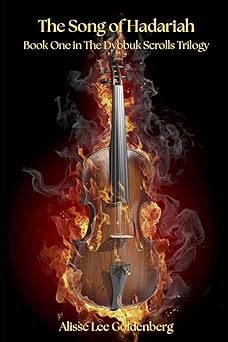
The Song of Hadariah by Alisse Lee Goldenberg
Have you ever wondered why some people remember ancient stories as if they lived them themselves? This question sparks a surprising journey—one you’ll only understand by reading the full review.
Keep readingMore Posts Like This

Reimagining Life Through Words and Service with Debra J. White
What happens when life’s hardest blows lead to unexpected purpose? Discover how Debra turned trauma, recovery, and rescued animals into writing and volunteer work that inspires resilience and connection.
Keep reading
Learning from the Land: A Conversation with Cathryn Wellner on Life’s Unexpected Lessons
Ever wondered what it’s like to raise sheep, pigs, and camels while learning life lessons along the way? Cathryn Wellner shares her unexpected journey, and readers will discover how she adapted and thrived.
Keep reading
Carmella Parker on Law, Education, and Guiding Institutions Through Change
How do you teach students about laws that are still being written? This interview explores one legal educator’s answer—revealed through experience, strategy, and real-world change inside the evolving legal landscape.
Keep reading
Shannon O’Brien on Travel, Teaching, and Redefining Home
Can a backpack become a home and a classroom at the same time? This interview follows one teacher-writer’s journey to find out—revealed through travel, reflection, and lived experience.
Keep reading
Leon Mitchell on Imagination, Resilience, and Finding the Extraordinary in the Ordinary
What if imagination isn’t an escape but a survival skill you forgot you had? This interview explores that idea—revealed through childhood wonder, discipline, and stories that reflect who we are.
Keep readingWe’d love to hear from you!
What are your thoughts on this piece? Share your insights in the comments below!
- What stood out to you most about this post?
- Have you read a book recently that relates to the themes discussed here?
- What’s your favorite takeaway or reflection from this write-up?
Let’s keep the conversation going—your thoughts make this space richer!
Disclaimer: The content on this site is provided for informational and inspirational purposes only. While we strive for accuracy, the views expressed in reviews, articles, and recommendations are subjective and may not reflect the opinions of all readers.
We receive complimentary copies of all books we review. However, this practice does not compromise the integrity or honesty of our reviews. Every write-up reflects the contributor’s genuine impressions and critical analysis, ensuring transparency and trust with our readers.
For a complete understanding of our practices, please refer to our full Disclaimer, Privacy Policy, and Terms of Service. These documents outline how we manage your information, ensure transparency, and uphold your rights as a user.
To request for a review, to nominate your favorite book for an award, or for more details about our awards, click here.
Other Stories
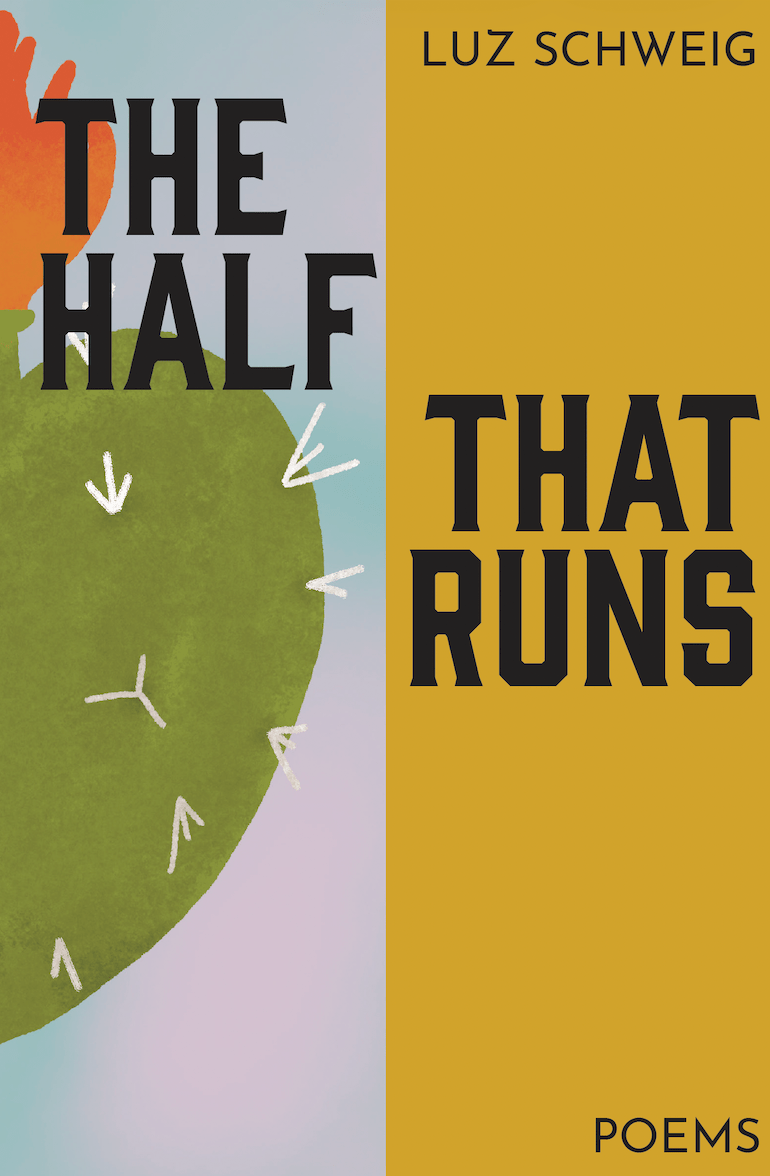
The Half That Runs by Luz Schweig
What if your memories had a geography—one that kept shifting under your feet like sand? Discover how The Half That Runs by Luz Schweig maps identity—read the full piece.
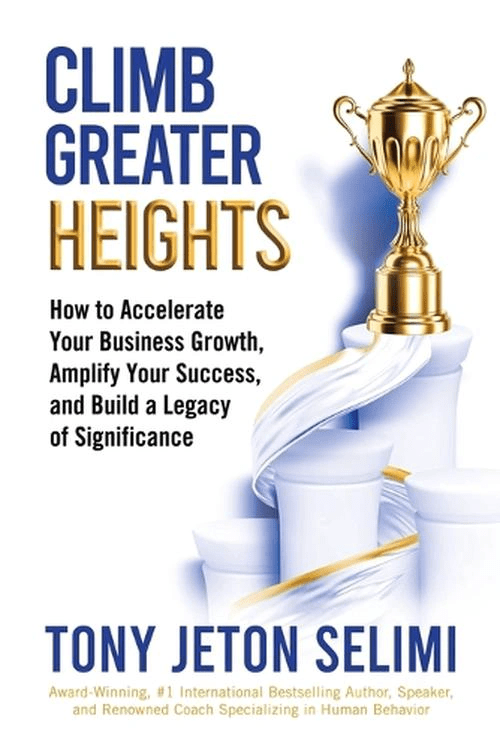
Book Review: Climb Greater Heights by Tony Jeton Selimi
What if your biggest business obstacle isn’t competition but something invisible within you? Discover the answer in Climb Greater Heights by Tony Jeton Selimi—read the full review to explore.
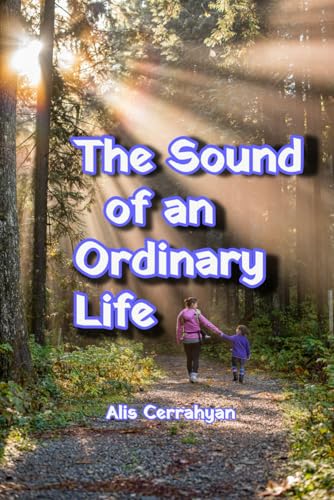
Review of The Sound of an Ordinary Life by Alis Cerrahyan
There are many ways to tell the story of a life. Some choose grand narratives, sweeping arcs of triumph and tragedy. Others, like The Sound of an Ordinary Life, find meaning in the quiet spaces, the moments that seem small but carry the entire weight of a person’s existence.

 OneTribune