Have you ever wondered why some conversations leave you exhausted while others rebuild your spirit? This review uncovers how one book explains the invisible architecture behind that feeling—read on to find out.
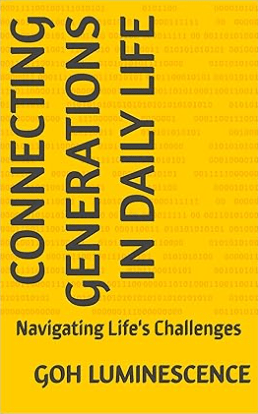
Navigating Life’s Challenges 2 by Luminescence Goh
Genre: Nonfiction
Subgenres: Reflective psychology, applied social science, contemporary leadership
Themes: Connection, self-regulation, moral courage, social design, renewal
Content Warning: None
Luminescence Goh’s Navigating Life’s Challenges 2 reads less like a sequel and more like a field guide for human complexity. It doesn’t tell you how to win at life—it teaches you how not to lose yourself in it. The book moves like a conversation between a behavioral scientist and a poet, fusing cognitive awareness with compassionate design thinking. It’s not about escaping the world’s chaos but organizing your inner architecture to thrive within it.
The narrative doesn’t follow characters, yet it feels alive with them: the parent negotiating bedtime after a draining workday, the young professional learning diplomacy in a multicultural office, the student trying to remain idealistic in a cynical system. Each example breathes with realism. Goh takes academic ideas—like equity theory and motivational psychology—and quietly transforms them into emotional lessons. You don’t notice you’re learning until you recognize yourself on the page.
What makes this book exceptional is how it avoids the usual tone of self-help. There are no loud affirmations or hollow promises. Instead, there’s an elegant stillness. Goh writes with the restraint of someone who trusts the reader’s intelligence. She offers tools, not commandments. Each chapter becomes a laboratory where everyday dilemmas—conflict, burnout, communication failure—are dismantled, examined, and reconstructed with grace. The takeaway is subtle yet profound: stability is not the absence of friction but the ability to move through it without hardening.
The prose glows with realism. There’s something scientific yet soulful about her observations—almost like reading a human version of physics. Emotional energy, Goh suggests, follows the same laws as motion: it cannot be destroyed, only transferred or redirected. When you speak kindly, you redistribute energy toward peace; when you act justly, you stabilize the system around you. It’s a deeply human form of physics, delivered in lyrical restraint.
Perhaps the most striking undercurrent is how the book humanizes leadership. Goh reframes leadership not as position but as presence. You lead whenever you restore calm, interpret complexity, or remind others that decency is not outdated. She doesn’t romanticize it—it’s hard, tiring, imperfect—but necessary if societies are to evolve with empathy rather than efficiency alone.
What differentiates Navigating Life’s Challenges 2 from its contemporaries is its refusal to isolate emotional growth from social context. It recognizes that well-being doesn’t happen in a vacuum—it happens in relationships, policies, workplaces, and cross-cultural exchanges. This holistic honesty gives the book longevity; it’s a work you return to after each life pivot, not just once.
For readers who hunger for slow, intelligent reflection rather than quick fixes, this book will resonate like quiet music. It’s not written to dazzle; it’s written to endure. You don’t close it feeling motivated—you close it feeling understood. And sometimes, that’s the rarest form of motivation there is.
Beyond Boundaries Reads Book Award
This book is a winner of the Beyond Boundaries Reads Book Award. The award honors exceptional works of literature that transcend borders—geographical, cultural, and imaginative. This award celebrates stories that connect us, foster empathy, and highlight universal themes while amplifying diverse voices from around the world. Spanning fiction, nonfiction, poetry, and youth literature, it recognizes books that inspire, challenge, and deepen our understanding of the global human experience.
We’d love to hear from you!
What are your thoughts on this piece? Share your insights in the comments below!
- What stood out to you most about this post?
- Have you read a book recently that relates to the themes discussed here?
- What’s your favorite takeaway or reflection from this write-up?
Let’s keep the conversation going—your thoughts make this space richer!
Disclaimer: The content on this site is provided for informational and inspirational purposes only. While we strive for accuracy, the views expressed in reviews, articles, and recommendations are subjective and may not reflect the opinions of all readers.
We receive complimentary copies of all books we review. However, this practice does not compromise the integrity or honesty of our reviews. Every write-up reflects the contributor’s genuine impressions and critical analysis, ensuring transparency and trust with our readers.
For a complete understanding of our practices, please refer to our full Disclaimer, Privacy Policy, and Terms of Service. These documents outline how we manage your information, ensure transparency, and uphold your rights as a user.
To request for a review, to nominate your favorite book for an award, or for more details about our awards, click here.
Other Stories
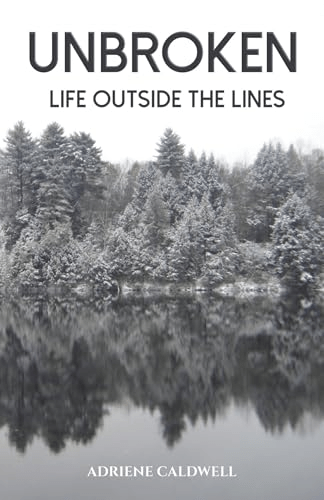
Book Review of Unbroken: Life Outside the Lines by Adriene Caldwell
What if your strongest survival tool wasn’t strength but instinct? In Unbroken: Life Outside the Lines by Adriene Caldwell, discover how one life answers that question—if you dare read on.
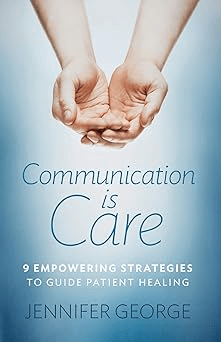
Communication is Care: 9 Empowering Strategies to Guide Patient Healing by Jennifer George
What if the most powerful medicine in a hospital wasn’t in a vial or tablet? Discover how human connection reshapes healing in Communication is Care by Jennifer George—explored in the full review.
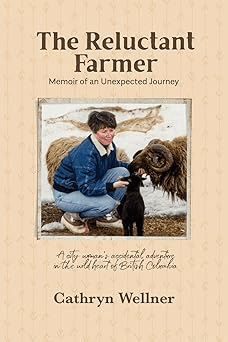
The Reluctant Farmer: Memoir of an Unexpected Journey by Cathryn Wellner
Have you ever wondered what a piglet, a runaway ram, and a hesitant city dweller could possibly teach about courage? Discover the surprising answers in The Reluctant Farmer by Cathryn Wellner.
 OneTribune