

Have you ever wondered if a river remembers every secret whispered to its waters? Explore how poetry unveils such strange truths in Vinita Agrawal’s Eartha—a lyrical dialogue with our planet.
Book Information
Eartha by Vinita Agrawal
Genre: Poetry
Sub-genres: Eco-poetry, Contemporary Indian Poetry, Reflective/Philosophical Verse
Themes: Climate change, extinction, resilience, memory, interdependence of species, human responsibility toward Earth
Review
Some books read like rivers: they move steadily, carrying layers of history, emotion, and sediment within them. Vinita Agrawal’s Eartha belongs to that current. This poetry collection is not simply a tribute to nature but a reckoning with what it means to inhabit a planet under strain. From frogs succumbing to chytrid fungus to baobabs threatened by rising temperatures, the poems evoke species and ecosystems both alive and lost, asking readers to listen closely to what remains.
Science tells us that one million species face extinction within decades if current trends continue. Agrawal’s poems take that statistic and breathe into it voices, faces, and rhythms. A leopard becomes a vanishing yogi. A seed becomes a fighter against hardened soil. Trees become survivors of atomic trauma. By transforming scientific fact into poetic testimony, she bridges data and feeling—what numbers cannot express, her words illuminate.
The strength of Eartha lies in its ability to oscillate between personal grief and planetary loss. Poems that mourn extinct birds or poisoned rivers sit alongside reflections on family, memory, and mortality. It is as though the poet suggests that human loss cannot be separated from environmental loss—that the thread of mourning is woven through both. This echoes findings from eco-psychology, which show how ecological devastation directly impacts mental well-being, a theme readers may unconsciously recognize in their own encounters with vanishing green spaces.
But Eartha is not unrelentingly somber. Scattered throughout are hymns of resilience. The “Hibakujumoku” trees of Hiroshima stand as metaphors for survival, sprouting again against unimaginable odds. In a time when despair about climate change can feel immobilizing, these poems remind us that resilience is not foreign to life on Earth—it is its most ancient inheritance.
One might ask: is poetry enough to change minds about climate and compassion? Perhaps not alone. But neuroscience research on empathy shows that stories and imagery can activate emotional centers of the brain more strongly than data alone. In that sense, Eartha acts as an emotional catalyst, giving urgency to facts through resonance.
This book is not for those seeking escapist poetry that skirts hard realities. Instead, it is for readers who welcome depth, who want language that stirs conscience as much as it soothes. Teachers could use it in classrooms to pair literature with environmental studies; readers of literary journals will recognize the careful craft. For casual readers, the imagery makes even heavy subjects approachable, like finding beauty in the veins of a fallen leaf.
The significance of Eartha lies not only in its themes but in its timing. Published in an era of planetary uncertainty, it becomes part of the global chorus of eco-poetry urging us to remember, grieve, and act. Ultimately, Agrawal offers not despair but grounded hope—the belief that language can still be a salve and a seed.
Voyages of Verses Book Award

This book is a winner of the Voyages of Verses Book Award, a recognition for books that expand the horizon of what literature can achieve. We honor works that challenge preconceived notions, broaden worldviews, and celebrate the rich blend of voices that shape our global narrative. Whether it’s a novel that immerses you in a different culture, a collection of poems that captures the essence of shared humanity, or a nonfiction account that sparks critical thought, the Voyages of Verses Book Award celebrates stories that invite exploration and discovery.
We’d love to hear from you!
What are your thoughts on this piece? Share your insights in the comments below!
- What stood out to you most about this post?
- Have you read a book recently that relates to the themes discussed here?
- What’s your favorite takeaway or reflection from this write-up?
Let’s keep the conversation going—your thoughts make this space richer!
Disclaimer: The content on this site is provided for informational and inspirational purposes only. While we strive for accuracy, the views expressed in reviews, articles, and recommendations are subjective and may not reflect the opinions of all readers.
We receive complimentary copies of all books we review. However, this practice does not compromise the integrity or honesty of our reviews. Every write-up reflects the contributor’s genuine impressions and critical analysis, ensuring transparency and trust with our readers.
For a complete understanding of our practices, please refer to our full Disclaimer, Privacy Policy, and Terms of Service. These documents outline how we manage your information, ensure transparency, and uphold your rights as a user.
To request for a review, to nominate your favorite book for an award, or for more details about our awards, click here.
Other Stories
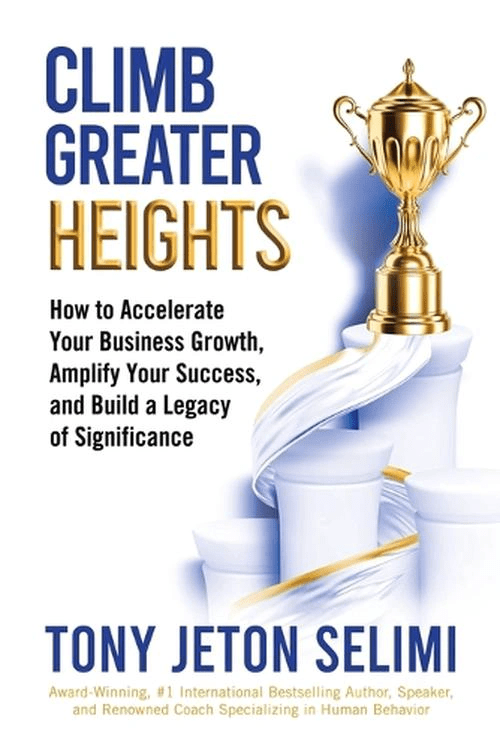
Book Review: Climb Greater Heights by Tony Jeton Selimi
What if your biggest business obstacle isn’t competition but something invisible within you? Discover the answer in Climb Greater Heights by Tony Jeton Selimi—read the full review to explore.
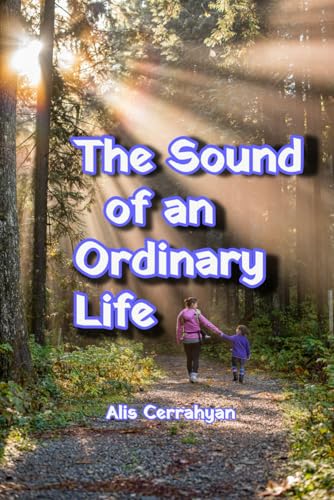
Review of The Sound of an Ordinary Life by Alis Cerrahyan
There are many ways to tell the story of a life. Some choose grand narratives, sweeping arcs of triumph and tragedy. Others, like The Sound of an Ordinary Life, find meaning in the quiet spaces, the moments that seem small but carry the entire weight of a person’s existence.

Unheard by Bhavini Bhargava
If grief could hold a pen, what would it say about the silence that follows loss? Find out how one book wrestles with that question and offers something most never expect: resonance.

 OneTribune