Genre: Business / Management
Sub-genres: Human Resources, Organizational Psychology, Workplace Strategy
Themes: Leadership through empathy, transparency in the workplace, emotional intelligence, real-world HR solutions, adaptive management, employee loyalty, and the balance of power.
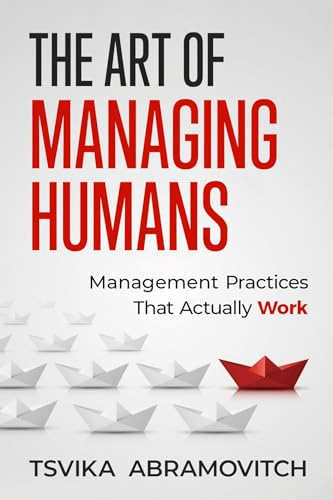
What do playground equipment and office politics have in common? Quite a lot, if you ask Tsvika Abramovitch. In The Art of Managing Humans, the metaphor of a seesaw isn’t just clever—it’s profoundly insightful. Imagine your workplace as a delicate balance beam between empathy and authority, tension and trust. Now picture someone who’s not a theorist, but a seasoned practitioner, showing you how to walk that beam with grace, purpose, and yes, even some humor.
Abramovitch doesn’t offer management clichés or repackaged Silicon Valley dogma. Instead, he shares lived experience—warts and all—gleaned from decades in HR trenches. He recounts difficult conversations, boardroom shake-ups, pandemic pivots, and union lockouts not as war stories, but as teachable moments. These are told with a candor that feels like advice from a mentor over coffee, not a lecture from a podium.
The heart of the book—the “Seesaw Model”—is a practical, humane framework for building resilient working relationships. It’s part organizational strategy, part emotional compass. And it’s surprisingly simple: constant motion requires constant attention. Like Newtonian physics applied to HR, it turns the abstract into the actionable.
There are no panaceas here, just field-tested tools—roundtables, field trips, personal conversations—that respect people as full humans, not just “resources.” It challenges the manager to lead not from a distance, but from within, setting boundaries without barricades and making transparency a habit, not a performance.
The book will resonate with leaders who believe that organizations are living organisms, not machines. It’s for those who’d rather gain loyalty through empathy than enforcement. But if you’re searching for quick wins, inflexible hierarchies, or AI-driven HR fixes, this isn’t your manual. It’s not about speed; it’s about sustainability.
Ultimately, The Art of Managing Humans makes the radical argument that leadership starts by being present and being real. There’s courage in that simplicity. There’s also measurable success.
Book Excellence Award

The book is a recipient of the Book Excellence Award, which celebrates literary achievement, creativity, and impact. More than just a mark of quality, the award honors books that inspire, inform, and transform readers across the globe. Winners are chosen for their exceptional storytelling, compelling voice, and professional presentation. Earning a Book Excellence Award signifies not only outstanding craftsmanship but also meaningful contribution to the literary world.
We’d love to hear from you!
What are your thoughts on this piece? Share your insights in the comments below!
- What stood out to you most about this post?
- Have you read a book recently that relates to the themes discussed here?
- What’s your favorite takeaway or reflection from this write-up?
Let’s keep the conversation going—your thoughts make this space richer!
Disclaimer: The content on this site is provided for informational and inspirational purposes only. While we strive for accuracy, the views expressed in reviews, articles, and recommendations are subjective and may not reflect the opinions of all readers.
We receive complimentary copies of all books we review. However, this practice does not compromise the integrity or honesty of our reviews. Every write-up reflects the contributor’s genuine impressions and critical analysis, ensuring transparency and trust with our readers.
For a complete understanding of our practices, please refer to our full Disclaimer, Privacy Policy, and Terms of Service. These documents outline how we manage your information, ensure transparency, and uphold your rights as a user.
To request for a review, to nominate your favorite book for an award, or for more details about our awards, click here.
Other Stories
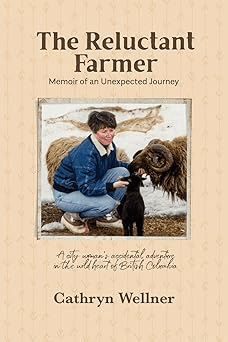
The Reluctant Farmer: Memoir of an Unexpected Journey by Cathryn Wellner
Have you ever wondered what a piglet, a runaway ram, and a hesitant city dweller could possibly teach about courage? Discover the surprising answers in The Reluctant Farmer by Cathryn Wellner.

Holy Parrot by Angel A
Holy Parrot tosses together what seems like the setup for a comic sketch, then deftly morphs it into a deeply human, tender, and investigative journey.

Carmella Parker on Law, Education, and Guiding Institutions Through Change
How do you teach students about laws that are still being written? This interview explores one legal educator’s answer—revealed through experience, strategy, and real-world change inside the evolving legal landscape.

 OneTribune